Mind & emotions
Sit With It
Most pain gets worse because you fight it. Distress tolerance is the skill of staying with a hard feeling without numbing it or acting on it. You let the wave rise, crest, and pass. That is how you stop being run by what you feel.

In this article
To sit with it means staying present with a painful feeling without numbing it, fixing it, or acting on it. That capacity has a name: distress tolerance. You let the emotion rise and fall on its own clock instead of escaping it. The feeling passes. The damage you would have done chasing relief does not.
You feel something hard. Your whole body wants out.
So you scroll. You snack. You pick a fight. You drink. You do anything except feel the thing.
That escape is the real problem. Not the feeling.
What does it actually mean to sit with a feeling?
To sit with a feeling means you notice it, name it, and let it exist in your body without trying to delete it or feed it. You stop the escape. You drop the story about why it is unbearable. You stay. The feeling moves through you instead of getting stored.
Most people confuse the emotion with the emergency. The emotion is just sensation plus interpretation: a tight chest, a hot face, a thought on a loop. None of that is dangerous on its own. What turns it into a crisis is the panic to make it stop.
Sitting with it is not passive. It is the active choice to feel without obeying. You can be furious and not send the text. You can be terrified and not run. That gap, between feeling and reaction, is where every adult freedom lives. (Related: Breathe Before You React.)
What is distress tolerance and why does it matter?
Distress tolerance is the ability to survive an intense emotion without making the situation worse. The term comes from Marsha Linehan's dialectical behavior therapy. It matters because the alternative is a life run by whatever you feel in your worst ten minutes, where every spike of pain triggers a decision you regret.
Linehan built distress tolerance skills for people in genuine crisis, where one impulsive move could cost everything. The principle scales down to ordinary days. Boredom, rejection, anxiety, shame. Each one whispers the same lie: act now, feel better instantly.
The skill is refusing that trade. You learn that a feeling can be intense and temporary at the same time. You learn your nervous system always comes back down. Building this is the quiet foundation of emotional regulation, because you cannot regulate what you will not first tolerate. (Related: Name It To Tame It.)
Why does avoiding an emotion make it stronger?
Avoidance teaches your brain the feeling is too dangerous to face, so it grows. Every time you escape discomfort, you confirm the threat and shrink your tolerance. The emotion does not leave. It goes underground, then resurfaces louder, demanding the same escape at a higher dose.
This is why suppression backfires. Push a feeling down and it leaks out sideways, as tension, insomnia, a short temper with people who did nothing. What you refuse to feel, you end up acting out.
Steven Hayes built acceptance and commitment therapy on this exact reversal. In Get Out of Your Mind and Into Your Life (New Harbinger, 2005), Hayes and Spencer Smith write that ACT "is not about resisting your emotions; it's about feeling them completely and yet not turning your choices over to them." Feeling completely is the opposite of drowning. It is the willingness to let the wave through so it stops crashing on the same shore. (Related: You Are Not Your Thoughts.)
How long does an emotion last if you stop fighting it?
A clean emotion, fully felt and not fed by story, moves through the body in minutes, not hours. The intensity peaks, then drops on its own. What keeps a feeling alive for days is not the feeling. It is the rumination, the replay, the resistance that keeps re-triggering the wave you refuse to ride.
Kristin Neff makes this concrete in her self-compassion work. "Painful feelings are, by their very nature, temporary," she writes in Self-Compassion (William Morrow, 2011). "They will weaken over time as long as we don't prolong or amplify them through resistance or avoidance."
The evidence backs the kindness. MacBeth and Gumley's 2012 meta-analysis in Clinical Psychology Review, pooling 20 samples from 14 studies, found a large effect (r = -0.54) linking higher self-compassion to lower anxiety, depression, and stress. Treating yourself gently while you sit with it is not soft. It shortens the storm. (Related: Pain Is Information.)
How do you build distress tolerance as a daily practice?
You build distress tolerance the way you build any capacity: small reps, on purpose, before the crisis. You practice staying with mild discomfort so the big waves find a stronger nervous system. You do not wait for a breakdown to learn the distress tolerance skills. You rehearse them on a Tuesday.
Start with the body. When a feeling hits, name it out loud, then breathe into where it lives instead of away from it. Set a timer for ninety seconds and just allow the sensation. No fixing. The point is to prove the feeling is survivable.
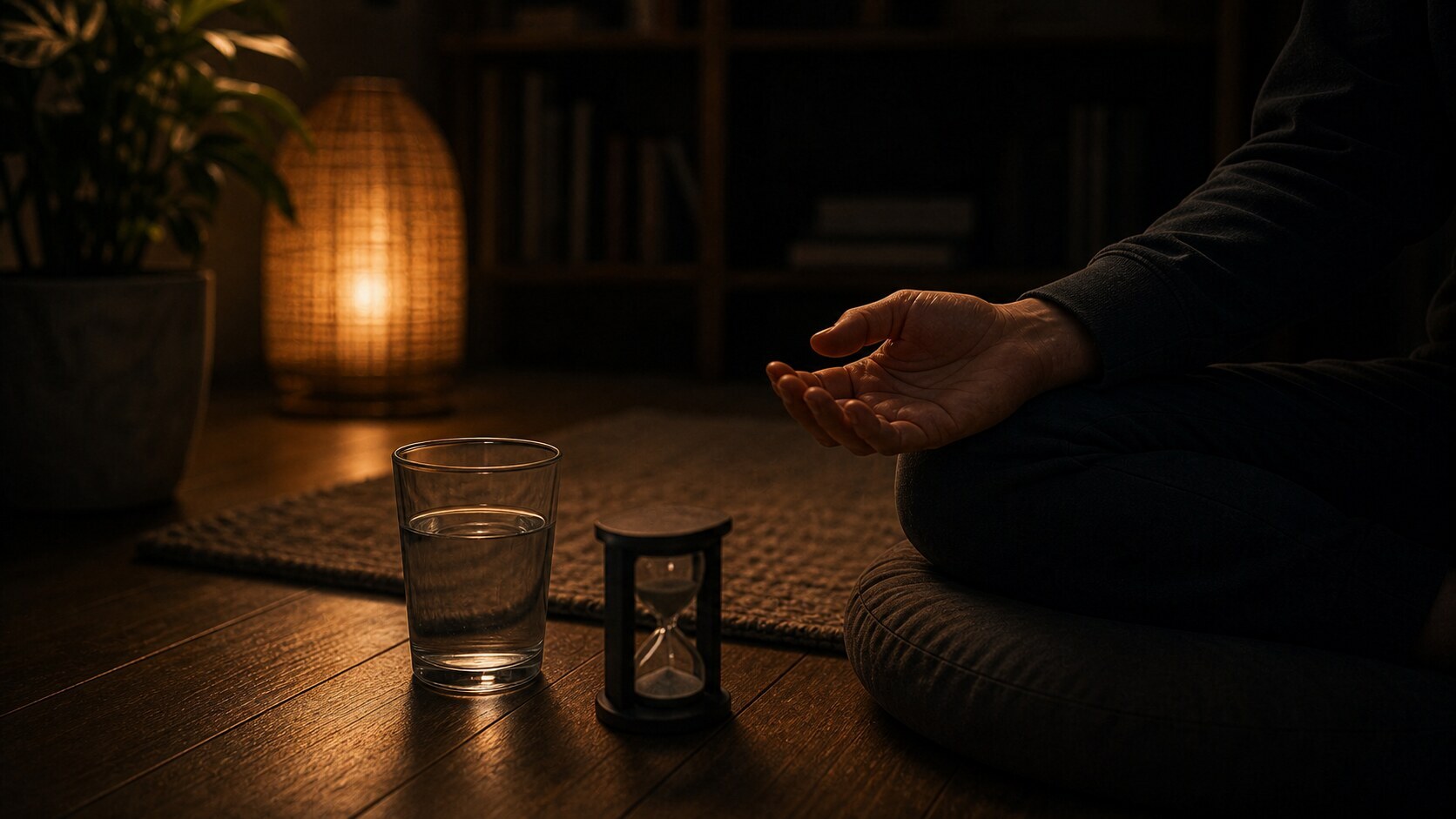
Then practice radical acceptance, Linehan's term for fully acknowledging reality as it is, not as you wish it were. Acceptance is not approval. It is refusing to add a second layer of suffering on top of the first. This is emotional regulation at its root. Self-compassion is the tool that makes it bearable, the steady voice that says this is hard and you are still okay. (Related: Guard Your Peace.)
Being THE ONE
THE ONE feels everything and obeys nothing.
THE ONE does not run from a hard emotion. Sits with it. Lets it speak. Lets it pass.
Where others numb, THE ONE stays present. Where others react, THE ONE waits.
THE ONE knows a feeling is weather, not climate. It moves. It always moves.
You are not your panic. You are not your anger. You are the one who can hold them and still choose well.
The escape was never the cure. The escape was the wound, repeated.
Be the one who can sit with anything and still walk forward.
Sources
- Linehan, M. M. (2015). DBT Skills Training Manual, Second Edition. Guilford Press. Source for distress tolerance, crisis survival, and radical acceptance skills. https://www.guilford.com/books/DBT-Skills-Training-Manual/Marsha-Linehan/9781462516995
- Hayes, S. C., & Smith, S. (2005). Get Out of Your Mind and Into Your Life: The New Acceptance and Commitment Therapy. New Harbinger Publications. Source for the acceptance and willingness quotation. https://www.newharbinger.com/9781648487750/get-out-of-your-mind-and-into-your-life/
- Neff, K. (2011). Self-Compassion: The Proven Power of Being Kind to Yourself. William Morrow. Source for the quotation on painful feelings being temporary. https://self-compassion.org/
- MacBeth, A., & Gumley, A. (2012). "Exploring compassion: a meta-analysis of the association between self-compassion and psychopathology." Clinical Psychology Review, 32(6), 545–552. Source for the r = -0.54 effect across 20 samples. https://pubmed.ncbi.nlm.nih.gov/22796446/
Running on empty from holding it all in? Check your burnout score and see where you actually stand.