Rest & recovery
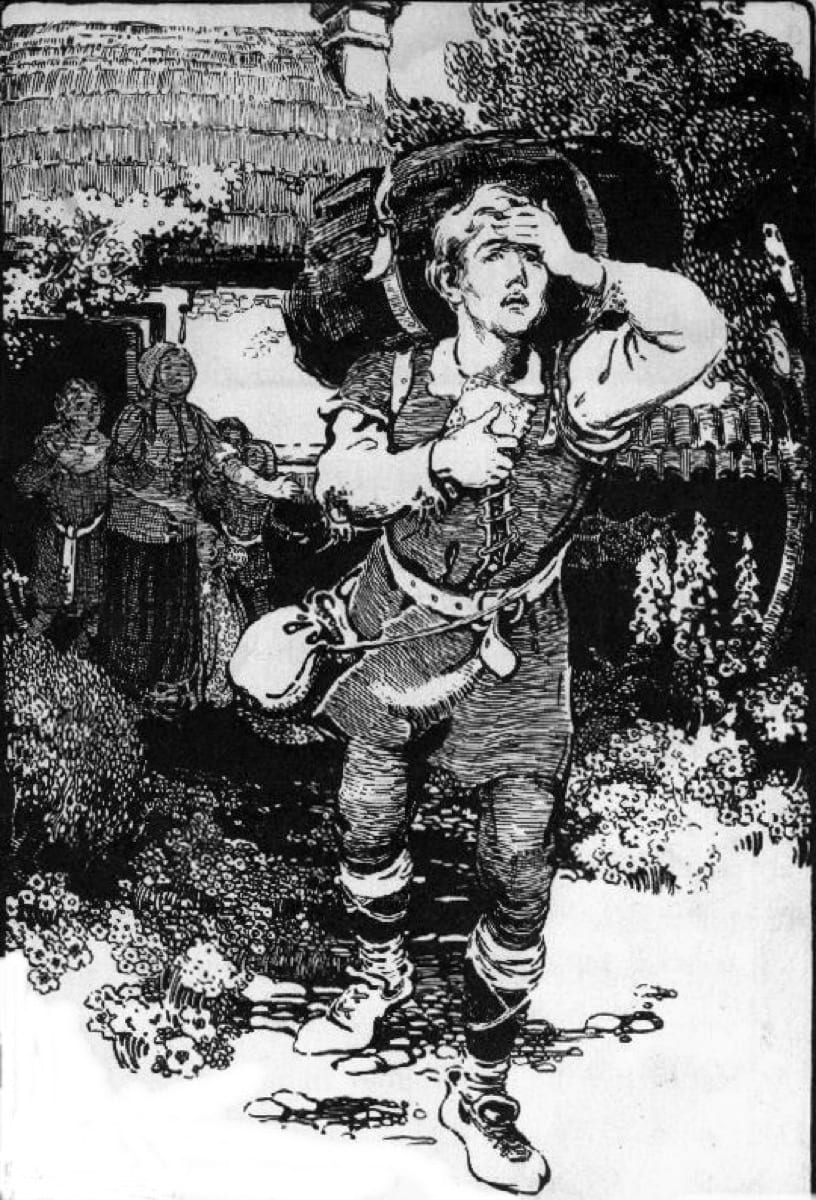
The Weight You Carry
The weight you carry is the old resentment, regret, and other people's expectations kept alive inside you long after they stop serving a purpose. Research on forgiveness, rumination, and emotional regulation shows putting it down is not weakness. It is the practice of choosing the present over the past.

In this article

The weight you carry is the old resentment, regret, and other people's expectations kept alive inside you long after they stop serving a purpose. Research on forgiveness, rumination, and emotional regulation shows putting it down is not weakness. It is the practice of choosing the present over the past. The weight is real. So is the release.
You are carrying too much.
Not in your hands. In your heart. In your mind. In the tight spaces of your body where stress lives and never quite leaves. Weight that was never yours to carry. Weight that serves no purpose. Weight that is slowly crushing the life you could be living. Most of the weight is invisible, which is why most people never put it down.
What does forgiveness research say about the weight of resentment?
Forgiveness research documents letting go of resentment correlates with physical and mental health improvements. A 2016 review by Tyler VanderWeele and colleagues at Harvard found people who practiced forgiveness had lower blood pressure, reduced cardiovascular risk, and reduced depressive symptoms.
The mechanism is specific. Resentment keeps the threat-response system switched on. In a 2001 study in Psychological Science, Witvliet and colleagues asked 71 people to rehearse their grudges in the lab. Heart rate, blood pressure, and skin conductance all climbed compared with imagining forgiveness. The weight you carry in the form of resentment is paid in biology, not just feeling. Meanwhile, the person you resent usually is not thinking about you at all. They have moved on. They are living their life. The resentment is punishment you are inflicting on yourself, not on them.
Forgiveness is not about the other person deserving it. It is about you deserving freedom. Johns Hopkins Medicine's patient education on forgiveness summarizes the research: letting go of resentment lowers stress, blood pressure, and heart attack risk. The health bill gets paid whether you acknowledge it or not. (Related: Break the Pact.)
How do you actually start letting go of resentment?
You start letting go of resentment by getting specific. Not "people have hurt me" but one name and one act. Vague grudges cannot be put down because they have no edges. Pick the grudge that costs you the most sleep and work the five steps below, then repeat with the next one.
- Name the specific grudge. One person, one act, said plainly enough to write down. A named wound can be released. A fog of old wrongs cannot. Name It to Tame It explains why the label matters.
- Find what the grudge protects you from feeling. Under most resentment sits something softer. Grief. Humiliation. The fear that it was somehow your fault. The grudge is armor over that wound.
- Decide the release is for you, not for them. They do not need to apologize, agree, or even know. Your own nervous system is the only beneficiary required.
- Write it out. Fifteen minutes, four days in a row, no editing. The expressive writing research covered below shows why this works.
- Refuse the re-pickup the next morning. Release is not a single ceremony. The grudge will be sitting by the bed when you wake up. Leaving it there is the practice.
James Baldwin named the trap in Notes of a Native Son: "I imagine one of the reasons people cling to their hates so stubbornly is because they sense, once hate is gone, they will be forced to deal with pain." That is step two in one sentence. The hate is anesthesia. Letting go of resentment means agreeing to feel what it was numbing. That is why it is hard. It is also why it works. (Related: Forgive To Free Yourself.)
Letting go is not reconciliation
Putting the grudge down does not mean picking the person back up. Forgiveness is unilateral. You can do it alone, in a room they will never enter, and keep every boundary you built. Reconciliation takes two people and changed behavior. The Stanford Encyclopedia of Philosophy's entry on forgiveness keeps the two apart for exactly this reason. Release the weight. Keep the fence. (Related: Guard Your Peace.)
Why does regret keep the weight attached?
Regret keeps the weight you carry attached because it assumes you could have known better than you knew. You made decisions with the information, maturity, and circumstances you had at the time. Looking back with more knowledge and declaring you should have done differently is not wisdom. It is self-torture with an intellectual disguise. You release regret by extracting the lesson, then dropping the fantasy of having known better.
Research on repetitive negative thought, pioneered by Susan Nolen-Hoeksema at Yale, documented that rumination correlates strongly with depression and anxiety. Her 2008 paper in Perspectives on Psychological Science synthesized decades of studies showing repetitive dwelling on the past is one of the strongest predictors of depressive episode duration. Regret is this dressed up as processing.
The feeling itself is nearly universal. Daniel Pink asked 4,489 Americans about regret for his American Regret Project in 2022, and 82 percent said they experience it at least occasionally. Pink's conclusion in The Power of Regret: "Regret is not dangerous or abnormal, a deviation from the steady path to happiness. It is healthy and universal, an integral part of being human." The feeling is not the problem. The loop is.
The alternative is learning plus release. Extract what the experience actually taught. Name the specific lesson. Then release the fantasy that you should have been more than you were. You did your best with what you had. That is all anyone can do. Holding yourself to a standard you could not possibly have met in the past is not accountability. It is cruelty. And cruelty toward yourself never produces better outcomes than self-compassion does. (Related: You Are Not Your Past.)
Whose expectations are you actually carrying?
The expectations you carry were often handed to you. Your parents' idea of success. A partner's definition of enough. Society's image of how you should live. You never agreed to these. Yet you carry them as if they were your own. The weight you carry in the form of unexamined expectations is among the heaviest because it feels invisible. Reparenting yourself can help translate an inherited rule into the care, choice, or protective limit needed now.
Question every expectation. Ask three things: "Did I choose this? Does this serve me? Is this mine?" If the answer is no, the expectation was inherited, not chosen. It can be released. Not rebelliously. Just recognized as not yours. The release is emotional burden release, a correction of an accounting error that has been costing you for years.
Watch this closely in a relationship. Resentment between partners usually grows in the gap between what was expected and what was actually agreed to. And the person you resent most is often the person whose expectations you still carry.
Research on psychological ownership, including work by Jon Pierce and colleagues at the University of Minnesota, documents that behaviors driven by internalized external expectations produce different outcomes from behaviors chosen internally. The internally chosen version sustains. The inherited version produces resentment, burnout, and the specific feeling of living someone else's life. Identifying which is which is the first step to putting the inherited ones down. (Related: What Others Think.)
Why is old identity the heaviest weight?
Old identity is the heaviest weight because it feels like self. The person you used to be. The limitations you used to accept. The beliefs about what was possible. That identity feels safe because it is familiar. But it is a cage you have outgrown, and the familiarity is how the cage keeps you inside.
Research on possible selves, developed by Hazel Markus and Paula Nurius in their 1986 American Psychologist paper, documented that the self you identify with now shapes what you will attempt, which shapes what you will become. Holding onto an old identity that no longer fits your current capacity produces the specific experience of living below your potential. You feel it as vague dissatisfaction, even when nothing external is obviously wrong.
The release is not abandoning yourself. It is becoming yourself. The old identity served a purpose in its time. The purpose has been served. Keeping the identity past its usefulness is like carrying the scaffolding after the building is complete. The scaffolding helped the building get built. It now only prevents you from using the building. Put it down. The weight you carry in the form of outdated self-concept gets lighter immediately. (Related: Kill the Old Version.)

What is the actual practice of release?
The practice of release is not an event. It is a daily practice. You do not put down a lifetime of burden in one moment. You put it down piece by piece. Day by day. Choice by choice. Notice what you are carrying. Name it. Ask if it serves you. If it does not serve you, practice putting it down. It will try to return. Put it down again.
Research on writing-based release, including James Pennebaker's expressive writing studies, documented that writing about emotional burden for 15 minutes a day across four days produces measurable improvements in immune function and reduced healthcare utilization for up to a year afterward. The writing does not fix the past. It processes the weight so it stops being carried.
Eventually, your hands stop reaching for it. Your mind stops returning to it. The weight is truly released. When the weight is released, you discover what you actually are. Lighter. Faster. Freer. Energy that was maintaining old burdens is now available for new creation. Space that was occupied by the past is now open for the future. You become capable of things that were impossible while carrying unnecessary weight. Not because you gained something. Because you lost what was holding you back. (Related: The Shadow Knows.)
Frequently Asked Questions
What is the difference between anger and resentment?
Anger is the flash. It rises when a line gets crossed and burns out once the message lands. Resentment is the flash replayed on a loop, sometimes for years, long after the moment has passed. Anger visits. Resentment moves in and starts charging rent.
Why is it so hard to let go of resentment?
Because the grudge is doing a job. It keeps you from feeling the grief or humiliation underneath, and it feels like justice, as if dropping it would let the other person win. The release costs one hard moment of feeling. The grudge costs years.
What does holding a grudge do to your body?
Measurable harm. In the 2001 Witvliet study, rehearsing a grudge raised heart rate, blood pressure, and skin conductance compared with imagining forgiveness. The forgiveness research above found the reverse as well. Letting the grudge go tracks with lower blood pressure and lower cardiovascular risk.
What if you cannot let it go?
Then get help carrying it. If the same grudge or regret will not drop after months of honest practice, the wound probably needs a professional. A therapist who works with rumination or trauma is the right move, not the last resort. Some weight takes two people to lift before one person can put it down.
Being THE ONE
THE ONE travels light.
Not because there is no past. Because the past does not determine the future. Forgives from strength, not weakness. Releases regret from wisdom, not denial. Drops inherited expectations from self-knowledge, not rebellion.
THE ONE runs the release as a daily practice. Notices what gets picked up. Names it. Asks if it serves. Puts it down when it does not. Repeats the practice the next day, because the weight tries to return, and the return has to be refused deliberately.
THE ONE carries only what serves the journey ahead. Everything else gets set down on the side of the road, not because it does not matter, but because carrying it prevents the journey it was supposed to support.
You have been carrying weight that was never yours.
Weight from people who hurt you. Weight from mistakes you made. Weight from expectations you never chose.
It is time to put it down.
Not tomorrow. Not when it feels easier. Now.
Feel your shoulders relax. Feel your chest open. Feel your step lighten.
This is who you are without the burden.
Be the one who walks free.
Sources
- VanderWeele, T. J., et al. (2016). "Forgiveness and Health." Academic Publications on Forgiveness Research. On forgiveness and measurable health outcomes. https://www.hopkinsmedicine.org/health/wellness-and-prevention/forgiveness-your-health-depends-on-it
- Witvliet, C., Ludwig, T., & Vander Laan, K. (2001). "Granting Forgiveness or Harboring Grudges." Psychological Science, 12(2). On the physiology of rehearsed grudges versus forgiveness imagery, n=71. https://pubmed.ncbi.nlm.nih.gov/11340919/
- Pink, D. H. (2022). "Results of the American Regret Project." Survey of 4,489 Americans on the prevalence of regret. https://www.danpink.com/wp-content/uploads/2022/02/Results-of-the-American-Regret-Project.pdf
- Nolen-Hoeksema, S., Wisco, B. E., & Lyubomirsky, S. (2008). "Rethinking Rumination." Perspectives on Psychological Science, 3(5), 400-424. On rumination and depression. https://doi.org/10.1111/j.1745-6924.2008.00088.x
- Stanford Encyclopedia of Philosophy. "Forgiveness." On the distinction between forgiveness and reconciliation. https://plato.stanford.edu/entries/forgiveness/
- Markus, H., & Nurius, P. (1986). "Possible Selves." American Psychologist, 41(9), 954-969. On possible selves and outdated identity. https://doi.org/10.1037/0003-066X.41.9.954
- Pennebaker, J. W. (1997). "Writing About Emotional Experiences as a Therapeutic Process." Psychological Science, 8(3), 162-166. On expressive writing for release. https://doi.org/10.1111/j.1467-9280.1997.tb00403.x
Ready to put this into practice? Map your childhood patterns and see where you actually stand.