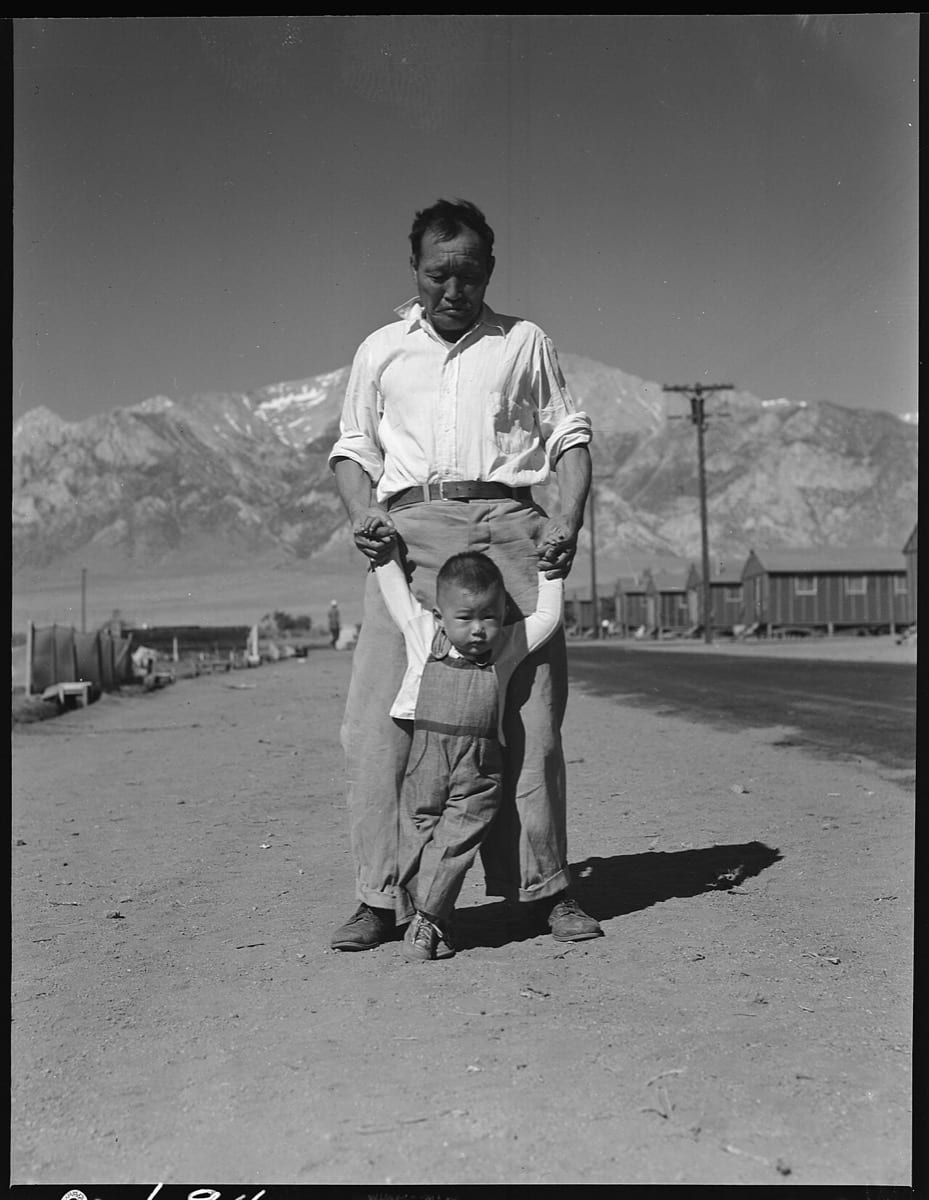
Legacy is the ripple effect of your life, the cumulative impact of your choices on people and places that outlast you. It is not a future monument. It is the daily construction of character, values modeled in action, and small acts of service that compound into what people remember long after you are gone.
You are building your legacy right now.
Not someday. Not when you are older. Not when you are more successful.
Now. In this moment. With this decision. With this action.
Legacy is not a future project. It is a present construction.
Chapter IHow do I create a legacy that outlasts me?
You create a legacy that outlasts you by focusing on the ripple effect of your ordinary days, not your extraordinary ones. Erik Erikson named this life task "generativity" in his 1950 theory of psychosocial development, which he identified as the primary developmental work of mid-adulthood. Erikson argued that adults either spend their 40s through 60s investing in the next generation, or stagnate from the lack of that investment.
The question is not whether you will leave a mark. You will. The question is whether the mark you leave is the one you intended. Daily choices compound. Character under pressure gets remembered. Small acts of service get inherited by the people who watched you make them.
Start by identifying one person whose life you can improve this week — not with a grand gesture, with a small specific act. Repeat that a thousand times. That is legacy. (Related: The Measure of a Person.)
Chapter IIWhy does character matter more than achievement?
Character matters more than achievement because achievements fade and character compounds. The championship is forgotten within a decade. The person who did the quiet right thing when no one was watching is remembered across generations. That gap is not small.
Dan McAdams's research at Northwestern on highly generative adults, published in Psychological Science in 2015, found a consistent pattern across life narratives: generative adults construct stories around redemption sequences, where setbacks become service. Their legacy is not what they accumulated. It is who they became through the hard moments. Seneca captured the other half of this in On the Shortness of Life: "It is not that we have a short time to live, but that we waste a lot of it." Most of that waste is chasing outcomes that will not survive you.
Character building is the underlying work of any real legacy. Without it, achievements are just objects people inherit and forget. With it, ordinary lives become the ones younger people try to live up to. (Related: Your Word Is Your Bond.)

Chapter IIIWhat should I do today to leave a lasting mark?
Leave a lasting mark today by doing one specific thing a specific person will remember. Not many things. One. Write the letter. Have the conversation. Teach the skill. Show up for the hard moment. Small ripple effects cross decades when the person on the receiving end needed exactly what you offered.
The power is in the specificity. A vague aspiration like "be remembered as kind" is a wish. A specific action like "called grandma Sunday, asked her to tell the story about her mother" is a legacy unit. Stack enough of those units and you are no longer trying to build a legacy. You are already inside one.
Consistency beats intensity here as everywhere. One profound gesture per decade is forgotten. A small specific act of care per week is remembered forever. (Related: Consistency Is the Key.)
Chapter IVIs legacy only for famous people?
Legacy is not only for the famous. The belief that it is was invented by people who wanted you to confuse scale with significance. Your personal legacy is the concrete imprint your life leaves on the specific people you touched. A parent, a mentor, a friend, a teacher, a neighbor who showed up.
The research on generativity makes this clear. Erikson and McAdams both found that the psychological markers of a generative life appear in ordinary people who invested in their families, communities, and work. Nobody tracks the number of statues. They track whether your children still call, whether your students still quote you, whether your neighbors still tell the story.
Your circle is smaller than a celebrity's. That is a feature, not a bug. Depth compounds where breadth dissipates. One person you shaped carefully will do more for the world than a thousand people you inspired casually. (Related: Why You Are Here.)
Chapter VHow do I stop postponing my legacy to someday?
You stop postponing your legacy by doing the first unit today. Not tomorrow. Not when the kids are grown. Not after the promotion. The "someday" problem is not time. It is the conviction that the real work starts later, and anything you do now is practice. That conviction is wrong. The practice is the legacy.
Pick one action within the next 24 hours that someone specific will remember. Do it. Then repeat that pattern weekly for a year. At the end of the year, you will not have built a monument. You will have built a life with a lasting impact baked into its shape, which is the only kind of legacy that actually survives you.
The alternative is waiting. Waiting is how most people spend their ordinary years, and ordinary years are the only years there are.
Chapter VIBeing THE ONE
THE ONE builds legacy daily.
Not through monuments. Through moments.
THE ONE understands that character, practiced in ordinary weeks, compounds into the only memorial people actually keep. The kind nobody has to inherit, because it is already woven into who they became because of you.
THE ONE does not wait for fame, for success, for permission. The work begins now. The legacy begins now.
You are building it with this hour. With this choice. With this action.
Make it worth remembering.
Be the one whose ripple effect reaches further than they ever saw.
Chapter VIISources
- Erikson, E. H. (1950). Childhood and Society. W. W. Norton. The generativity versus stagnation framework — the primary developmental task of mid-adulthood. https://wwnorton.com/books/Childhood-and-Society/
- McAdams, D. P., & Guo, J. (2015). "Narrating the Generative Life." Psychological Science, 26(4), 475-483. https://pubmed.ncbi.nlm.nih.gov/25749704/
- Seneca, L. A. De Brevitate Vitae (On the Shortness of Life). Direct quote: "It is not that we have a short time to live, but that we waste a lot of it." https://en.wikisource.org/wiki/On_the_Shortness_of_Life
- Peterson, C., & Seligman, M. E. P. (2004). Character Strengths and Virtues: A Handbook and Classification. Oxford University Press / American Psychological Association. https://psycnet.apa.org/record/2004-14724-000
---
Ready to put this into practice? Check your identity alignment and see where you actually stand.