Identity
Legacy Is Daily
Legacy is daily. Not a grand moment at the end of a life. A thousand small moments, compounded. Research on generativity, character, and identity-based habits shows what endures is not the achievements but the consistent self behind them. You do not write your eulogy. The people you touched daily do.

In this article
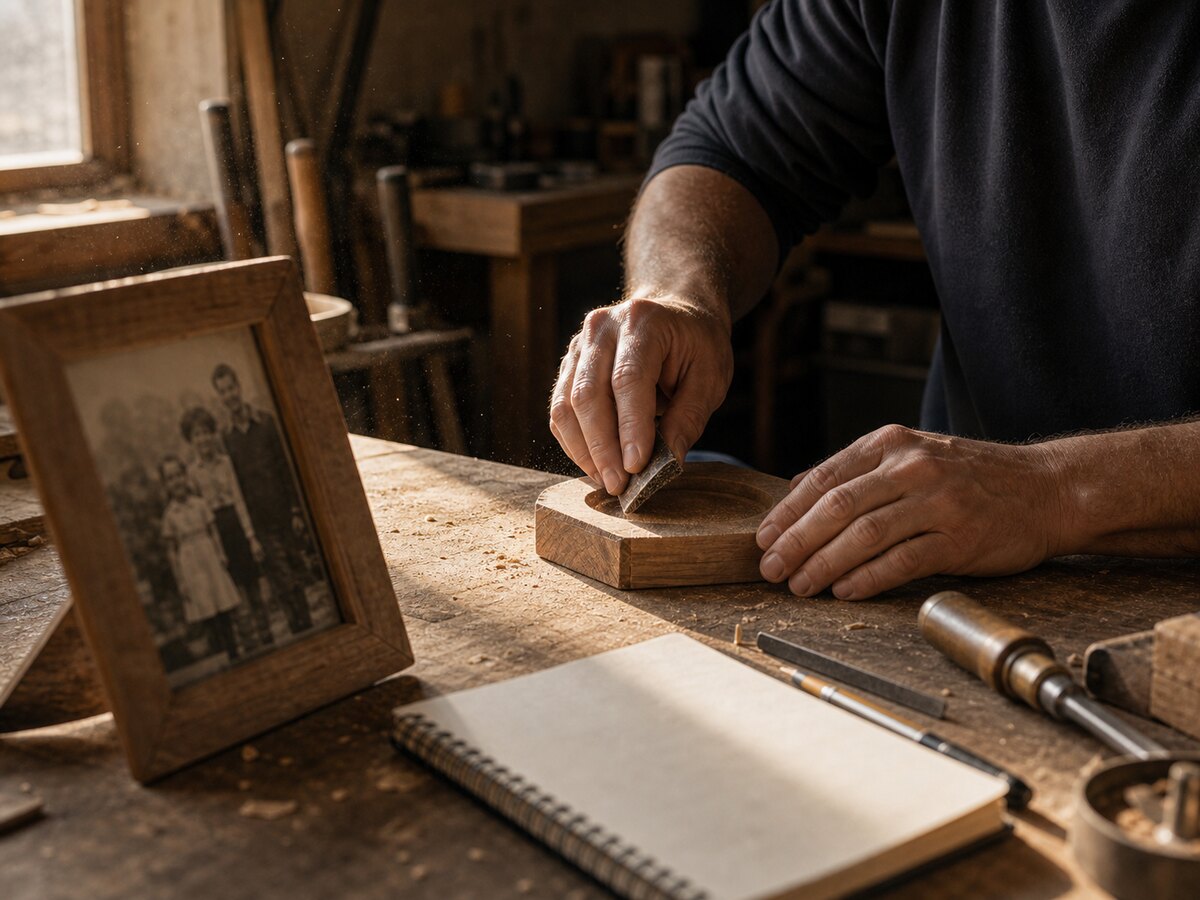
Legacy is daily is the practice of treating every small moment as the raw material of what will be remembered. Research on generativity, character habits, and identity-based behavior shows what endures is the consistent self behind the achievements, not the achievements themselves. You do not write your eulogy. The people you touched every day do, and they write from the Wednesday afternoon version of you.
Most people think about legacy wrong.
They imagine a statue. A building with their name on it. A eulogy full of accomplishments. Some grand moment where everything adds up. That is a movie, not a life. Legacy is a thousand small moments every single day. How you show up when nobody is watching. How you keep your word when breaking it would be easier.
What does the research say about what actually gets remembered?
Generativity research points away from achievements and toward character. Erik Erikson's 1950 theory of psychosocial development, synthesized in Childhood and Society, identified generativity (the concern for guiding the next generation through example and action) as the central developmental task of midlife and the strongest predictor of what survives the person. Legacy is daily because generativity is daily.
The research is specific. People remembered for decades after their death are remembered primarily for how they made others feel, for the consistency of their character, for the way they showed up in small moments. Not for their resumes. Anne Colby and William Damon's Some Do Care (1992) studied moral exemplars and found that the defining trait was not dramatic heroism but daily integrity, sustained across years, across thousands of unremarkable decisions.
The practical implication is that the grand ending people imagine does not materialize for anyone. The endings are made of all the days that preceded them. The daily legacy accumulates or it does not. By the time the ending arrives, the legacy is already written. The final moment just reveals what was quietly built across decades. The same timeline runs backward through what your ancestors endured and passed forward. (Related: The Measure of a Person.)
How does integrity compound like interest over time?
Integrity compounds the same way financial interest does. Every time you keep your word, you deposit into an account. Every time you show up when you said you would, another deposit. Every time you do the right thing when the wrong thing was easier, another deposit. Over time, the account builds into something money cannot buy: trust, reputation, respect.
The reverse mechanism is just as real. Every broken promise is a withdrawal. Every mismatch between word and action is a withdrawal. Every corner cut when nobody was watching is a withdrawal. Withdrawals compound as fast as deposits. The integrity account of someone who makes small daily withdrawals empties faster than they realize, and the rebuild is often impossible.
Research on trust in organizational behavior, including work by Roderick Kramer at Stanford's Graduate School of Business, consistently finds that trust takes years to build and can be destroyed in a single violation. This is integrity compounding in reverse. The math is asymmetric. Deposits are small and continuous. Withdrawals can be large and sudden. This is why daily legacy matters more than the occasional big gesture. The gesture can be wiped out by a single betrayal. The daily pattern survives because it is structural. (Related: Your Word Is Your Bond.)
What is the Wednesday afternoon version of you?
The Wednesday afternoon version is the self that exists when cameras are off and the audience is gone. How you behave in traffic. How you talk about people behind their backs. How you handle the receipt when you got undercharged. That version is the real you, and that version is what gets remembered. Legacy is daily because that version shows up daily.
James Clear's Atomic Habits (2018) documented that identity forms through accumulated evidence, not through announced intentions. What you do repeatedly, especially when no one is watching, becomes who you are. "Every action you take is a vote for the type of person you wish to become." The Wednesday afternoon votes count as much as the Sunday morning ones, often more, because they are unguarded and therefore honest.
The practical implication is that daily character habits are not incidental. They are the foundation. The person you practice being when nothing requires the performance is the person you actually are. Legacy is built in these moments because these moments are the only ones that reveal character rather than performance. Everyone else's impression of you, compounded across years, is drawn from these unguarded moments. (Related: Silence Is a Weapon.)
Why do wealth and legacy often not correlate?
Wealth and legacy often do not correlate because wealth tracks external outcomes while legacy tracks internal consistency. Jim Collins's Good to Great (2001) found that leaders who built companies that lasted had disproportionate "Level 5 leadership," a combination of humility and professional will. The trait is not correlated with net worth. Legacy is daily, while wealth is transactional.
This is why the wealthiest person in a room often has the shallowest legacy, and the modest person sometimes has the deepest. The legacy was built through character, which was exercised daily across decades. Whether or not the person also accumulated wealth was a separate variable. Some did. Some did not. The legacy did not depend on which category they ended up in.
The extreme cases are visible. Wealthy individuals whose children do not call. Modest individuals whose communities turn out for them at the end. The external optics reversed. The internal accounts matched the output exactly. The daily deposits or withdrawals, compounded across decades, produced the lived outcomes that wealth alone could not purchase. (Related: The Weight of Potential.)
How do I build a daily legacy intentionally?
Build daily legacy intentionally by asking three questions regularly. "Am I building or borrowing? Depositing or withdrawing? Same in private as in public?" The questions are uncomfortable, which is a sign they are working. Comfort does not produce legacy. Deliberate integrity compounding does, and daily practice is the only route.
The specific moves are small and repeated. Keep the promise even when breaking it would be invisible. Tell the truth when the lie would be easier. Show up for people who cannot repay you. Handle small stakes with the same care as large ones. Each of these is a vote for the person you are becoming. The votes accumulate. The accumulation becomes the self. The self becomes the legacy.
The practical protocol is to pick one character habit per quarter and practice it until it becomes automatic. Radical honesty. Perfect follow-through. Generous listening. Unconditional presence with the people who matter. Each habit installed through 60 to 90 days of deliberate practice compounds with the others over years, producing a person whose daily presence is the legacy they leave behind. (Related: Identity-Based Discipline.)
Being THE ONE
THE ONE knows legacy is daily.
Does not wait for grand moments. Builds the thousand small ones. Shows up when nobody is watching because that is the version of them that gets remembered.
THE ONE compounds integrity. Keeps the small promises. Makes the small deposits daily. Refuses the easy withdrawals that would compromise the account.
THE ONE asks the hard questions regularly. Building or borrowing? Depositing or withdrawing? Same in private as in public? Uses the discomfort as the signal that the practice is working.
Your kids are watching you.
Not when you give the speech. When you lose your temper in the kitchen.
Not when you celebrate the win. When you handle the loss.
Not when you perform your values. When you live them on a random Wednesday afternoon.
That is the legacy. The Wednesday afternoon version of you.
Build that version with care. Build it daily. Build it in the small moments that feel like they do not matter.
Because they are the only ones that do.
You do not get to write your eulogy.
The people you touched every day write it for you.
Be the one who made sure what they wrote was true.
Sources
- Erikson, E. H. (1950). Childhood and Society. W. W. Norton. Foundational work on generativity and life-stage development. https://wwnorton.com/books/Childhood-and-Society/
- Colby, A., & Damon, W. (1992). Some Do Care: Contemporary Lives of Moral Commitment. Free Press. Research on moral exemplars. https://www.simonandschuster.com/books/Some-Do-Care/Anne-Colby/9780743237888
- Clear, J. (2018). Atomic Habits: Tiny Changes, Remarkable Results. Avery. On identity-based habits and accumulated evidence. https://jamesclear.com/atomic-habits
- Collins, J. (2001). Good to Great: Why Some Companies Make the Leap and Others Don't. HarperBusiness. On Level 5 leadership and lasting impact. https://www.jimcollins.com/books.html#good-to-great
Ready to put this into practice? Check your identity alignment and see where you actually stand.