Daily practice
The Breath Is The Bridge
The breath can serve as a metaphorical bridge for pausing and noticing your state. Gentle breathing may support stress management, but it is not a guaranteed nervous system reset. Learn a comfortable optional practice and what the research does and does not show.

In this article
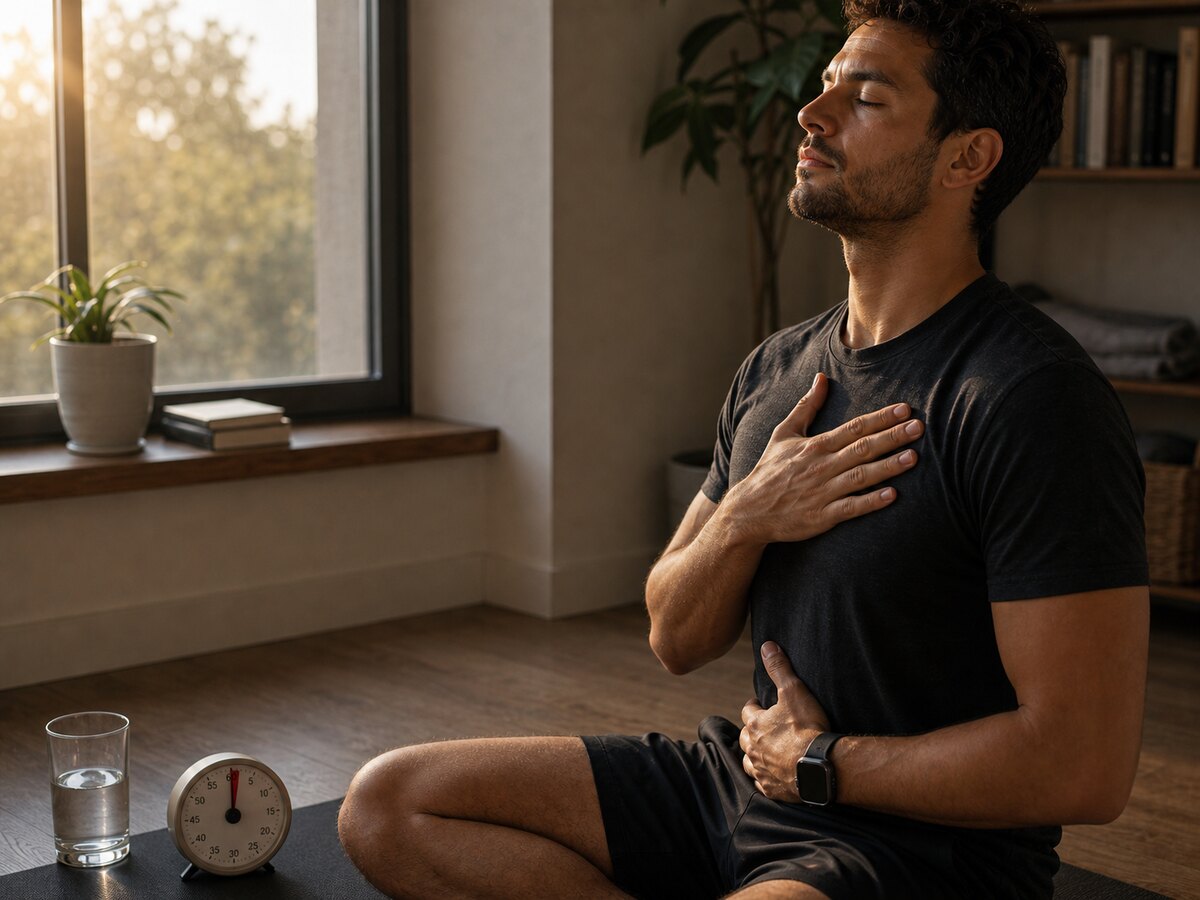
“The breath is the bridge” is a metaphor for using a familiar bodily process to pause and notice your state. Gentle breathing can support stress management for some people. It is not an on-demand nervous system reset, and no pattern guarantees calm in ninety seconds. Comfort, context and permission to stop matter.
A tense meeting. A message you want to answer immediately. An argument that is moving faster than you can think.
Breathing is one possible place to put your attention before choosing what to do. It is not the only one. Leaving the room, asking for time, getting support or addressing the source of pressure may matter more. The autonomic nervous system is not a two-position switch that makes you either irrational or in control.
What does vagus nerve research say about slow breathing?
Breathing, heart rhythms and autonomic activity interact. Slow breathing can change heart rate variability, but a change in that measure is not a direct score of safety, emotional control or clinical recovery. Stephen Porges's polyvagal theory offers a framework for thinking about regulation; it does not establish every practical claim made about breathwork.
Gerritsen and Band's 2018 paper proposes a respiratory vagal stimulation model for contemplative practices. It is a synthesis and theoretical model, not a trial proving that six breaths per minute maximizes vagal tone for everyone or restores the prefrontal cortex in ninety seconds. Breathing rate and the balance of inhalation and exhalation are research variables, not a universal control panel.
Zaccaro and colleagues' 2018 review included 15 articles on slow breathing. It described physiological and psychological patterns but also substantial differences in methods, participants and outcomes that prevented statistical pooling. The authors called for stronger long-term studies and attention to adverse effects. That supports investigating breathing practices, not declaring every protocol validated for every person.
In practical terms, gentle pacing may help you notice a pause. It does not guarantee lower cortisol or immediate clarity. The original article's ninety-second switch, maximum-vagal-tone and inevitable brain-recovery claims exceeded the evidence and have been removed. (Related: Breathe Before You React.)
What is a comfortable breathing practice to try?
Choose a safe place to sit with support. Allow breathing to stay comfortable rather than deliberately taking the deepest possible breath. Try a gentle breath in and a gentle breath out. If counting helps, count at an easy pace; shorten or drop the count whenever it creates strain. You do not need to hold your breath.
The NHS describes a simple practice with gentle inhalation and exhalation, optional counting up to five, and no forcing. It suggests regular practice for several minutes. Start with what is manageable, and stop if you become dizzy, breathless or more distressed. A longer exhale is an option if comfortable, not a requirement or a guaranteed reset.
Named patterns differ. Box breathing uses equal phases of inhalation, holding, exhalation and holding. The 4-7-8 pattern includes a longer hold and exhale. Coherent breathing often aims for a slower, even rhythm. These are not interchangeable, and their breath holds are unnecessary for the gentle practice here. The previous explanation invoking the Bezold-Jarisch reflex to justify a hold was unsupported and has been removed. See the broader breathwork guide for context.
Balban and colleagues' 2023 trial compared five-minute daily breathing practices with mindfulness meditation over about a month. All groups reported improvements in anxiety or mood; cyclic sighing, which emphasized exhalation, showed the greatest daily increase in positive affect. The finding was not that sighing uniquely or instantly treated anxiety disorders. It does not promise the same response for every person. (Related: You Are Not Your Thoughts.)
The existing video provides Andrew Huberman's explanation of breathing techniques. It is an English-language educational video, not an individualized exercise prescription. Use the comfortable option above and stop if a technique causes discomfort; you do not need to copy every demonstration.
How can a morning practice build familiarity?
A short practice at an ordinary time can make the steps more familiar. You might sit after waking or before breakfast and notice a few comfortable breaths. If that helps, try a few minutes. Morning is one possible anchor, not the only effective time, and you do not need a perfect streak.
Regular practice is a way to explore what fits you. It does not train a guaranteed parasympathetic response on demand. An occasional pause may still be useful without months of preparation, and a practiced technique can still feel unhelpful during intense stress. That is information about the moment, not evidence that you failed.
The previous ninety-day minimum and promise of an automatic calm response were not established by the cited studies. Choose a review point instead: after a week or two, ask whether the routine was comfortable, useful and easy enough to keep. Adjust the duration or use a different grounding activity. (Related: Own Your Morning.)
Why might a pause under pressure matter?
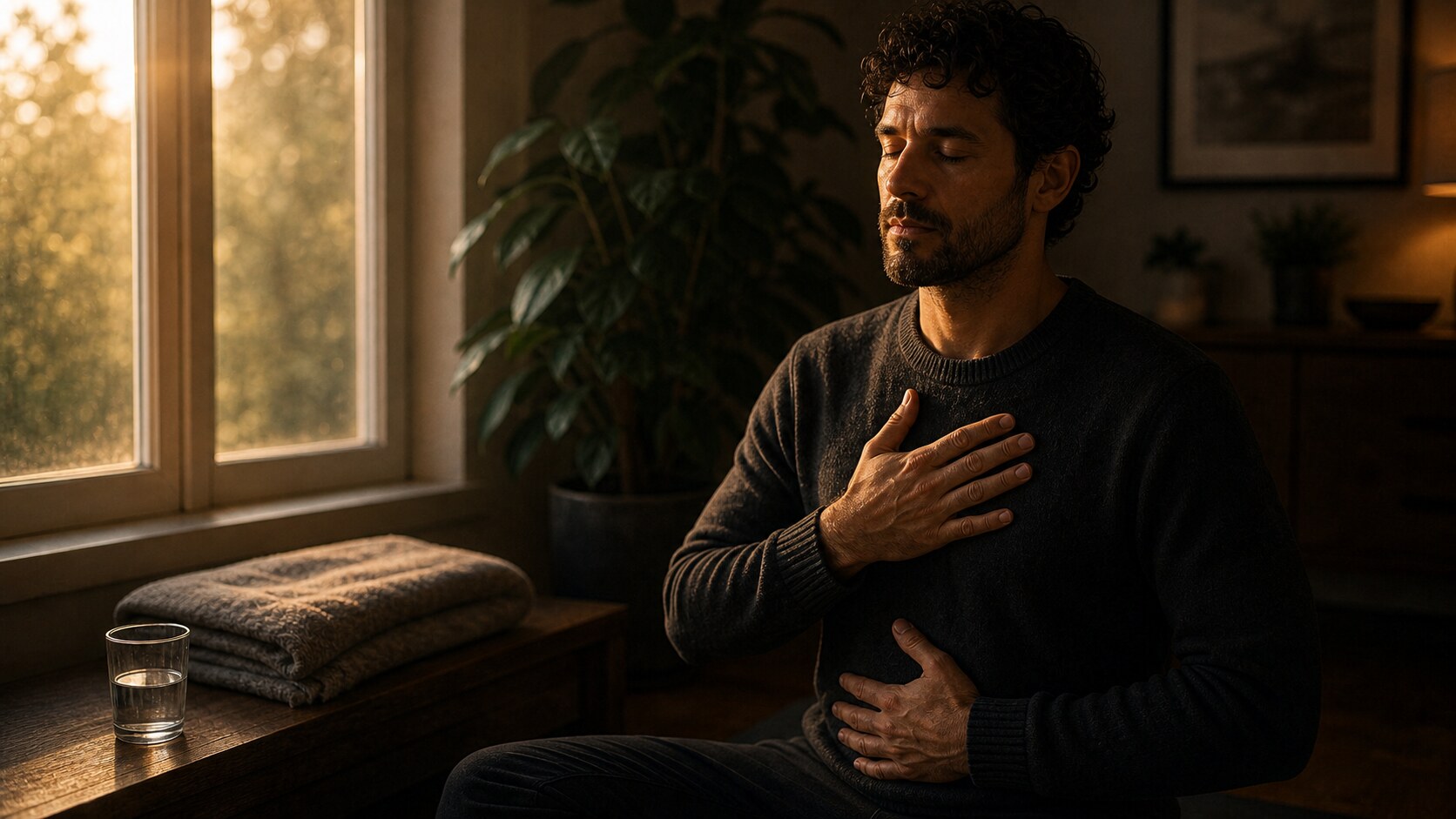
The meeting, message or argument can be a moment when a small pause changes what you say next. There is no evidence here that 95 percent of important decisions happen under pressure. The value is more concrete: a pause can give you time to notice an impulse and choose a question, boundary or delay.
Try a simple sequence: notice that you want to react, let one comfortable breath happen, then ask what the situation needs. You might say, “I need a moment,” or ask to return to the discussion later. Slower breathing does not create a measurable gap that automatically produces better decisions. It is one possible cue for taking time.
The familiar “space between stimulus and response” idea is useful as a metaphor. The earlier attribution to Viktor Frankl was not verified here, and the phrase should not be presented as a neuroscience finding. A person can need distance or practical protection rather than a breathing exercise. (Related: What Your Triggers Tell You.)
How do I make breathing check-ins useful in daily life?
Choose one ordinary cue, such as finishing a meeting, rather than monitoring yourself constantly. Ask: “Am I tense? How is my breathing? What do I need next?” If gentle pacing helps, take a brief pause. If it makes you more preoccupied or anxious, look around the room, move or return to normal breathing.
Tense shoulders or a shallow breath do not diagnose chronic sympathetic activation or explain every health problem. Fatigue, pain, posture, activity and illness can affect how you feel and breathe. New or severe breathing difficulty deserves medical attention rather than a self-guided reset. Persistent stress may need changes to circumstances and professional support.
You do not need hundreds of resets or a reminder every two hours. The aim is a useful choice at a useful moment, alongside sleep, relationships and workable demands. The breath is the bridge when that metaphor helps you; it is not a test of self-mastery. (Related: Pain Is Information.)
Frequently Asked Questions
What is pranayama, and is it the same as every breathing exercise?
Pranayama names breathing practices within yogic traditions. These include varied aims and methods; not every technique is a calming exercise. Brown and Gerbarg's review discusses yoga breathing and possible mechanisms. It was published in 2009, not 2013 as the previous German citation stated. Tradition and physiological research offer different kinds of context, neither a universal medical promise.
How is the Wim Hof Method different from gentle breathing?
The method combines intensive breathing, breath retention, cold exposure and training. Kox and colleagues' 2014 experiment compared 12 trained healthy volunteers with 12 controls during an experimental endotoxin challenge. It found differences in stress and immune responses under those conditions. It did not establish treatment for illness or the safety of recommending the combined routine to everyone.
This article does not prescribe hyperventilation or cold exposure. Never perform intensive breathing or breath holds in water, while driving or anywhere loss of consciousness could cause injury. These methods are not a substitute for medical care.
How quickly should a breathing practice work?
There is no universal one-minute, ninety-second or multiweek deadline. Notice comfort and your own response rather than chasing a physiological target. If nothing changes, you have not failed. A breathing practice is one optional support, not a promise to eliminate stress.
What is a suitable starting point, and when should I stop?
The gentle practice above avoids breath holds and forced depth. Stop if it causes dizziness, air hunger or worsening panic. If you are pregnant, have a relevant medical condition or are unsure about a technique, ask a qualified clinician before intensive breathwork. Serious or unfamiliar symptoms should be assessed rather than breathed through.
Being THE ONE
THE ONE uses the breath as an option, not an obligation.
Practices gently when it helps. Chooses a pause, a boundary or support when that is what the situation needs.
THE ONE does not turn calm into proof of character or distress into failure. The person who struggles under pressure deserves care, not an accusation that the bridge was never built.
Begin with a comfortable moment if you want to try. Keep what helps. Stop or change what does not.
The breath is the bridge as a reminder to notice your state and choose a next step. It is not a reset button that always works.
Be the one who responds with attention, patience and realistic support.
Sources
- NHS. Breathing exercises for stress. Gentle, comfortable breathing with optional counting. Guidance.
- Porges, S. W. (2011). The Polyvagal Theory. W. W. Norton. Theoretical framework; not proof of a universal reset protocol. Publisher.
- Gerritsen, R. J. S., & Band, G. P. H. (2018). Breath of Life: The Respiratory Vagal Stimulation Model of Contemplative Activity. Frontiers in Human Neuroscience, 12, 397. Paper.
- Zaccaro, A., et al. (2018). How Breath-Control Can Change Your Life: A Systematic Review on Psycho-Physiological Correlates of Slow Breathing. Frontiers in Human Neuroscience, 12, 353. Heterogeneous evidence and methodological limits. Review.
- Balban, M. Y., et al. (2023). Brief structured respiration practices enhance mood and reduce physiological arousal. Cell Reports Medicine, 4(1), 100895. Trial.
- Stanford Medicine. (2023). Cyclic sighing can help breathe away anxiety. Trial team's account distinguishing mood and anxiety findings. Research account.
- Brown, R. P., & Gerbarg, P. L. (2009). Yoga breathing, meditation, and longevity. Annals of the New York Academy of Sciences, 1172, 54–62. Review.
- Kox, M., et al. (2014). Voluntary activation of the sympathetic nervous system and attenuation of the innate immune response in humans. Small controlled study in healthy volunteers. Study.
- Wim Hof Method. Frequently Asked Questions. Provider's safety information; not independent efficacy evidence. Safety information.
Ready to try it? Begin a short breathing practice with simple steps and an optional timer.