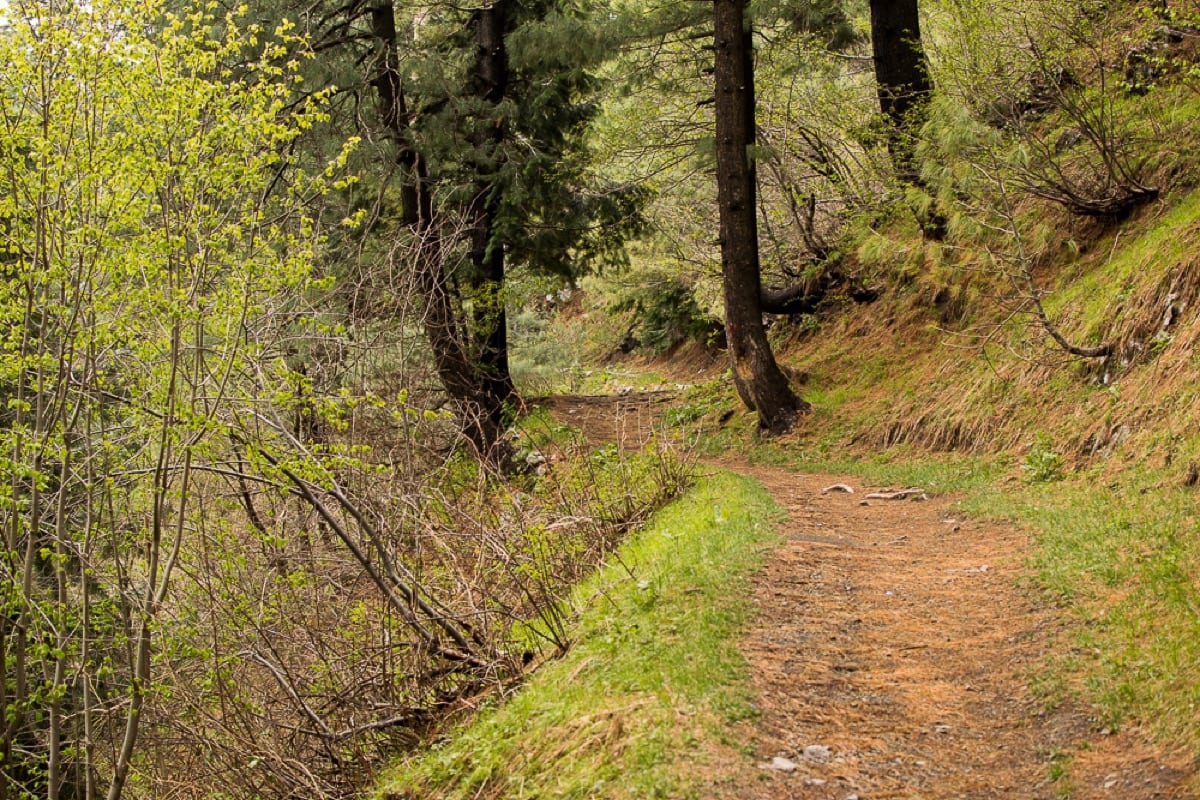
Walking alone is the conscious choice to move toward something meaningful without waiting for company or consensus. It is solitude with direction, not isolation. Some paths cannot be walked with a crowd. Research on purposeful solitude shows it builds creativity, self-trust, and clarity that group pressure can never produce. The courage to separate is the price of going somewhere different.
Not everyone can walk with you.
Some people will not understand where you are going. Some will not want you to get there. Some will simply be unable to keep up. At some point, the choice appears: slow down for the crowd or move alone toward where you need to be.
Chapter IWhy is walking alone sometimes necessary?
Separating from the group is sometimes necessary because the crowd optimizes for consensus, not outcomes. If your path does not match theirs, walking with them means compromising yours. Solomon Asch's classic 1956 conformity studies found that roughly 75 percent of participants conformed to an obviously wrong group answer at least once, purely because the group agreed.
The crowd does not go to exceptional places. Exceptional places require exceptional choices, and exceptional choices usually look wrong to most observers. If you wait for the group to validate your direction, you will go where the group goes. If you want to go further, at some point you walk ahead of them.
This is not about superiority. The paths are different. The courage is in admitting the paths are different and accepting the aloneness that admission creates. (Related: The Silent Hours.)
Chapter IIWhat does the research on purposeful solitude actually show?
Research on purposeful solitude shows it produces benefits that social time cannot replicate. Christopher Long and James Averill's 2003 paper in the Journal for the Theory of Social Behaviour, "Solitude: An Exploration of Benefits of Being Alone," documented four benefits: freedom, creativity, intimacy with self, and spiritual development. All four require absence of social performance to occur.
Thuy-vy Nguyen, Richard Ryan, and Edward Deci's 2018 paper in Personality and Social Psychology Bulletin, "Solitude as an Approach to Affective Self-Regulation," found that chosen solitude produced measurable drops in high-arousal negative states and helped restore emotional equilibrium. The critical variable was choice. Imposed isolation damages. Chosen solitude restores.
The distinction matters practically. Loneliness is suffering from being alone. Solitude is benefiting from being alone. The circumstances can look identical from outside while producing opposite effects from inside, depending entirely on whether the aloneness was chosen or inflicted. (Related: The Stillness Practice.)
Chapter IIIWhy does separating from the group take so much courage?
Separating from the group takes courage because humans are wired for belonging. John Cacioppo and William Patrick's Loneliness (2008) documented that perceived social exclusion activates the same neural circuits as physical pain. The brain treats being left by the tribe as a genuine threat, which is why walking a different path produces real, not imagined, discomfort.
The ancestral logic is clear. For most of human history, tribe meant safety and exclusion meant death. The nervous system still runs that old programming even though modern aloneness rarely threatens survival. The primal discomfort is not a sign you are wrong. It is a sign you are breaking with an ancient pattern the body has not updated yet.
The courage to separate is the willingness to feel that discomfort without obeying it. You can acknowledge the pain of leaving the tribe while still choosing the direction the tribe will not follow. Both things are true at once. The discomfort does not disappear. It just stops being decisive. (Related: What Others Think.)
Chapter IVWhat does walking alone build that the crowd cannot?
Chosen solitude builds self-trust that group validation cannot produce. Every time you hold your direction without external agreement, the evidence accumulates that you can rely on yourself. Albert Bandura's research on self-efficacy documented that mastery experiences, especially those faced without a safety net, produce the most durable forms of self-confidence.
The other thing it builds is clarity. Without the constant noise of others' opinions, you can hear your own. The paper cited earlier by Nguyen, Ryan, and Deci found that time in solitude improved participants' ability to identify what they actually wanted, as distinct from what the social environment was suggesting they want. The signal gets stronger when the social static drops.
Chosen separation also forces skill-building that the crowd never requires. When no one is there to carry you, you carry yourself. The capacity you develop across a year of walking alone is the capacity you would never have developed inside a supportive group. The solitude produces the competence. (Related: Stop Waiting for Permission.)
Chapter VHow long does walking alone actually last?
This phase rarely lasts forever. Your people exist. They are further down the path you are on, moving at roughly your pace. This is the phase between leaving the wrong crowd and arriving at the right one, where growth and loneliness overlap most sharply. The phase is usually months to years, not decades.
The right people announce themselves through alignment. They are not attracted to your company because you are fun. They are attracted to your direction because it matches theirs. When you find them, the quality of companionship is different from anything the original crowd offered, because it is rooted in shared trajectory, not shared comfort.
Until you find them, the solitude is the training ground. The period of chosen aloneness is what makes you recognizable to the right people when they appear. Without that training, the future connections do not form, because you would still be the person the old crowd shaped. Walk alone long enough to become someone the right people can find. (Related: Who You Spend Time With.)
Chapter VIBeing THE ONE
THE ONE walks alone when necessary.
Does not wait for company to start the journey. Does not slow down for people who chose not to keep up. Does not abandon the path because no one else is on it.
THE ONE knows the difference between loneliness and solitude. Between suffering from being alone and benefiting from being alone. Between isolation and direction.
THE ONE walks alone long enough to become someone the right people can recognize when they appear.
Not everyone will understand your path.
Not everyone will support your journey.
Some will leave. Some will criticize. Some will try to pull you back.
Let them.
Your path is yours. Walk it with others when you can. Walk it alone when you must.
The destination does not change based on who is walking with you.
Be the one who kept walking regardless.
Chapter VIISources
- Long, C. R., & Averill, J. R. (2003). "Solitude: An Exploration of Benefits of Being Alone." Journal for the Theory of Social Behaviour, 33(1), 21-44. Foundational paper on solitude benefits. https://onlinelibrary.wiley.com/doi/10.1111/1468-5914.00204
- Nguyen, T. T., Ryan, R. M., & Deci, E. L. (2018). "Solitude as an Approach to Affective Self-Regulation." Personality and Social Psychology Bulletin, 44(1), 92-106. On chosen solitude and emotional restoration. https://journals.sagepub.com/doi/10.1177/0146167217733073
- Cacioppo, J. T., & Patrick, W. (2008). Loneliness: Human Nature and the Need for Social Connection. W. W. Norton. On the neuroscience of social exclusion. https://wwnorton.com/books/Loneliness/
- Asch, S. E. (1956). "Studies of independence and conformity: A minority of one against a unanimous majority." Psychological Monographs: General and Applied, 70(9), 1-70. Classic conformity research. https://doi.org/10.1037/h0093718
---
Ready to put this into practice? Measure your identity shift and see where you actually stand.