Identity
Grounding: Return to the Present
Grounding is a deliberate return to what is real right now—your senses, your body, and the place beneath your feet. Learn a simple outdoor practice, what it can honestly offer, and where popular earthing claims run ahead of the evidence.

In this article
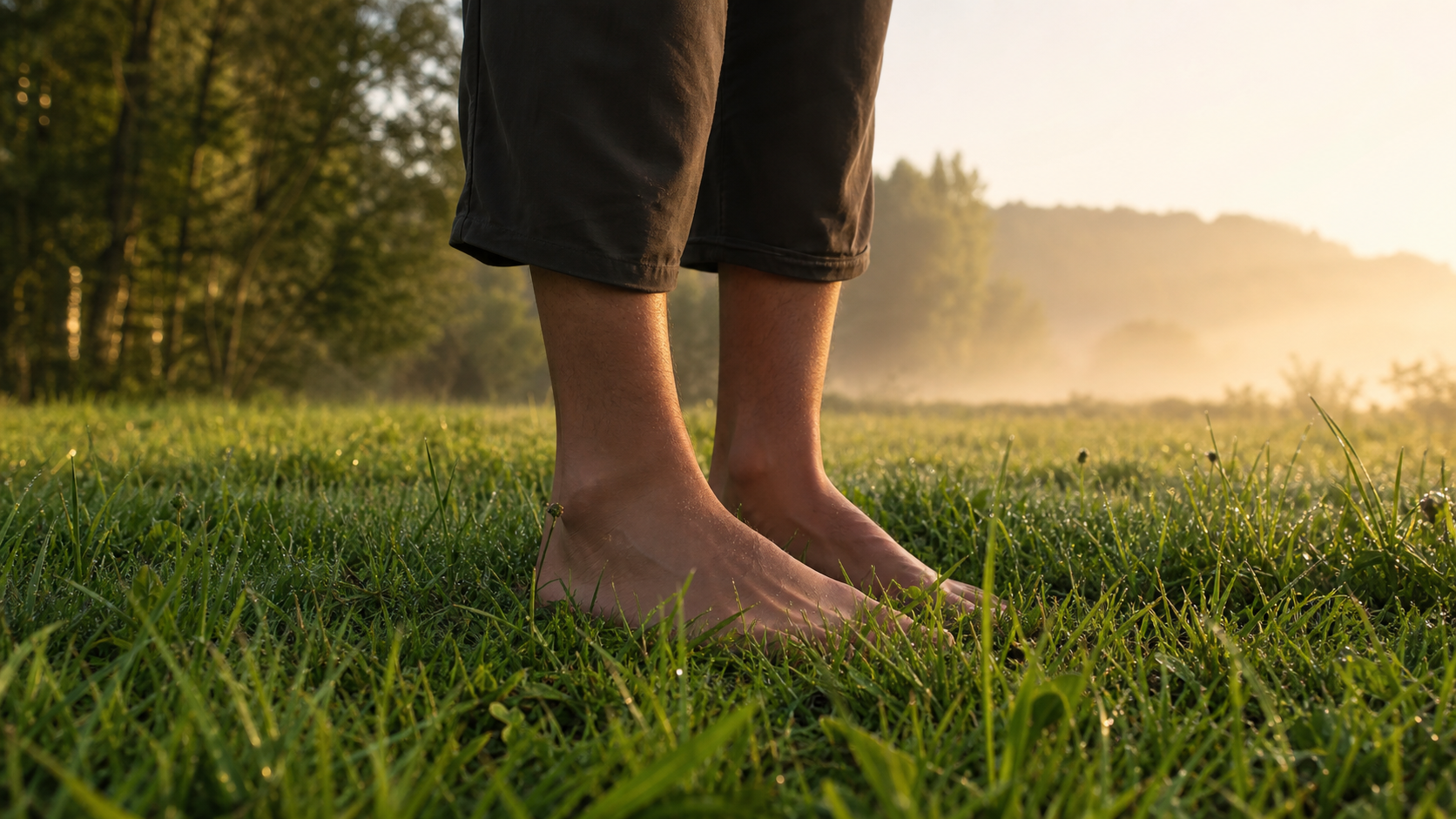
Grounding techniques bring attention back to direct experience: breath, pressure, temperature, sound, and the physical place beneath you. They do not erase a difficult situation or prove that the Earth changed your biology. They create enough space to see what is actually happening and choose one honest next action.
When your mind races, attention leaves the room. It moves into imagined futures, old conversations, and problems you cannot solve in this exact second. Grounding is the discipline of returning.
What does grounding actually mean?
Grounding usually describes two related but different practices. Sensory grounding uses sight, sound, touch, smell, and breath to reconnect with the present moment. Earthing is narrower: direct skin contact with grass, soil, sand, or another natural surface. Standing barefoot outdoors can include both, but the useful attention practice does not depend on being barefoot.
That distinction matters because the evidence is not equal. Sensory grounding is commonly taught as a coping skill for stress and anxiety. Earthing has been explored in small studies, but the research does not establish that contact with the ground treats inflammation, pain, high blood pressure, poor sleep, or disease. The honest reason to try it is simpler: it interrupts mental spin, gets you away from a screen, and gives attention something concrete to notice. Pair it with the breath practice when a longer exhale feels comfortable.
Why can a sensory grounding exercise help?
A sensory grounding exercise narrows a crowded field of attention. Instead of trying to defeat every thought, you identify what the nervous system can verify right now: the weight of your feet, the temperature of the air, a nearby sound, the shape of an object. That shift does not make the problem imaginary. It stops imagination from multiplying it.
The practical benefit is a pause between activation and response. A pause gives you a better chance of choosing a useful action instead of following the first impulse. It can also reconnect you with bodily signals that were buried under noise: fatigue, tension, hunger, or the need to leave an unsafe situation. Grounding should never be used to argue yourself out of a real threat. If danger is present, act on safety. For ordinary activation, the pause before you speak and name it to tame it offer complementary ways to recover choice.
How do you do the five-minute grounding practice?
Choose a safe place indoors or outside. Stand or sit; bare feet are optional. First, notice three points where your body meets the floor, chair, or ground. Then name five things you see, four things you feel, three things you hear, two things you smell, and one thing you taste or appreciate. Keep the observations plain. “Cool air on my hand” is more useful than a theory about what the sensation means.
Finish with five easy breaths, letting the exhale become slightly longer than the inhale without straining or holding. Ask one question: “What is one grounded action I can take next?” Then take it. The action might be sending a clear message, drinking water, returning to work, or asking for support. The goal is not forced calm. It is contact with reality. This is the same action-first principle behind the stillness practice and discipline as a skill.
Is earthing backed by science?
Earthing research is early and limited. A small 2004 pilot study reported changes in cortisol and self-reported sleep, pain, and stress during grounded sleep. Small exploratory studies can identify questions worth testing, but they cannot establish broad clinical benefits. Larger, independent, well-controlled trials are still needed before strong health claims are justified.
That does not make time outdoors worthless. It means the claim should match the evidence. Walking into a quiet green space, looking away from a phone, and attending to direct sensation can be worthwhile without promising a cure. The Cleveland Clinic makes the same practical distinction between earthing claims and present-moment grounding techniques. Enjoy bare grass if it is safe and pleasant. Keep the medical story modest. A practice can be meaningful without becoming medicine, just as active recovery can support a routine without replacing professional care.
How do you practice grounding safely?
Check outdoor surfaces for glass, sharp objects, extreme heat, ice, insects, and contamination. Keep shoes on if you have reduced foot sensation, an open wound, diabetes-related foot risk, or terrain you cannot inspect. If focusing inward increases distress, stop. Orient visually to the room, name objects and colors, contact someone you trust, or seek professional support.
Grounding is a wellbeing practice, not a substitute for medical or mental-health care. The present moment includes your limits and your need for help. Respecting those facts is more grounded than forcing yourself through discomfort because a wellness claim told you it should work. The practice ends where safety begins. Grounding techniques support present moment awareness only when they remain safe, voluntary, and honest about their limits.
Being THE ONE
THE ONE returns to what can be verified, then chooses the next appropriate action. Feet where they are. Breath as it is. One honest move from here. Grounding techniques are not an escape from reality. They are a disciplined return to it.