Daily practice
Start Before You Are Ready
Analysis paralysis is what you mistake for careful preparation. You will never feel ready. The people who actually build things start before they feel prepared and figure it out along the way.

In this article

Analysis paralysis is what your brain does when it cannot tell the difference between useful preparation and sophisticated stalling. You will never feel fully ready. The people who build things start before they are ready and figure it out along the way. Waiting for readiness is how most dreams die quietly.
You are not ready.
For the business. For the change. For the project. For the conversation. For the next level.
You are not ready. And you never will be. So start anyway.
How do I start when I don't feel ready?
You start when you don't feel ready by accepting that the feeling of readiness is not the thing you are waiting for, and shrinking the first action until it is smaller than the fear. Readiness is produced by doing, not by preparing. Every person you respect who has built something meaningful started before they felt prepared, and most of them still do not feel ready.
The concrete move is to decouple "start" from "finish." You are not trying to execute the whole plan today. You are trying to make one move, any move, that moves you from thinking-about to actually-doing. Apply to the program. Write the first sentence. Book the call. Put up the landing page. The first action creates a new state: a person who started. Everything downstream changes from that.
The enemy here is not fear. It is the disguised form of fear called "more preparation." Fear wearing the mask of diligence is the version most people never recognize. (Related: If You Really Want It.)
What is analysis paralysis and how do I break out of it?
Analysis paralysis is the state where the weight of possible options and possible outcomes overwhelms your ability to pick any one. The more possibilities you hold open, the less likely you are to commit to any of them. Break out by artificially narrowing the options, picking two instead of ten, this week instead of eventually.
Sheena Iyengar and Mark Lepper's 2000 jam study in the Journal of Personality and Social Psychology showed the mechanism at work. Shoppers at a display with 24 jam varieties were more likely to stop and browse than at a display with 6 varieties, but only 3 percent of the 24-variety shoppers bought anything, versus 30 percent at the smaller display. More options did not produce better choices. It produced no choice at all, which is analysis paralysis in one data point.
The constraint is the unlock. Deadlines, budgets, and pre-commitments are not the enemies of good decisions. They are the conditions that make decisions happen at all. (Related: Simplify Your Life.)
Why do I keep waiting to feel ready?
You keep waiting because "ready" is a feeling your nervous system will never reliably produce for anything that actually matters. Readiness is the body's confirmation that the action is safe and familiar. Anything worth doing is not yet familiar, which means the green-light feeling will not arrive in advance. Start before ready is not a catchphrase. It is the only available option.
Voltaire captured the trap in La Bégueule (1772), quoting an Italian proverb: "il meglio è l'inimico del bene," the perfect is the enemy of the good. Waiting for perfect readiness is the mechanism by which good enough never ships. It is cultural shorthand for a very specific pattern: high-functioning people procrastinating on their most important work while feeling responsible about it.
Replace "ready" with "committed." You do not need to feel ready. You need to be committed enough that the lack of readiness is no longer a veto. Decide what counts as "started," the specific smallest action, and do that today. Overcoming procrastination at this level is not a motivation problem. It is a definition problem. (Related: Finish What You Start.)
Is imposter syndrome ever useful?
Imposter syndrome is mildly useful as a signal that you are operating at the edge of your current competence, which is exactly where real growth happens. It is destructive when you interpret it as a verdict that you do not belong, and it is wildly common. The people you most admire have some version of it almost constantly, because they keep moving into rooms they are not quite ready for.
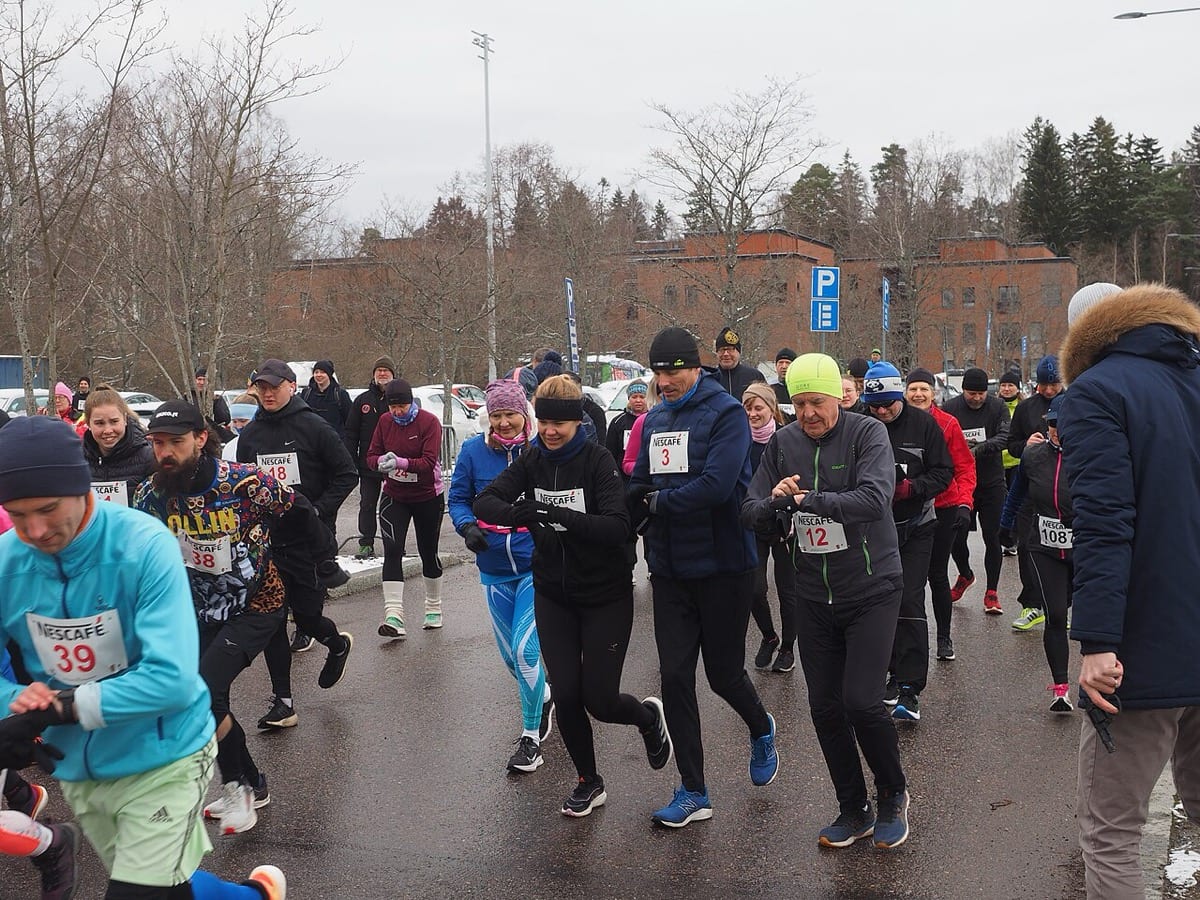
The reframe that works: the feeling is the price of being in a room you stretched yourself into. Its absence usually means you stopped stretching. If you want to grow, the feeling will be a recurring guest, not a passing visitor. The choice is not whether to feel it, it is whether to let the feeling end the sentence.
The practical move is to separate the information from the story. Information: you are doing something at the edge of your skill. Story: therefore you should not be here. The first is often true and useful. The second is almost always false and expensive. (Related: Fear Is a Compass.)
What's the smallest first step I can take today?
The smallest first step is whatever you can finish in the next 30 minutes without preparation. Not the whole project. Not the first milestone. The smallest unit that converts you from "someone thinking about X" into "someone who has already done one small part of X." That status change is the actual unlock. Everything else downstream of it is easier.
Concrete menu. Write one page, not the whole document. Make one call, not six. Ship one feature, not the full build. Book one meeting, not the schedule. Reach out to one person, not your entire network. Sign up for one class, not the four-year plan. The smallness is the point. Analysis paralysis dies the moment an action is small enough that it cannot be killed by planning.
Then do the same thing tomorrow. And the day after. Start before you are ready is a framework for the first move only. Staying in motion is a separate practice, but starting is the one that actually changes the trajectory, because the person you become after starting is not the same person who was waiting. (Related: Consistency Is the Key.)
Being THE ONE
THE ONE starts before they are ready.
Because they know there is no alternative state where "ready" is going to arrive cleanly delivered.
THE ONE treats readiness as a result of action, not a prerequisite. Uses analysis paralysis as the signal to shrink the first move, not as an excuse to keep studying.
THE ONE still feels imposter syndrome. Still feels unprepared. Still feels not-quite-good-enough.
And starts anyway.
You are not ready.
Start.
Be the one whose ambition does not die in the waiting room.
Sources
- Iyengar, S. S., & Lepper, M. R. (2000). "When Choice is Demotivating: Can One Desire Too Much of a Good Thing?" Journal of Personality and Social Psychology, 79(6), 995-1006. The jam-study foundational paper. https://faculty.washington.edu/jdb/345/345%20Articles/Iyengar%20&%20Lepper%20(2000).pdf
- Voltaire (1772). La Bégueule, quoting an Italian proverb: "il meglio è l'inimico del bene" (the perfect is the enemy of the good). https://en.wikipedia.org/wiki/Perfect_is_the_enemy_of_good
- Clance, P. R., & Imes, S. A. (1978). "The Impostor Phenomenon in High Achieving Women: Dynamics and Therapeutic Intervention." Psychotherapy: Theory, Research & Practice, 15(3), 241-247. The original imposter-syndrome research paper. https://psycnet.apa.org/doi/10.1037/h0086006
- Schwartz, B. (2004). The Paradox of Choice: Why More Is Less. Ecco / HarperCollins. The book-length treatment of choice overload. https://www.harpercollins.com/products/the-paradox-of-choice-barry-schwartz
Make room for the practice. Plan your weekly practice time and see how the sessions add up.