Mind & emotions
Fear Is A Compass
Fear does not show you what to avoid. It shows you what matters. When you learn to face your fears as direction rather than danger, the fear becomes a compass pointing at your growth.

In this article
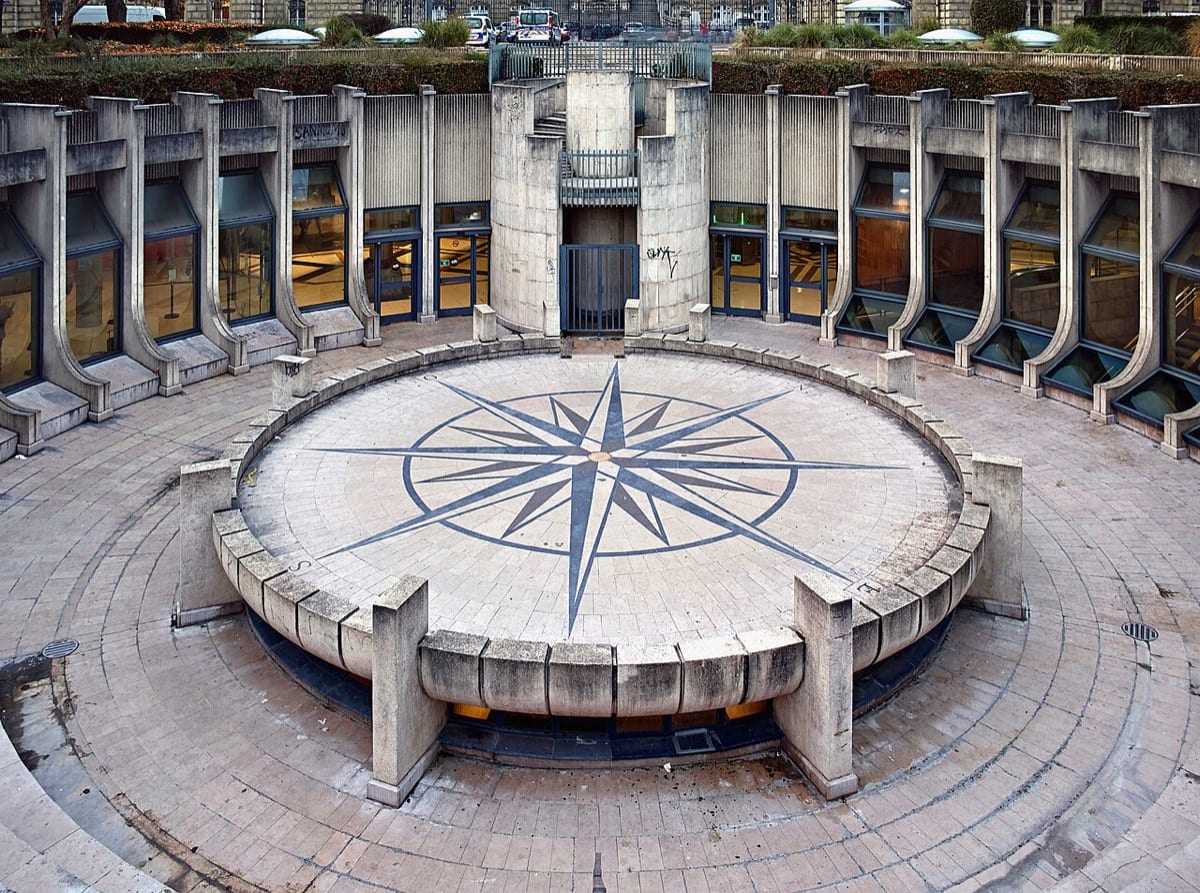
Fear does not show you what to avoid. It shows you what matters. When you learn to face your fears as direction rather than danger, the fear becomes a compass: the things that scare you most are usually the things that matter most, and avoiding them is avoiding the life you said you wanted.
Fear is not the enemy.
Most people treat fear like a stop sign. A signal to turn around. An instruction to retreat to safety.
But fear is not a stop sign. It is a compass. It points directly at the things that matter most.
How do I turn fear into a guide instead of a stop sign?
You turn fear into a guide by pausing when you feel it and asking what it is pointing at, rather than acting on the impulse to retreat. Fear as compass is the practice of reading the signal for significance rather than for danger. Fear does not appear randomly. It arrives in the presence of something that carries weight for you, which means the fear itself is data about what matters.
Face your fears not by overriding the feeling, but by decoding it. What is this fear about? What would happen if you moved toward it instead of away from it? What does the version of you in five years wish you had done here? The answer is almost never "retreated for safety reasons." The only useful response to a useful fear is to face your fears in manageable doses and let the evidence of survival accumulate.
Action taken in the direction of a fear rewrites the fear itself. Your nervous system learns through evidence, not through thought. Every approach that does not kill you reduces the fear's grip. Every avoidance strengthens it. You are always training one of the two, whether you notice or not. (Related: Breathe Before You React.)
What does it mean that fear points to what matters?
Fear points to what matters because you do not fear things that do not matter. Your nervous system is not burning calories on irrelevant outcomes. The fear of a difficult conversation means the conversation matters. The fear of a public attempt means public attempts carry real stakes for you. The fear of asking means the answer would actually change your life.

The avoidance map is the same as the growth map. Follow the fear and you find what you actually want. Follow the comfort and you find a smaller version of the same year, repeated. Most people never examine which map they have been using.
One practice: list the five things you have been avoiding for the past year. Do not edit the list. Do not judge it. Just write it. The things on that list are not random. They are the specific shape of the life you are not currently living. (Related: Stop Waiting for Permission.)
How do I build courage to face difficult conversations?
Build courage the way every other capacity is built: small reps, repeated until the action feels almost ordinary. Face your fears by starting with the conversation you are 20 percent afraid of, not the one you are 90 percent afraid of. Courage practice is like strength training. You do not start at the final weight. You start where you can lift, you add small increments, you keep showing up.
The research is clear on the mechanism. A 2011 BMC Psychiatry systematic review and meta-analysis of anxiety treatments found that exposure therapy, which is structured practice at approaching what you fear, produces large effect sizes across specific phobia, social anxiety, and panic disorder. In other words: approach, repeated in manageable doses, is the active ingredient. Avoidance does not shrink fear. Only contact with the feared thing shrinks it.
In practice: name the specific thing. Choose the smallest version of the approach you can actually do this week. Do it. Notice the fear was exactly as bad as you expected, or more often, less. Repeat. The next size up becomes available after three or four reps at the current size. (Related: Make Discomfort a Practice.)
What's the difference between fear that protects and fear that imprisons?
Fear that protects keeps you alive. Fear that imprisons keeps you small. The first is the signal that says "the bear is near, move." The second is the signal that says "people might notice, hide." Both feel similar from the inside. They are entirely different in function, and only one is the fear you are supposed to face.
Protective fear is specific, time-limited, and body-based. It spikes, causes action, then resolves. It is proportional to real danger. You respect it and move.
Imprisoning fear is vague, chronic, and story-based. It does not resolve, because there is no actual threat to resolve. You avoid, then avoid again, then build a life around the avoidance. The smaller your life gets, the more things become fearful, because the fear muscle atrophied from non-use. Overcoming avoidance means refusing to let imprisoning fear dictate where your life is allowed to go. (Related: Guard Your Peace.)
The test is simple. Is the feared thing actually going to harm you, or is it just going to be uncomfortable? If it is the second, the fear is imprisoning, and the right response is to move through it.
How do I take action when I'm paralyzed by fear?
Take action by shrinking the action until it is smaller than the fear. Paralysis happens when the gap between where you are and the next move feels impossibly large. Close the gap by making the next move absurdly small. Send one email. Make one call. Walk to the door. Say the first sentence. This is how you face your fears when the full approach is still out of reach.
Nelson Mandela, writing in Long Walk to Freedom after 27 years of imprisonment: "I learned that courage was not the absence of fear, but the triumph over it. The brave man is not he who does not feel afraid, but he who conquers that fear." The distinction matters. You will not stop feeling the fear. You will learn to take the action anyway, and the action is what rewrites everything.
Then build the next action while the momentum from the first is still warm. Paralysis feeds on stillness. Action eats paralysis. The sequence is: smallest possible move, then next smallest, then next. Momentum compounds faster than fear regenerates.
Being THE ONE
THE ONE reads fear as a compass.
Not a verdict. Not a warning. A direction.
THE ONE moves toward the fear as a matter of practice. Not recklessly. Deliberately. Repeatedly. Until the fear is no longer in charge of the map.
THE ONE knows that every avoidance is a vote for a smaller life, and every act to face your fears is a vote for the one you actually want.
You do not stop feeling fear.
You stop letting it decide where you are allowed to go.
Be the one who walks toward what matters, fear and all.
Sources
- Mandela, N. (1995). Long Walk to Freedom. Back Bay Books. Verified quote: "I learned that courage was not the absence of fear, but the triumph over it. The brave man is not he who does not feel afraid, but he who conquers that fear." https://www.hachettebookgroup.com/titles/nelson-mandela/long-walk-to-freedom/9780316548182/
- Ougrin, D. (2011). "Efficacy of exposure versus cognitive therapy in anxiety disorders: systematic review and meta-analysis." BMC Psychiatry, 11(1), 200. https://bmcpsychiatry.biomedcentral.com/articles/10.1186/1471-244X-11-200
- Jeffers, S. (1987). Feel the Fear and Do It Anyway. Ballantine Books. The title itself is the thesis. https://www.penguinrandomhouse.com/books/69043/feel-the-fear-and-do-it-anyway-by-susan-jeffers-phd/
- Foa, E. B., & Kozak, M. J. (1986). "Emotional processing of fear: exposure to corrective information." Psychological Bulletin, 99(1), 20-35. Foundational paper on exposure and emotional processing. https://psycnet.apa.org/doi/10.1037/0033-2909.99.1.20
Ready to put this into practice? Check your identity alignment and see where you actually stand.