Daily practice
Make Discomfort A Practice
Deliberate discomfort means choosing a manageable challenge for a worthwhile purpose. Practice the task you want to improve, allow recovery, and adjust the dose. Difficult conversations, unfamiliar reading, and appropriate exercise offer different kinds of practice; none requires ignoring danger or treating rest as failure.

In this article
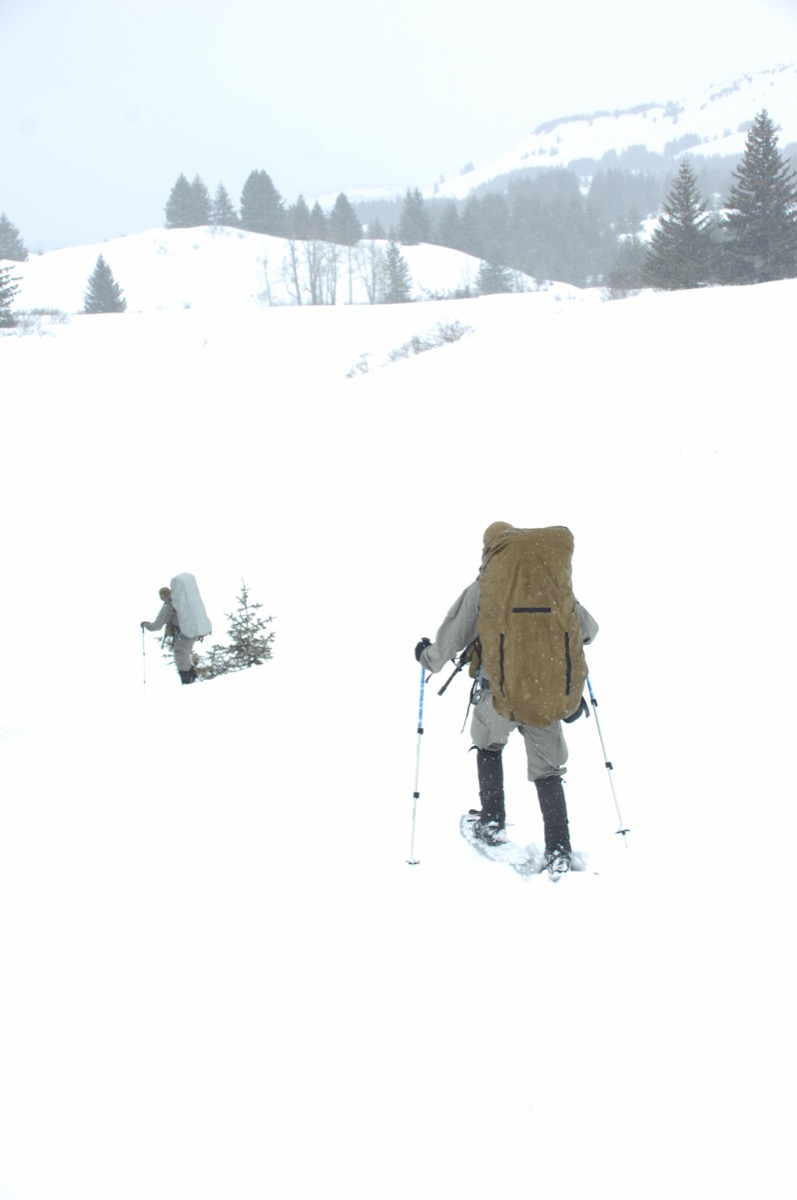
Deliberate discomfort means choosing a manageable challenge for a worthwhile purpose. Practice the task you want to improve, allow recovery, and adjust the dose. Difficult conversations, unfamiliar reading, and appropriate exercise offer different kinds of practice; none requires ignoring danger or treating rest as failure.
Some things worth doing feel awkward before they feel familiar. Asking for feedback. Learning a movement. Opening the book you keep postponing because you do not understand its subject yet.
You can practice approaching those things. But discomfort is not automatically the cause of growth, and comfort is not proof that you have stopped learning. The question is what the challenge helps you do, and whether the cost is reasonable. (Related: The Price of Growth.)
What is deliberate discomfort and why does it work?
Deliberate discomfort is a chosen, manageable challenge: effort you accept in service of a particular goal. That might be an appropriately demanding exercise, an unfamiliar task, or a conversation you have been avoiding. Having a choice and a way to stop matters. It does not make every voluntary activity safe or prevent it from becoming overwhelming.
Different practices work through different processes. Physical training can produce adaptations when the load and recovery are appropriate. Practicing a conversation can improve your preparation and give you feedback. Reading difficult material can expand understanding if you work through it. Calling all of these “hormesis” does not establish a single mechanism that makes the nervous system stronger after every uncomfortable experience.
Cold exposure illustrates the need for precision. Tipton and colleagues' 2017 review discusses both adaptation and serious hazards, including the cold-shock response. Evidence varies across proposed benefits. Becoming accustomed to one exposure is not the same as acquiring broad emotional resilience, and a cold shower is not a necessary starting point. (Related: Cold Water Teaches.)
Choose a challenge because it serves your goal, not because it hurts. An easy rehearsal can still be useful. A difficult attempt can be unproductive. The dose, context, feedback, and opportunity to recover matter more than whether the activity looks impressive.
How do I make discomfort a practice?
Start with one action you can describe and review. For example, spend 15 minutes on unfamiliar reading and write down one question. Prepare a five-minute conversation about a concern you have avoided. If exercise fits your health and training plan, practice an appropriately scaled movement rather than adding an exhausting session just to prove resolve. These are possible starting points, not research-derived minimum doses.
Attach the action to a realistic cue: after coffee, read; after a meeting, request specific feedback; before dinner, prepare what you want to say. Keep the setup simple. A regular appointment helps you remember, but a daily streak is optional. Illness, poor sleep, injury, and an already overloaded day are reasons to reconsider the task or its intensity.
Review what happened rather than escalating automatically. Was the question clearer? Did you listen as well as speak? Can you perform the movement more accurately? If the only result is accumulating exhaustion, change the plan. Progress does not follow a universal week-one, month-three, or month-six schedule. (Related: The Final Push.)
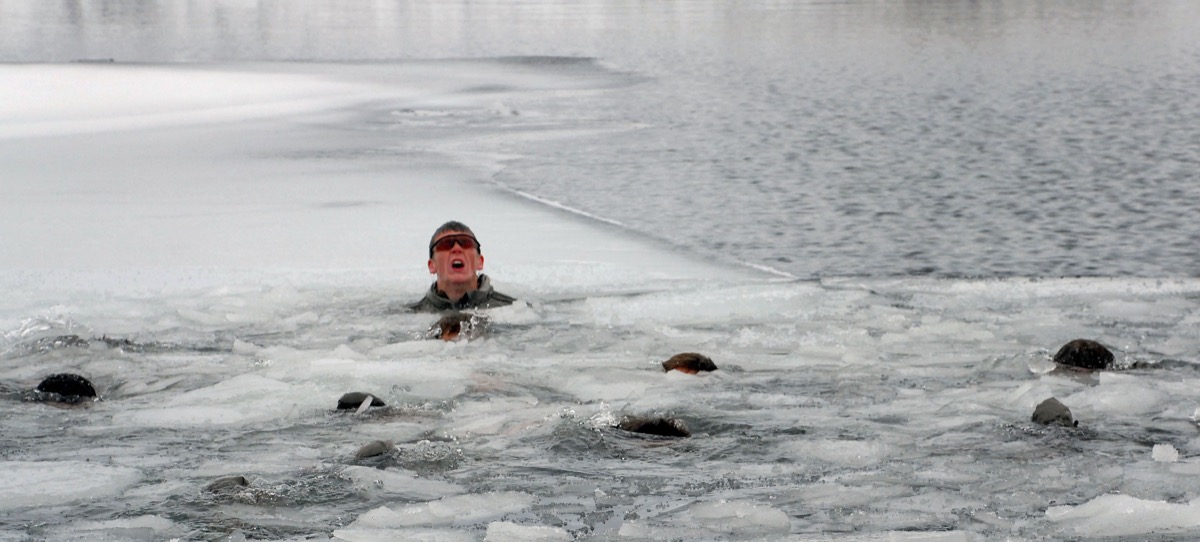
The photograph is not a practice recommendation. Cold-water immersion can provoke dangerous breathing and cardiovascular responses; choosing it voluntarily does not remove those risks. Do not use extreme exposure as a test of character.
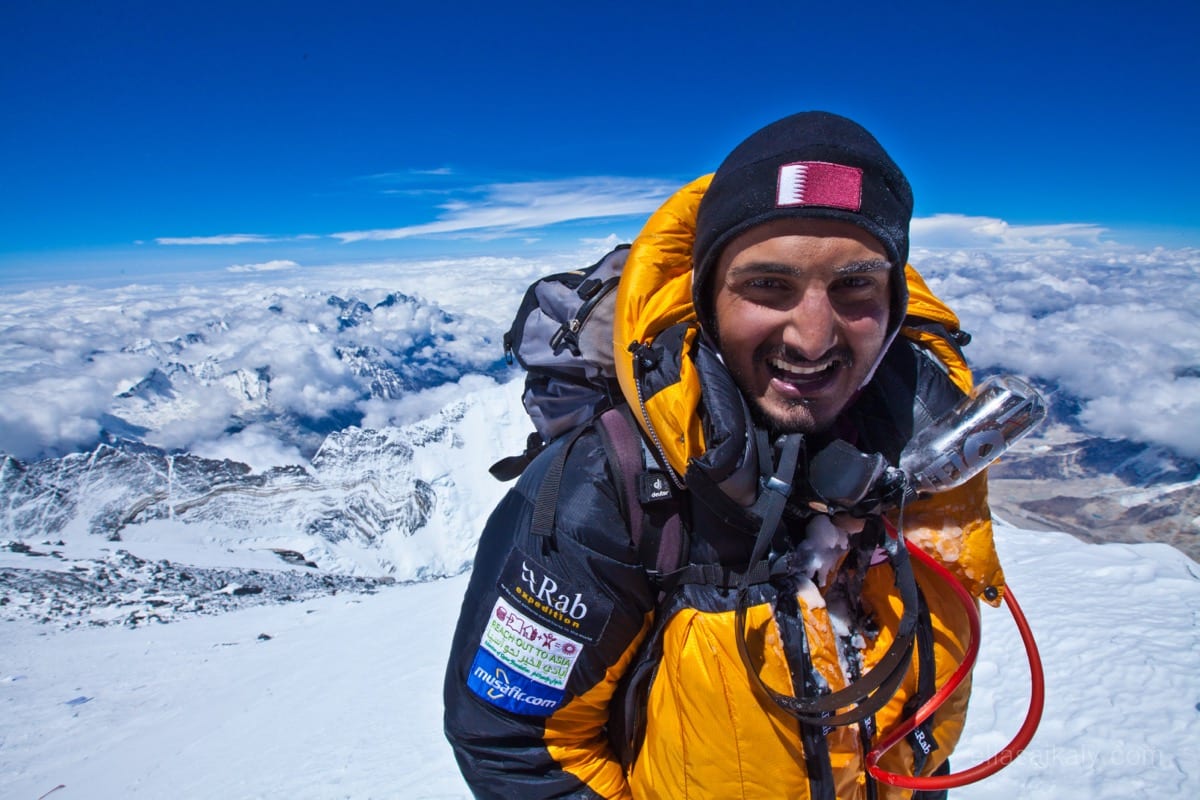
A summit photograph does not show the preparation, support, recovery, or decisions to turn back that difficult activities can require.
What is the growth zone and how do I stay in it?
The “growth zone” is a useful coaching metaphor for a challenge that demands attention while leaving room to learn. It is not a measurable band that guarantees improvement or safety. The familiar comfort–growth–panic diagram is also not what Yerkes and Dodson directly tested in 1908. Their experiments examined stimulus intensity and the learning of a visual discrimination task in mice; the results depended on task difficulty.
For your own practice, use the metaphor as a prompt to calibrate. Can you understand the task? Can you respond to feedback? Do you have enough support and recovery? A task that was appropriate last week may be excessive today. Familiar practice can maintain skills, and increasing difficulty is not always necessary.
What does deliberate-practice research add?
Ericsson, Krampe, and Tesch-Römer's work concerns the development of particular skills, especially in its original music-training setting. Useful features include a specific improvement target, guidance from a qualified teacher, informative feedback, concentration, and repeated attempts that incorporate what you learned. It does not show that any unpleasant activity trains every life skill.
Ericsson and Harwell's later clarification explicitly rejects a magical 10,000-hour threshold. Simply enduring discomfort for enough hours does not guarantee expertise. If your goal is public speaking, practice speaking and get relevant feedback; freezing yourself is not a substitute.
How do I distinguish useful effort from overload?
Use three review questions: Is recovery possible? Am I learning something relevant? Do I have a real choice about continuing? These are planning prompts, not a medical test. Feeling good afterward does not prove that an activity was safe; feeling tired does not prove that growth occurred.
Persistent deterioration, pain, or alarming symptoms require a different response from ordinary frustration with a task. Stop or scale back as appropriate and seek qualified help when needed. In a threatening relationship, the safer next step may be support and a safety plan rather than a confrontation. Choosing to rest is also an exercise of judgment. (Related: The Discipline of Rest and Burnout vs Laziness.)
How do I build discomfort tolerance?
Practice in the setting where you want more capacity. Physical practice might mean appropriate exercise with recovery. Cognitive practice might mean working on unfamiliar material or considering an argument that challenges your views. Social practice might mean asking for honest feedback or expressing a boundary in a situation where doing so is reasonably safe. You do not need to complete all three categories every day.
Robertson and Marino's 2016 paper discusses how the brain, including the prefrontal cortex, may contribute to interpreting fatigue and ending exercise. It is not a trial showing that cold showers improve difficult conversations, nor permission to override physical warning signs. Transfer between activities needs evidence of its own. The practical implication here is to observe the actual task rather than assuming that all forms of tolerance are interchangeable.
Extended fasting is not a casual discomfort drill. If you are considering it, read the water fasting protocol and its contraindications and seek qualified medical guidance where appropriate. There is no need to add food restriction, exposure to severe cold, or deprivation of heating to an everyday discipline practice.
Seneca's Letter 18 offers a historical perspective. He describes temporarily living with simple food and rough clothing to examine a fear of poverty. This voluntary simplicity is related to Stoic preparation for hardship, but it is not the same as a validated modern training protocol. Mental anticipation of adversity, often called praemeditatio malorum, and physically rehearsing simplicity are related but distinct practices. (Related: Fear Is a Compass.)
Can the practice change my self-image?
Keep a short record: what you attempted, what you learned, and what you will adjust. Over time, these experiences can give you more specific grounds for confidence: “I can prepare for this conversation” is more useful than “I can endure anything.” James Clear's identity-based-habit framework offers a practical way to reflect on repeated actions; “identity-based hardening” and “antifragile identity” are not established concepts from his book.
There is no demonstrated 90-day sequence in which your nervous system or identity must transform. You can use a month or a quarter as a review period without making it a biological deadline. (Related: The 90-Day Identity Shift.)
When does comfort get in the way of growth?
Comfort gets in the way when avoiding a manageable, meaningful task repeatedly costs you something you value. Avoiding every difficult discussion can leave a relationship issue unresolved. Repeating only the parts of a skill you already know can limit improvement. In those situations, a small deliberate challenge may be useful.
But rest, warmth, safety, familiar routines, and enjoyable activities are not enemies. They can make practice sustainable. Calling comfort universally addictive, or claiming that every easy choice makes your life smaller, confuses avoidance with recovery and ignores the demands people already carry.
Ask what the choice serves. Are you recovering so you can return? Are you maintaining something that works? Or are you postponing a feasible next step because it feels awkward? You may need a smaller task, better support, or a different goal. Meaning can guide the choice without making suffering a requirement for a worthwhile life. (Related: The Cost of Comfort.)
Being THE ONE
THE ONE makes room for purposeful practice.
Choose a challenge that matters. Make it specific enough to learn from. Keep the option to adjust or stop.
Practice unfamiliar reading, a relevant physical skill, or an honest conversation. Allow the recovery each requires. Do not mistake an extreme example for an obligation.
You do not need to seek pain every day to become dependable. You need to notice when avoidance is blocking a worthwhile action, then choose a workable next step.
Make discomfort a practice when it serves that step. Let rest remain part of the practice.
Frequently asked questions
How do I choose the right dose?
Start with a manageable task and review recovery, relevant learning, and genuine choice. These checks help planning but cannot guarantee safety. Adjust for your health, workload, and the activity's specific risks; there is no universal safe number of seconds or repetitions.
What role does Stoicism play?
Stoic writing supplies a philosophical tradition of reflecting on hardship and practicing simplicity. Seneca's Letter 18 is one example; modern authors such as Ryan Holiday interpret that tradition. Philosophy can inform your values without functioning as clinical evidence for a particular exposure.
How do I respond to an urge to avoid the task?
Notice the urge, pause, and assess the situation. If the task remains safe and useful, try a smaller version. If the urge reflects overload, danger, or a poorly chosen task, adjust or stop. “Do it anyway” is not always the wise answer.
Sources
- Yerkes, R. M., & Dodson, J. D. (1908). “The relation of strength of stimulus to rapidity of habit-formation.” Journal of Comparative Neurology and Psychology, 18(5), 459–482. Animal learning experiment, not a direct test of a three-zone personal-growth model. Original record; full text.
- Robertson, C. V., & Marino, F. E. (2016). “A role for the prefrontal cortex in exercise tolerance and termination.” Journal of Applied Physiology, 120(4), 464–466. Discussion of exercise regulation, not a cross-domain training trial. Paper.
- Tipton, M. J., et al. (2017). “Cold water immersion: kill or cure?” Experimental Physiology, 102(11), 1335–1355. Review of hazards, adaptation, and varying evidence for proposed benefits. Review.
- Seneca. Letters to Lucilius, Letter 18. Historical philosophical discussion of voluntary simplicity. Text.
- Ericsson, K. A., Krampe, R. T., & Tesch-Römer, C. (1993). “The role of deliberate practice in the acquisition of expert performance.” Psychological Review, 100(3), 363–406. Original research.
- Ericsson, K. A., & Harwell, K. W. (2019). “Deliberate Practice and Proposed Limits on the Effects of Practice on the Acquisition of Expert Performance.” Clarifies task-specific practice and rejects a magical hour threshold. Author clarification.
- Holiday, R. (2014). The Obstacle Is the Way. Portfolio. Modern popular interpretation of Stoic philosophy. Author's book page.
- Goggins, D. (2018). Can't Hurt Me. Lioncrest. Personal memoir, not evidence that extreme training is appropriate for every reader.
- Clear, J. (2020 German edition). Die 1 Prozent Methode. Goldmann. Practical identity-based-habit framework, not a trial of general resilience through discomfort.
Make room for a realistic practice. Plan your weekly practice time, including the recovery that makes it sustainable.