Daily practice
The Final Push
The second wind is not a feeling that happens to you. It is a response you produce by refusing to quit at the exact moment most people do. The last stretch is where finishers and almost-finishers separate.

In this article

The second wind is not something that happens to you. It is the response you produce when you refuse to stop at the exact moment most people do. The final push is the last stretch of any effort, the place where exhaustion peaks and motivation collapses, and where a finisher and an almost-finisher are separated by a single decision.
The last stretch is the hardest.
This is not a metaphor. It is a physical and psychological fact, documented across endurance sports, long projects, and every meaningful undertaking. The reason most people do not finish is not that the work was too hard at the start. It is that the last 10 percent was harder than they expected, and they quit there.
Why is the last stretch of any project the hardest?
The last stretch is the hardest because effort runs out when the finish is close enough to touch. Physically, your body has burned through its reserves. Psychologically, the novelty has worn off, the urgency has dulled, and the brain is looking for a graceful exit. The proximity to the finish makes everything worse, because "almost done" rationalizes stopping in a way "barely started" does not.
Marathon science makes this mechanism concrete. Peer-reviewed research on marathon "hitting the wall" finds that more than two-fifths of marathon runners experience severe glycogen depletion, almost always between mile 20 and mile 21. The body was storing about 90-120 minutes of glycogen at race pace. The runner has been burning it evenly. At mile 20, the tank is functionally empty. The body is now running on reserves no one trains for.
The professional, amateur, and every runner between them all hit the same wall at the same place. What separates them is the response. The finisher keeps moving. The almost-finisher stops. (Related: Finish What You Start.)
How do I push through when I'm completely exhausted?
You push through exhaustion by shrinking the horizon to the next 60 seconds instead of the remaining distance. Staring at how far you still have to go is what produces the collapse. Staring at the very next step, and then the next one, removes the problem your brain is overwhelmed by. This is what the final push actually looks like from inside.
David Goggins, the former Navy SEAL and endurance athlete, captured the principle in Can't Hurt Me: "When your brain tells you to quit, you've only used about 40% of what you can actually do. You still have 60% left in the tank." The 40 percent rule is a rough estimate, not a precise physiological measurement, but the core insight has strong support in exercise physiology. The brain down-regulates effort long before the body actually runs out of capacity, because the brain is a threat-avoidance system, not an output maximizer.
Your job during the final push is to recognize the brain's quit signal for what it is (a request for reassurance, not a hard limit) and keep moving for one more small unit. The next rep. The next 60 seconds. The next single paragraph. The capacity reveals itself in the doing. (Related: Make Discomfort a Practice.)
What is the 'second wind' and how do I get it?
The second wind is the physiological and psychological recovery that arrives after you push past the first wall. Once the body shifts from depleted glycogen to alternate fuel systems (fat oxidation, mental reframing, adrenaline), effort gets easier again for a stretch. You did not get stronger. You got re-calibrated. The same level of effort now feels sustainable because the system has stopped sending emergency signals.
You do not get the second wind by waiting for it. You get it by continuing to move through the phase where the first wind has clearly ended. Most people quit during that gap and never discover that a second wind would have arrived in the next five to fifteen minutes. The training is to simply keep going during the gap, on the expectation that the gap is normal and the second wind will come.
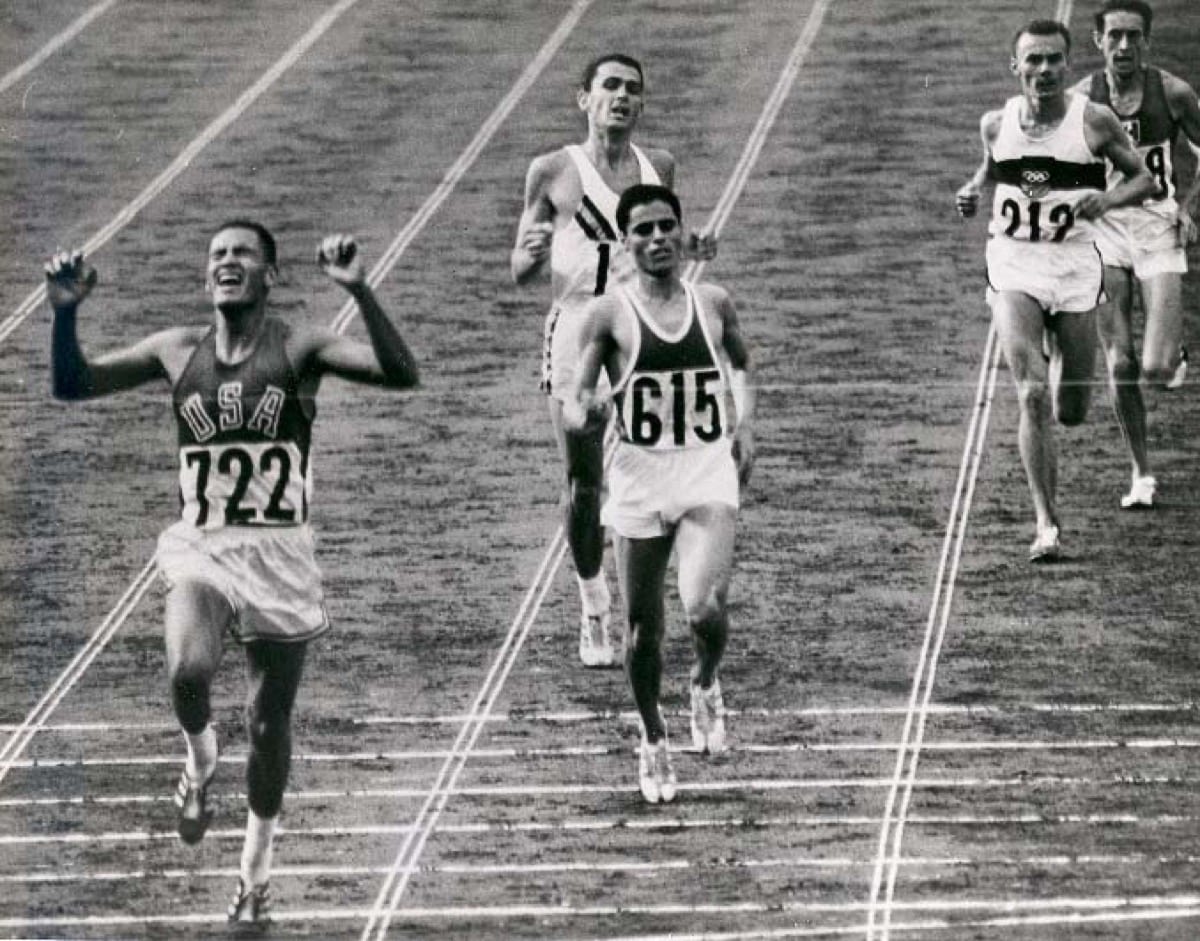
Practically, the bridge across the gap is small: slow slightly, breathe deliberately, shorten the horizon, and do not debate whether to stop. Every finisher has learned this. Every almost-finisher has not. (Related: Consistency Is the Key.)
Why do I always quit at 90%?
You quit at 90 percent because your brain is running the math that "almost done is good enough," and that math is wrong. An almost-finished thing is not worth 90 percent of a finished thing. It is often worth close to zero. A half-written book is not a book. The value is mostly in the last 10 percent.
There is also a dignity dynamic at the 90 percent mark. Up to that point, you have been "working on it." Once you complete it, you have to face how it will be received. Many people stop before completion to preserve the story of "in progress" rather than test the story against reality.
The corrective is to rehearse finishing like a skill. Finish small things on purpose: the email, the page, the short essay, the workout. Build the identity of a finisher on low-stakes reps before you need it on a big one. Finishing what you start at small scale trains the muscle that survives the big-scale final push. (Related: Finish What You Start.)
How do I stop rationalizing quitting near the finish?
Stop rationalizing by recognizing the rationalizations as the predictable output of an exhausted brain, not as insights. The quit thoughts arrive on schedule: maybe the project is wrong, maybe more research is needed, maybe a fresher moment would be better. None of these feelings show up at the start. They show up only near the end, when your brain is looking for a graceful exit.
Label the rationalization as it arrives. "This is the quit thought. It is on schedule. It is not new information." Labeling reduces its power. Then do the next small thing anyway. Last mile effort is not about strength. It is about refusing to treat the quit thought as a signal worth acting on.
Pre-commit to finishing before you start. Tell one specific person. Set a deadline. Make the cost of quitting higher than the cost of pushing through the final push. The structure carries you across the gap the willpower alone cannot. (Related: If You Really Want It.)
Being THE ONE
THE ONE finishes.
Not sometimes. Not when it is easy. Consistently.
THE ONE expects the wall. Expects the quit thoughts. Expects the rationalizations. Meets them on schedule and keeps moving.
THE ONE knows the second wind is not luck. It is what arrives on the other side of the exact moment most people stop.
Almost done is nothing.
Done is everything.
Make the final push.
Be the one who crosses the line, not the one who can describe how far they got.
Sources
- Goggins, D. (2018). Can't Hurt Me: Master Your Mind and Defy the Odds. Lioncrest Publishing. Verified quote: "When your brain tells you to quit, you've only used about 40% of what you can actually do. You still have 60% left in the tank." https://davidgoggins.com/book/
- Rapoport, B. (2010). "Metabolic Factors Limiting Performance in Marathon Runners." PLOS Computational Biology, 6(10), e1000960. Peer-reviewed analysis of glycogen depletion and the marathon "wall" phenomenon. https://journals.plos.org/ploscompbiol/article?id=10.1371/journal.pcbi.1000960
- Noakes, T. D. (2012). "The Central Governor Model in 2012: eight new papers deepen our understanding of the regulation of human exercise performance." British Journal of Sports Medicine, 46(1), 1-3. Exercise physiology on how the brain regulates effort output. https://bjsm.bmj.com/content/46/1/1
- Pressfield, S. (2002). The War of Art. Black Irish Entertainment. On Resistance and how it peaks near completion. https://stevenpressfield.com/books/
Make room for the practice. Plan your weekly practice time and see how the sessions add up.