Daily practice
The One Percent
The gap between exceptional and ordinary is one percent. Marginal gains, compounded daily, create the difference that looks like talent from outside. Research on deliberate practice and aggregate improvement shows the margin most refuse to cross is small enough that anyone could, and that is precisely why so few do.

In this article
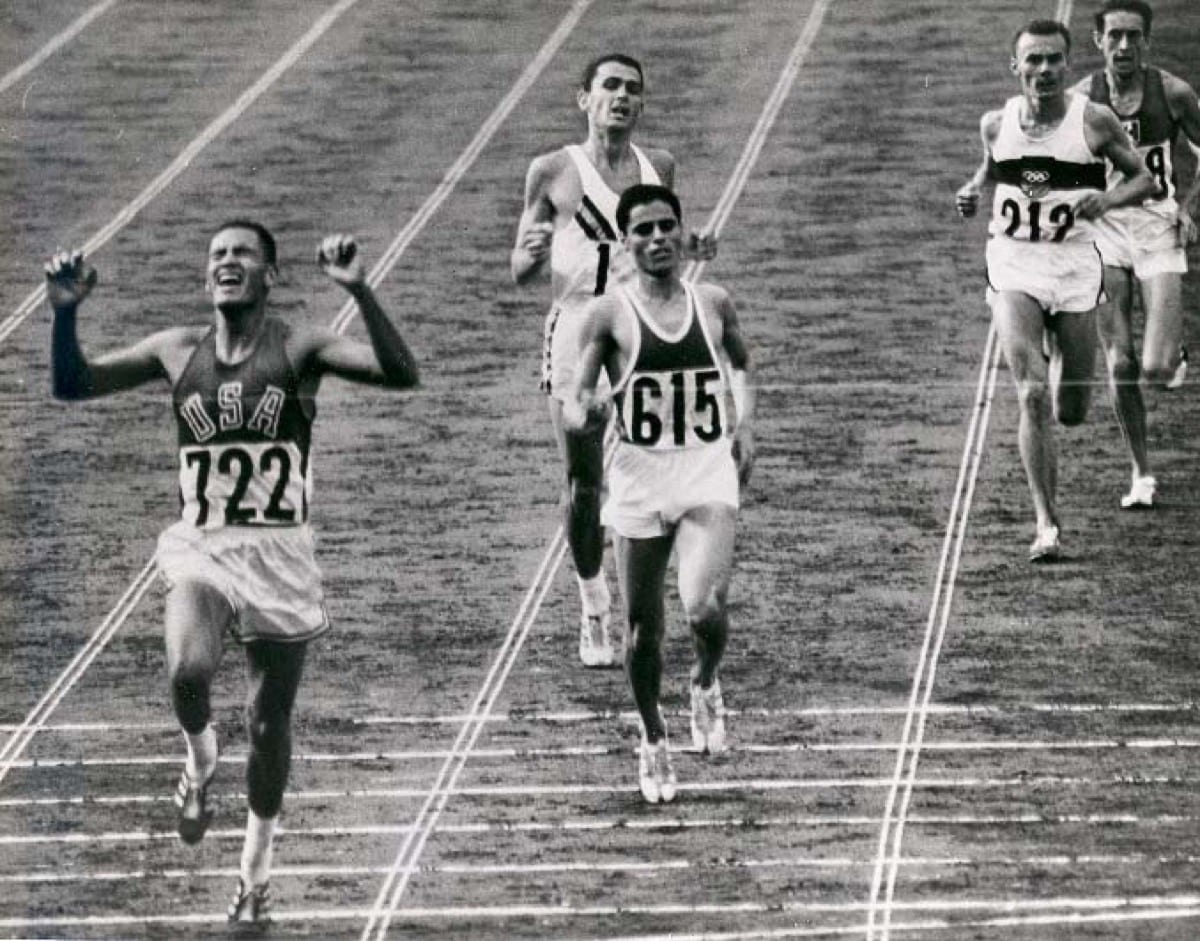
Marginal gains are small, deliberate improvements applied everywhere at once. A one percent edge in a single area is trivial. A one percent edge across every area, compounded daily, creates the gap between world-class and average. Research on British Cycling, deliberate practice, and habit compounding shows the margin that separates exceptional from ordinary is narrow, uniform, and mostly ignored.
The difference between exceptional and ordinary is not what you think.
It is not a gulf. It is not unbridgeable natural talent. It is one percent. A margin so small that anyone could cross it. A margin so small that almost no one does.
What are marginal gains and why do they compound?
Marginal gains are small, systematic improvements applied across every dimension of a performance system. The term was popularized by Sir Dave Brailsford, performance director of British Cycling, in a 2015 Harvard Business Review piece titled "How 1% Performance Improvements Led to Olympic Gold." Brailsford's teams went from mediocre to dominant by improving hundreds of tiny details by one percent each.
The mechanism is compounding. A single one percent improvement is invisible. A hundred one percent improvements, layered across a system, transforms the system. British Cycling improved seat ergonomics, massage gel, sleep pillows, handwashing technique, and roughly a hundred other variables simultaneously. Over four years, the team won seven of ten gold medals at the 2008 Beijing Olympics and dominated Tour de France from 2012 to 2018.
The practical implication is direct. Chasing one breakthrough is usually the wrong strategy. Improving everything by small amounts, consistently, outperforms the search for a single game-changer. The aggregate wins. (Related: Your Habits Are Your Future.)
Why does the one percent rule work where talent fails?
The one percent rule works where talent fails because talent is finite and compound effort is not. K. Anders Ericsson and colleagues' 1993 paper in Psychological Review documented that exceptional performance correlated more strongly with thousands of hours of deliberate practice than with innate talent. The myth blames genetics for what is actually accumulated effort.
Ericsson's team studied elite violinists and found the top performers had accumulated roughly 10,000 hours of deliberate practice by age 20, compared to 4,000 hours for moderate performers. The difference was not natural ability. It was the one percent edge, applied daily, across years, to the specific weaknesses that matter most in the domain.
This is why the top of any field looks unreachable from outside and entirely earnable from inside. From outside, the result looks like genius. From inside, it looks like ten thousand one percent choices made over a decade. Both descriptions are true. Only one is useful for anyone who wants to get there. (Related: The Compound Effect of Daily Discipline.)

Where exactly do I find my one percent?
Find your one percent in the details that other people in your field routinely ignore. James Clear's Atomic Habits (2018) described the 1% better, 1% worse curve: improving by one percent daily produces a 37x gain over a year, while declining by one percent daily produces near-zero output over the same period. The calculation is 1.01^365 ≈ 37.78. The decline is 0.99^365 ≈ 0.03.
Practically, the one percent lives in the boring places. The follow-up email most people do not send. The revision most people skip. The ten-minute warm-up most people consider unnecessary. The skill refresher most people stopped doing after they passed the certification. These details are invisible because most people have learned not to see them.
The audit to find yours is specific. Pick your primary domain. Identify the ten highest-leverage behaviors in that domain. For each, ask what a one-percent-better version would look like. The answers are usually small, tedious, and achievable. Executing them consistently across a year is where the gap appears. (Related: Identity-Based Discipline.)
How do I actually apply aggregate improvements daily?
Apply aggregate improvements by picking five to ten areas that together constitute your performance system and improving each by one percent per week. Not all at once. Not perfectly. Just one percent per area, tracked, compounded. Over a year, each area improves by roughly 67 percent compounded, and the combined effect across areas is transformative.
The tracking is non-negotiable because one percent improvements are too small to feel. If you do not measure, you will not notice, and if you do not notice, you will not keep going. A simple weekly log of "what did I improve by one percent this week" per area is enough. After three months, the aggregate is visible. After six, it is dramatic. After a year, the gap between you and your baseline looks impossible.
The mistake most people make is chasing big one-time improvements instead of small continuous ones. The big one-time improvement feels productive in the moment but reverts toward baseline. The small continuous improvement feels like nothing in the moment but compounds into a different baseline entirely. The math heavily favors the second strategy. (Related: The Enemy of Progress.)

What happens when the one percent becomes identity?
When the one percent becomes identity, the extra effort stops feeling like extra effort. It becomes the baseline. James Clear's Atomic Habits framed this as identity-based habits: the most durable habit changes occur when the behavior becomes part of your self-concept. The person who sees themselves as someone who pushes one percent further does not have to decide daily. The decision already happened at the identity level.
The transition takes roughly three to six months of consistent one percent effort. Before then, each push feels like a choice, and choices deplete willpower. After then, the push feels automatic, and automatic behavior costs almost no willpower. This is why veterans of a craft can sustain effort levels that look unsustainable to beginners. The effort is not actually high for them anymore. It has been internalized.
Once identity transfer occurs, the compounding accelerates. You are no longer a person trying to improve by one percent. You are a person who improves by one percent. The behaviors that used to require focus now run in the background, freeing your focus for the next layer of improvement. This is how top performers keep getting better long after others plateau. (Related: The 90-Day Identity Shift.)
Being THE ONE
THE ONE lives in marginal gains.
Not occasionally. Consistently. The one percent edge, applied everywhere, every day, for years, until the gap between who they were and who they are becomes unrecognizable.
THE ONE knows the difference between exceptional and ordinary is small. Narrow enough that anyone could cross it. Ignored enough that almost no one does.
THE ONE crosses it anyway. Through daily choices no one sees. Through details most consider unnecessary. Through effort that compounds invisibly until the results become impossible to miss.
The door to the one percent is open.
It is just through territory most people refuse to cross.
A little more effort. A little more care. A little more discipline. A little more courage.
Most people will never give it. They will stay at good enough. They will stop one percent early.
You can choose differently.
Be the one who gives what others withhold.
Be the one percent.
Sources
- Harvard Business Review. (2015). "How 1% Performance Improvements Led to Olympic Gold." On Dave Brailsford and aggregate marginal gains at British Cycling. https://hbr.org/2015/10/how-1-performance-improvements-led-to-olympic-gold
- Ericsson, K. A., Krampe, R. T., & Tesch-Römer, C. (1993). "The Role of Deliberate Practice in the Acquisition of Expert Performance." Psychological Review, 100(3), 363-406. Foundational deliberate practice research. https://psycnet.apa.org/record/1993-40718-001
- Clear, J. (2018). Atomic Habits: Tiny Changes, Remarkable Results. Avery. On the 1% better curve and identity-based habits. https://jamesclear.com/atomic-habits
- Syed, M. (2015). "Viewpoint: Should we all be looking for marginal gains?" BBC News. On the marginal gains philosophy in practice. https://www.bbc.com/news/magazine-34247629
Make room for the practice. Plan your weekly practice time and see how the sessions add up.