Daily practice
The Compound Effect of Daily Discipline
Habit stacking attaches a new habit to one you already run on autopilot, so the old behavior triggers the new one. No willpower negotiation, no reminder apps. Stack three small daily discipline habits onto existing cues, survive the Valley of Disappointment, and the reps quietly turn into a different person.

In this article
Habit stacking attaches a new habit to one you already run on autopilot, so the old behavior triggers the new one. No willpower negotiation, no reminder apps. Stack three small daily discipline habits onto existing cues, survive the Valley of Disappointment, and the reps quietly turn into a different person.
One habit fails alone.
Not because you are weak. Because a behavior with no trigger depends on memory and mood, and both quit early. Attach the same behavior to something you already do every day and the decision disappears. The coffee finishes brewing, the writing starts. No negotiation.
What is habit stacking?
Habit stacking is attaching a new habit to an existing one, using the established habit as the trigger. James Clear popularized the framework in Atomic Habits (2018) with the formula "After [current habit], I will [new habit]." After brushing teeth, do ten pushups. After pouring coffee, write for ten minutes. The existing habit becomes the cue.
The technique works because the brain already runs the existing habit on autopilot. Linking a new action to that cue piggybacks into an existing neural pathway. You are not building a new habit from scratch. You are borrowing the trigger from one that already works.
Lally and colleagues' 2010 study in the European Journal of Social Psychology followed 96 volunteers and found the average time to habit automaticity was 66 days, not the 21 days pop culture cites. Habit stacking shortens the perceived difficulty of those 66 days by reducing activation energy to near zero. (Related: Identity-Based Discipline.) (Related: How to Stay Disciplined When You Don't Feel Like It.)
How does the compound effect make habit stacking work?
Habit stacking works because compounding rewards frequency, and stacking is the most reliable frequency machine there is. A habit tied to an existing cue fires daily without willpower, and daily reps are what multiply. Stacking does not change the arithmetic. It changes your odds of showing up for the arithmetic.
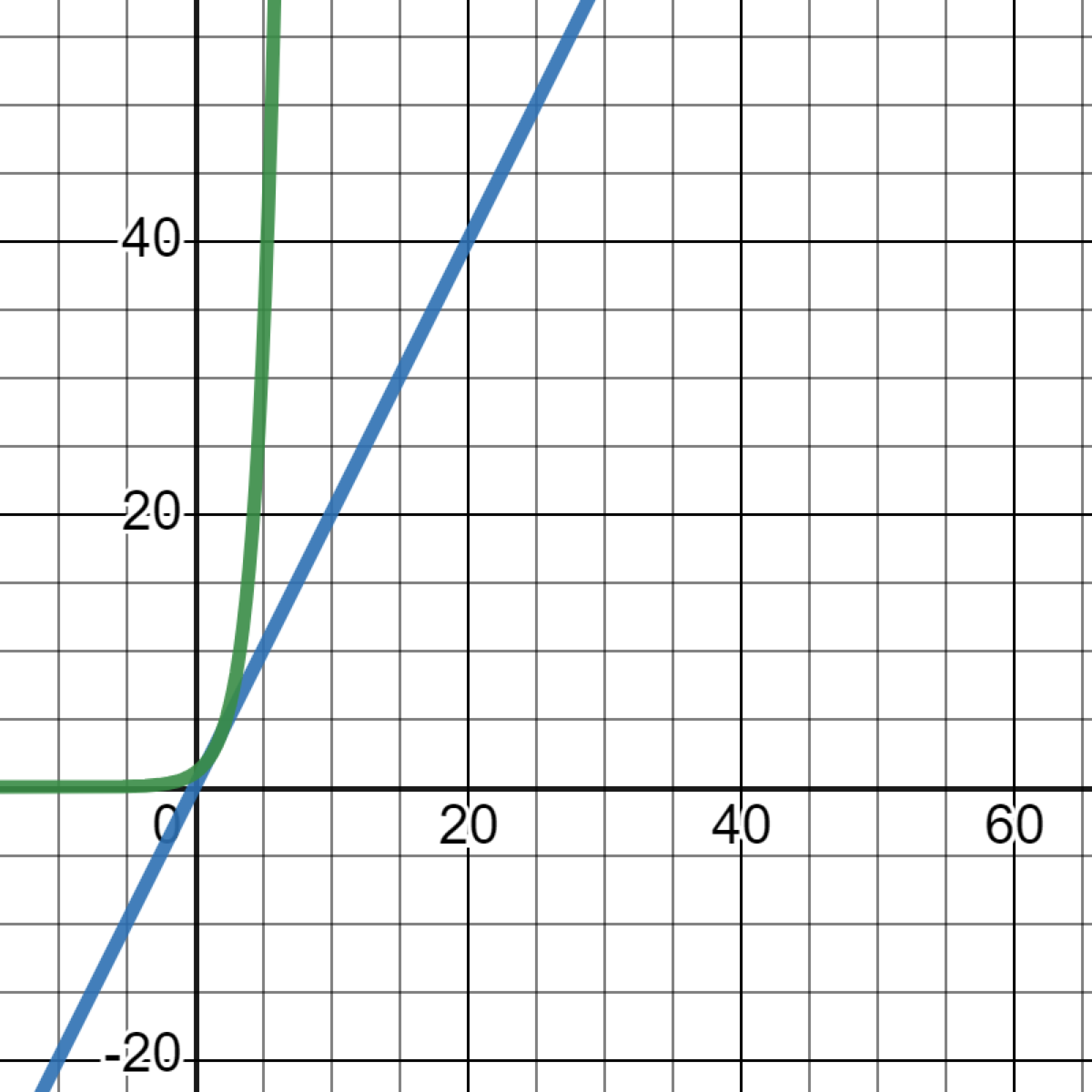
The mechanism is multiplicative. Each stacked habit produces a small gain in its own domain, and the gains feed each other: better sleep improves the morning workout, the workout improves focus, focus improves the work. Someone running three stacks for a year is dramatically ahead of someone running none, not by the sum of the improvements but by the product of them, because each improvement enables the next.
The full math, the 37x curve, and what skipping days does to the multiplier all live in one place now. (Related: The Compound Effect.)

What is the Valley of Disappointment?
The Valley of Disappointment is the stretch of effort where you are doing the work correctly and the visible results have not yet arrived. Clear named it in Atomic Habits to describe the emotional state most people quit at. The effort went in. The output is invisible, and the mind wrongly concludes the effort is not working.
Exponential curves look almost flat early. The gap between the disciplined and undisciplined path is nearly zero for the first few months, which is why the valley feels pointless. It is not. The reps are accumulating. Skill, identity, and opportunity are all building beneath the surface. (Related: Trust the Process.)
The practical move is to expect the valley. Plan for it. Pre-commit to staying in it for at least 90 days, regardless of visible results. Visible change tends to arrive in a rush between day 90 and 180, long after most people have already quit. (Related: The Enemy of Progress.)
How do I build a habit stack from scratch?
Build a stack from scratch in three moves. First, pick three non-negotiable daily discipline habits. Not ten. Three is the sustainable ceiling for the first 90 days. Small enough to do on the worst day, meaningful enough that each moves the life forward. This keeps the stack clean and the cadence real.
Second, attach each new habit to an existing trigger. "After I brush my teeth, I will do ten pushups." "After I pour my coffee, I will write for ten minutes." The trigger is the hack. The existing habit reminds you, which is why adherence jumps.
Third, track the streak on a physical calendar. Mark an X for every day you complete all three. Gail Matthews' 2015 Dominican University study found that people who tracked progress and reported to a partner achieved goals at roughly twice the rate of people who kept goals private. Visible tracking is the mechanism.

How many habits should I stack at once?
Stack one to three habits at a time, never more. Three is the ceiling that survives a bad week; ten is a plan for quitting by Friday. Run the stack for 90 days before adding a fourth, because every new habit taxes the same limited attention until it turns automatic.
The best habit stacking examples stay small enough to fit inside the trigger's moment. After pouring the morning coffee, write one sentence. After brushing teeth, do ten pushups. After parking the car, sit for sixty seconds of slow breathing. After closing the laptop, lay out tomorrow's gym clothes. Each one takes under two minutes, which is exactly why each one survives.
Scaling works by deepening, not widening. The two-minute version earns the ten-minute version, and the ten-minute version earns the hour. Bad habit stacking examples fail in predictable ways: too big (an hour of reading attached to lunch), too vague (be more mindful after waking), or hooked to an unstable cue (after the meeting that sometimes gets cancelled). Keep the cue fixed and the action tiny, and let time do the upgrading. (Related: Mastery Takes Time.)
Being THE ONE
THE ONE runs the habit stack.
Three habits. Each attached to an existing trigger. Tracked on a visible streak. Done every day regardless of weather, mood, or season.
THE ONE stays in the Valley of Disappointment long enough to reach the other side. Does not confuse invisibility of results with absence of progress.
THE ONE trusts the arithmetic. Knows the curve is flat before it is vertical. Knows the person who quits in the valley never sees the version of themselves that was waiting 90 days out.
Habit stacking is not a hack.
It is a delivery system for showing up, and showing up rewards only the people who survive the flat part.
Run the stack. Mark the X. Come back tomorrow.
Be the one who stayed in the valley long enough to see the curve bend.
Be the one whose ordinary daily discipline habits compounded into a life that looks extraordinary from outside.
Sources
- Clear, J. (2018). Atomic Habits: Tiny Changes, Remarkable Results. Avery. Habit stacking framework and the Valley of Disappointment. https://jamesclear.com/atomic-habits
- Lally, P., van Jaarsveld, C. H. M., Potts, H. W. W., & Wardle, J. (2010). "How are habits formed: Modelling habit formation in the real world." European Journal of Social Psychology, 40(6), 998-1009. Study of 96 volunteers finding 66-day average to habit automaticity. https://onlinelibrary.wiley.com/doi/abs/10.1002/ejsp.674
- Matthews, G. (2015). "Goals Research Summary." Dominican University of California. On written tracking, accountability, and goal achievement. https://scholar.dominican.edu/psychology-faculty-conference-presentations/3/
Make room for the practice. Plan your weekly practice time and see how the sessions add up.