Identity
Trust The Process
Trust the process means committing to the work without needing proof it is paying off yet. It is the gap between effort and evidence, held open by discipline instead of certainty. Results are not linear. The invisible phase is where everything is being built.

In this article

Trust the process means committing to the work without needing proof it is paying off yet. It is the gap between effort and evidence, held open by discipline instead of certainty. Results are not linear: the invisible phase produces nothing visible for weeks, then the boulder rolls, then it accelerates. Stay in the pushing.
You are doing the work.
Day after day. Putting in effort. Following the plan. And nothing visible seems to be happening. This is the hardest part, not the work itself. It is the silence between the work and the results.
What does "trust the process" actually mean?
Trust the process means doing the work without requiring evidence the work is succeeding yet. You accept that results lag effort, often by months, and that the gap between input and output is held open by discipline, not by certainty. You keep going because the underlying system is sound, not because today's metrics confirm it.
This is different from blind faith. Trust the process applies when you have chosen a method that has worked for others in similar situations, you are executing it consistently, and the only missing piece is time. Blind faith is executing inconsistent work on an unvetted method and hoping anyway. The two produce opposite outcomes, which is why the distinction matters.
The operational form is boring. Do the work today. Do the work tomorrow. Do not judge the method on week two. Do not judge it on week six. Judge it at the time horizon the method is designed for, usually months, sometimes years. Before then, your judgments are not measurement. They are mood. (Related: Mastery Takes Time.)
Why does it feel like nothing is happening?
It feels like nothing is happening because results lag effort, often substantially. The invisible progress phase is real and long: structure is forming beneath the surface while the surface itself shows no change. You experience the gap as failure because your feedback loop is calibrated to visible progress and your underlying progress is not visible to the eye.
The boulder analogy explains the mechanics. You push and push and nothing moves. Then one more push and it starts to roll. Then it accelerates. Then it becomes unstoppable. The pushing phase is where most people quit, not because the method is wrong, but because the visible output has not yet arrived.
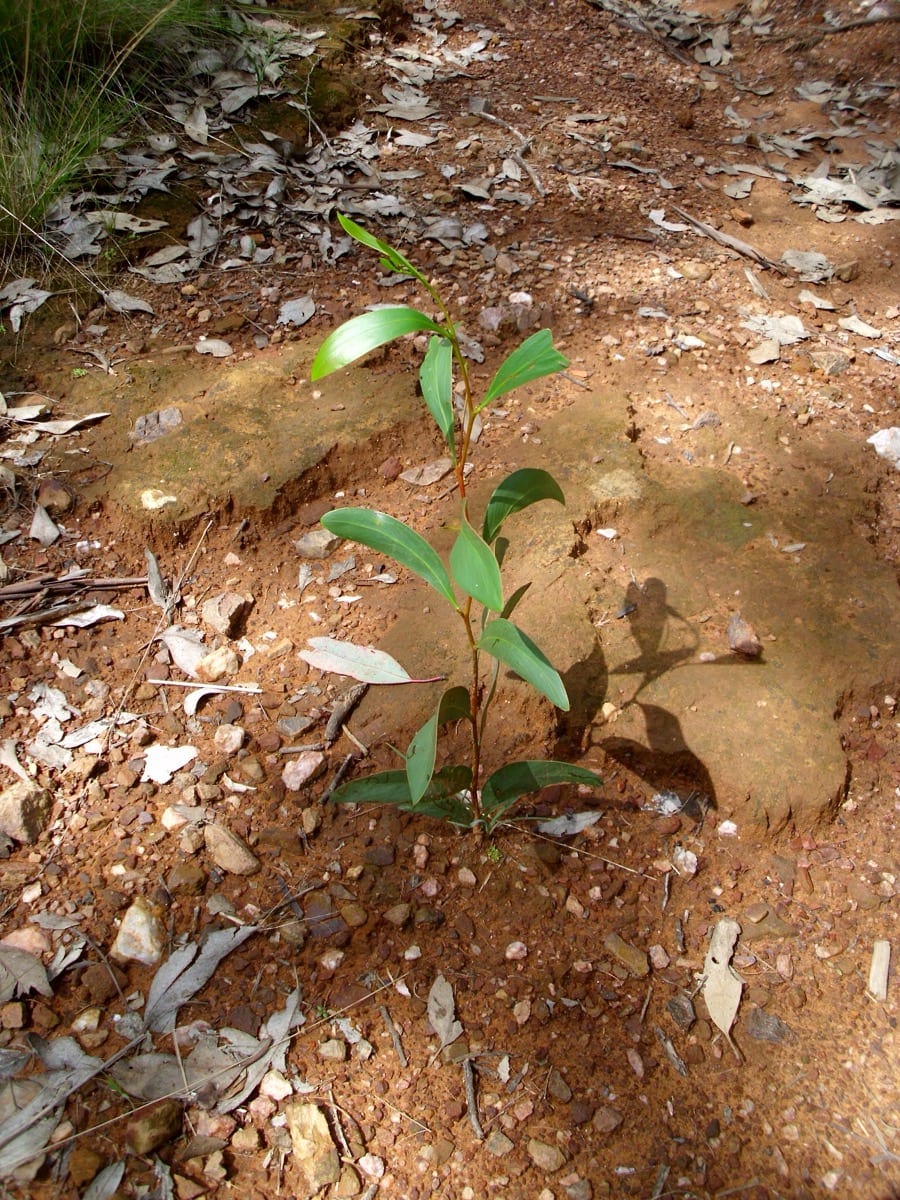
The seed does the same thing. Weeks of watering, no sprout. Underground, roots are forming. The foundation is being laid. Then one day, a sprout, then rapid growth. The growth was not sudden. It was happening all along, just not where your eyes were looking. Invisible progress is the rule for any compounding system, not the exception. (Related: Make Discomfort a Practice.)
Why do most people quit in the invisible phase?
Most people quit in the invisible phase because the brain treats absence of feedback as evidence of failure, which is a reasonable survival heuristic and a terrible decision rule for long horizon work. Without visible progress, the internal signal says the method is broken and the rational move is to switch directions. The signal is wrong.
Angela Duckworth's research on 11,258 West Point cadets found that grit, the combination of perseverance and passion for long-term goals, predicted retention through the punishing Beast Barracks selection period: cadets a standard deviation higher in grit had 54 percent greater odds of making it through. The variable that separated finishers from quitters was not intelligence or physical capacity. It was the capacity to keep working when the reward was absent.
The practical lesson is simple. Your quitting moment will feel rational every time it arrives, and it will usually be wrong. Pre-commit to a time horizon before starting. Let that commitment, not your mid-effort mood, decide whether you continue. For a literary version of this tension, see the lessons from The Alchemist and their limits. (Related: Fear Is a Compass.)
Why do results lag effort for so long?
Results lag effort because compounding is back-loaded. Skill, reputation, fitness, and money all accumulate below the threshold of visibility before they cross it, so the early work pays into an account you cannot see yet. The lag is not a malfunction. It is the standard shape of meaningful work.
The question of why results take time has a boring answer: every system that grows by multiplication spends most of its timeline looking flat. The first months of training, saving, or building produce gains too small to register, and each gain only turns visible once it has compounded through dozens of cycles. Understanding why results take time converts the silence from a verdict into a schedule. Patience and discipline are not magic. They are prerequisites for any project whose timeline exceeds your immediate satisfaction curve, and long-term consistency is the price of entry. (Related: The Weight Of Potential.)
Walter Mischel's 1972 marshmallow studies and the 2018 Watts replication that tempered them both point at the same trainable skill, persisting through stretches that pay nothing yet, and the full research story lives in the long game. (Related: The Long Game.)
When should I adjust the process instead of trusting it?
Adjust the process when micro progress is absent after a full cycle of consistent execution, not when it simply feels slow. Trust is warranted when the underlying method has a track record and you are executing it the way it was designed. Trust is misplaced when you are executing inconsistently, or when the method itself is fundamentally wrong.
The honest diagnostic has two questions. First: is the micro level moving? Are you slightly stronger, slightly better, slightly clearer than a month ago? If yes, patience and discipline are the right response, and the macro result is on the way. If no, something specific needs to change. Usually it is the tactic, not the goal.
Change the approach, not the ambition. Shorten the feedback loop so you can see whether the new tactic is working within weeks. Keep long-term consistency on the direction while iterating on the method. Most people quit when they should adjust, and adjust when they should quit. The difference is whether the micro metrics are moving. (Related: The Final Push.)
Being THE ONE
THE ONE trusts the process.
THE ONE does not need to see results today to keep working. Does not need validation to stay committed. Does not need evidence to maintain faith in the work.
THE ONE understands that the invisible phase is where the foundation is built. That the silence is not the absence of progress. That the delay is not denial.
You cannot see it yet.
The progress is there. The growth is happening. The result is forming underground where you cannot observe it.
Keep going.
Not because you can prove it is working. Because you chose a method that has worked for everyone who stayed long enough.
The people who quit during the invisible phase never learn what was being built for them.
Be the one who trusts long enough to see the result.
Sources
- Duckworth, A. L., Peterson, C., Matthews, M. D., & Kelly, D. R. (2007). "Grit: Perseverance and passion for long-term goals." Journal of Personality and Social Psychology, 92(6), 1087-1101. Landmark grit study, including the 11,258 West Point cadet retention analysis. https://psycnet.apa.org/doiLanding?doi=10.1037/0022-3514.92.6.1087
- Mischel, W., Ebbesen, E. B., & Zeiss, A. R. (1972). "Cognitive and attentional mechanisms in delay of gratification." Journal of Personality and Social Psychology, 21(2), 204-218. Original marshmallow test on delayed gratification. https://psycnet.apa.org/doiLanding?doi=10.1037/h0032198
- Watts, T. W., Duncan, G. J., & Quan, H. (2018). "Revisiting the Marshmallow Test: A Conceptual Replication Investigating Links Between Early Delay of Gratification and Later Outcomes." Psychological Science, 29(7), 1159-1177. The replication that tempered the original SAT effect. https://pmc.ncbi.nlm.nih.gov/articles/PMC6050075/
- Ericsson, K. A., Krampe, R. T., & Tesch-Römer, C. (1993). "The role of deliberate practice in the acquisition of expert performance." Psychological Review, 100(3), 363-406. Classic study on the long time horizons mastery actually requires. https://psycnet.apa.org/doiLanding?doi=10.1037/0033-295X.100.3.363
Ready to put this into practice? Check your identity alignment and see where you actually stand.