Identity
The War Within
The war within is the ongoing internal conflict between the disciplined self pursuing growth and the comfort-seeking self pulling toward ease. Research on self-control, dual-system decision-making, and willpower depletion shows the war is fought and decided through daily choices, not single moments.

In this article

The war within is the ongoing internal conflict between the disciplined self pursuing growth and the comfort-seeking self pulling toward ease. Research on self-control, dual-system decision-making, and willpower depletion shows the war is fought and decided through daily choices, not single moments of will. The side you feed is the side that wins.
The biggest battle you will ever fight is not out there.
It is not against competitors. Not against circumstances. Not against the world. It is against yourself. Inside every person, two forces are at war. One wants comfort, safety, the easy path. The other wants growth, discipline, the harder path. These two forces fight every single day, in every decision.
What does dual-system research say about the war within?
Dual-system research, formalized by Daniel Kahneman in Thinking, Fast and Slow (2011), documents that humans operate on two parallel cognitive systems. System 1 is fast, automatic, emotional, and optimized for comfort. System 2 is slow, deliberate, effortful, and optimized for long-term outcomes. The two systems frequently disagree. The war within is literally the real-time negotiation between them.
System 1 wants the snooze button. System 2 wants the early morning workout. System 1 wants the easy meal. System 2 wants the disciplined one. System 1 wants immediate gratification. System 2 wants outcomes that accumulate across years. Neither system is wrong. The problem is that without deliberate work, System 1 wins most battles because it is faster, cheaper, and evolved to dominate in the absence of active effort.
The practical implication is that discipline is not about force of will. It is about installing protocols that let System 2 win specific battles by default, without having to out-argue System 1 each time. Research on habit formation, including Wendy Wood's 2016 Annual Review of Psychology synthesis "Psychology of Habit," shows that well-designed habits move decisions out of the negotiation zone entirely. You do not argue with the alarm anymore. You just get up. (Related: Identity-Based Discipline.)
Why does negotiating with yourself produce losses?
Negotiating with yourself produces losses because the moment you start the conversation, you have already given the comfort-side a seat at the table. Discipline does not negotiate. It executes. There is no conversation with the alarm clock. There is no debate about whether to do the work. There is only doing.
The comfort-seeking self is a masterful negotiator. It will always find a convincing argument for the easy path. "Just five more minutes." "I will start tomorrow." "One day off will not matter." "I deserve a break." These sound like reason. They are surrender disguised as logic. The arguments are pre-built and infinitely replenishing, which is why trying to out-argue them fails.
Roy Baumeister's research on ego depletion, summarized in Willpower (2011), documented that willpower is a finite daily resource. Every negotiation depletes it. The person who removes negotiation from their morning routine has more willpower available for the actual hard decisions later in the day. The person who negotiates about small things depletes the resource and has nothing left for the things that matter. The cost of the negotiation is not just the time. It is the willpower that can no longer be spent elsewhere. (Related: Structure Is Freedom.)
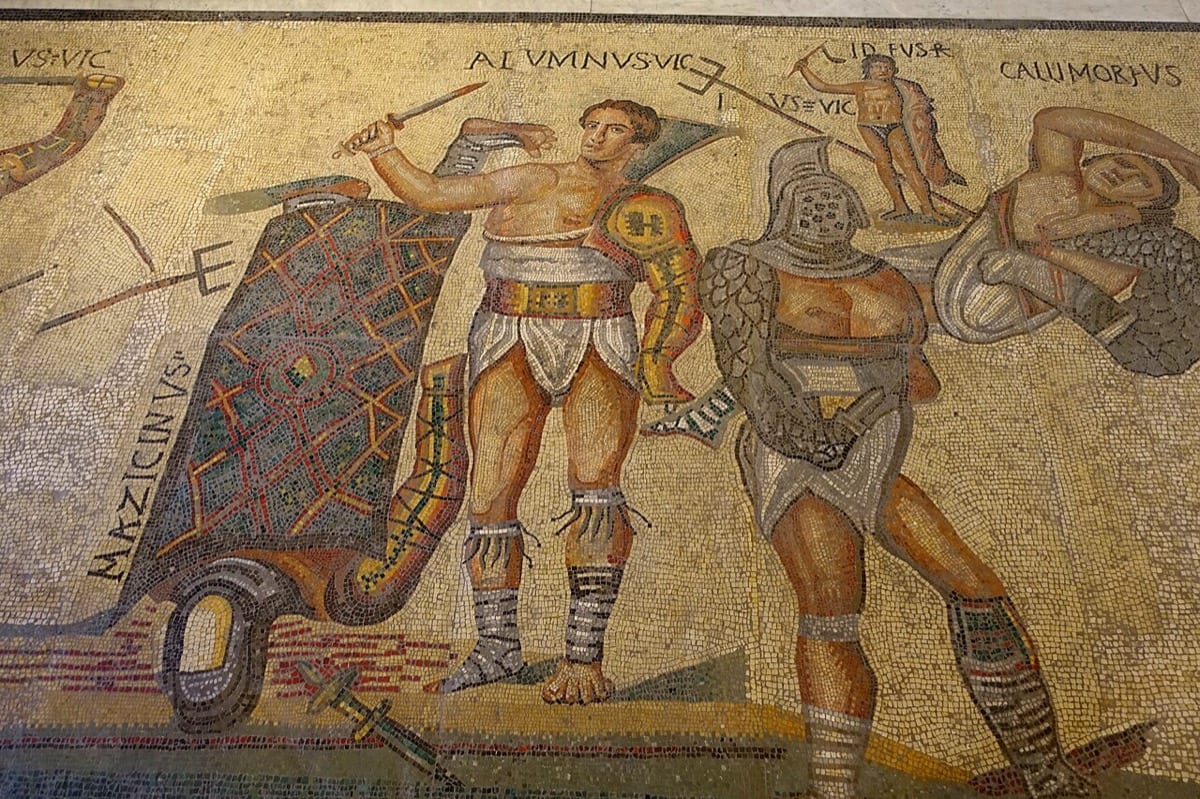
What does the two wolves story really teach?
The two wolves story, attributed to Cherokee oral tradition, teaches that the wolf you feed is the wolf that wins. One represents discipline, strength, and growth. The other represents laziness, fear, and comfort. Every choice feeds one at the expense of the other. The feeding is not metaphorical in research terms. It is behavioral reinforcement.
Research on behavioral reinforcement, synthesized across decades of operant conditioning work, shows that every reinforced behavior gets stronger. Every unreinforced behavior gets weaker. When you choose comfort, the comfort-circuit fires and strengthens. When you choose discipline, the discipline-circuit fires and strengthens. The two circuits compete for priority the next time a similar decision arrives. The one with more reinforcement wins more often.
Across weeks and months, this pattern produces the compounding that people experience as "becoming disciplined" or "becoming lazy." Neither is a character trait. Both are reinforcement histories. The person who has fed discipline for three years has reinforced the circuit thousands of times, and it dominates by default. The person who has fed comfort for the same duration has the opposite pattern. Same biology. Different feeding choices. Dramatically different outcomes. (Related: Your Habits Are Your Future.)
Why does the morning determine the trajectory?
The morning determines the trajectory because the first battle sets the tone for every subsequent one. Research on decision fatigue, including Shai Danziger and colleagues' 2011 PNAS study "Extraneous Factors in Judicial Decisions," showed that decisions deteriorate across the day as cognitive resources deplete. Morning decisions use fresh resources. Evening decisions use depleted ones.
If you win the morning decision, momentum carries you forward through the day. Your System 2 has proven it can override System 1, and the victory fuels subsequent victories. If you lose the morning, the pattern inverts. System 1 has proven it can override System 2, and the pattern of surrender continues through the day. The morning battle is disproportionately important because of this carryover effect.
Research on self-efficacy by Albert Bandura documented that recent successes strengthen the belief in future success, which strengthens the actual likelihood of future success. Winning the morning creates this positive feedback loop. Losing the morning creates the opposite. The morning decides more than a single battle. It decides whether the day becomes a compounding of wins or a compounding of surrenders. (Related: Own Your Morning.)

How do I actually win the war within consistently?
Win the war within consistently through three moves. First, remove negotiation from the core decisions. Pre-commit to actions so strongly that the morning decision is not "should I work out" but "how much." Habit stacks, fixed schedules, and accountability partners all serve this function. The less negotiation, the less willpower spent on the core battles.
Second, feed the discipline wolf deliberately. Stack small wins early to reinforce System 2 victories. Cold shower. First deep work block. Protected workout. Each is a vote for the disciplined self. Duckworth and Seligman's 2005 Psychological Science study found self-discipline was more than twice as predictive of outcomes as IQ.
Third, accept that the war never ends. There is no final victory. No day where the weaker self stops showing up. The best you can do is win today, then tomorrow. The war is daily. The commitment is daily. The victory is daily. (Related: Discipline Is Devotion.)
Being THE ONE
THE ONE fights the war within and wins enough battles to matter.
Not every battle. Enough battles. Consistently enough that discipline becomes the default and System 2 dominates the mornings that shape everything downstream.
THE ONE does not negotiate with the comfort-side in the core daily decisions. Pre-commits. Installs protocols. Removes the negotiation that would otherwise drain willpower reserved for the real challenges.
THE ONE feeds the discipline wolf daily. Votes for System 2 at every small decision. Accumulates the reinforcement history that eventually produces the disciplined self automatically, without the daily internal war consuming the willpower that was supposed to go elsewhere.
The war within never ends.
But you can win today.
Fight the right battle. Feed the right wolf. Choose the harder path.
Be the one who wins the war within.
Sources
- Kahneman, D. (2011). Thinking, Fast and Slow. Farrar, Straus and Giroux. On System 1 and System 2 decision-making. https://us.macmillan.com/books/9780374533557/thinkingfastandslow
- Baumeister, R. F., & Tierney, J. (2011). Willpower: Rediscovering the Greatest Human Strength. Penguin Press. On ego depletion and self-control. https://www.penguinrandomhouse.com/books/307740/willpower-by-roy-f-baumeister-and-john-tierney/
- Duckworth, A. L., & Seligman, M. E. P. (2005). "Self-Discipline Outdoes IQ in Predicting Academic Performance of Adolescents." Psychological Science, 16(12), 939-944. On self-discipline outcomes. https://pubmed.ncbi.nlm.nih.gov/16313657/
- Wood, W. (2016). "Psychology of Habit." Annual Review of Psychology, 67, 289-314. On habit formation and automaticity. https://www.annualreviews.org/doi/10.1146/annurev-psych-122414-033417
Ready to put this into practice? Take the Shadow vs Phoenix assessment and see where you actually stand.