Daily practice
Gamification
Gamification of life is the deliberate structuring of your day with game mechanics, with clear goals, visible progress, and calibrated difficulty. Done right, it pushes you into flow state more often, where challenge meets skill and time disappears. Treat every obstacle as a level, every problem as a puzzle, every setback as a design error you can work around.

In this article
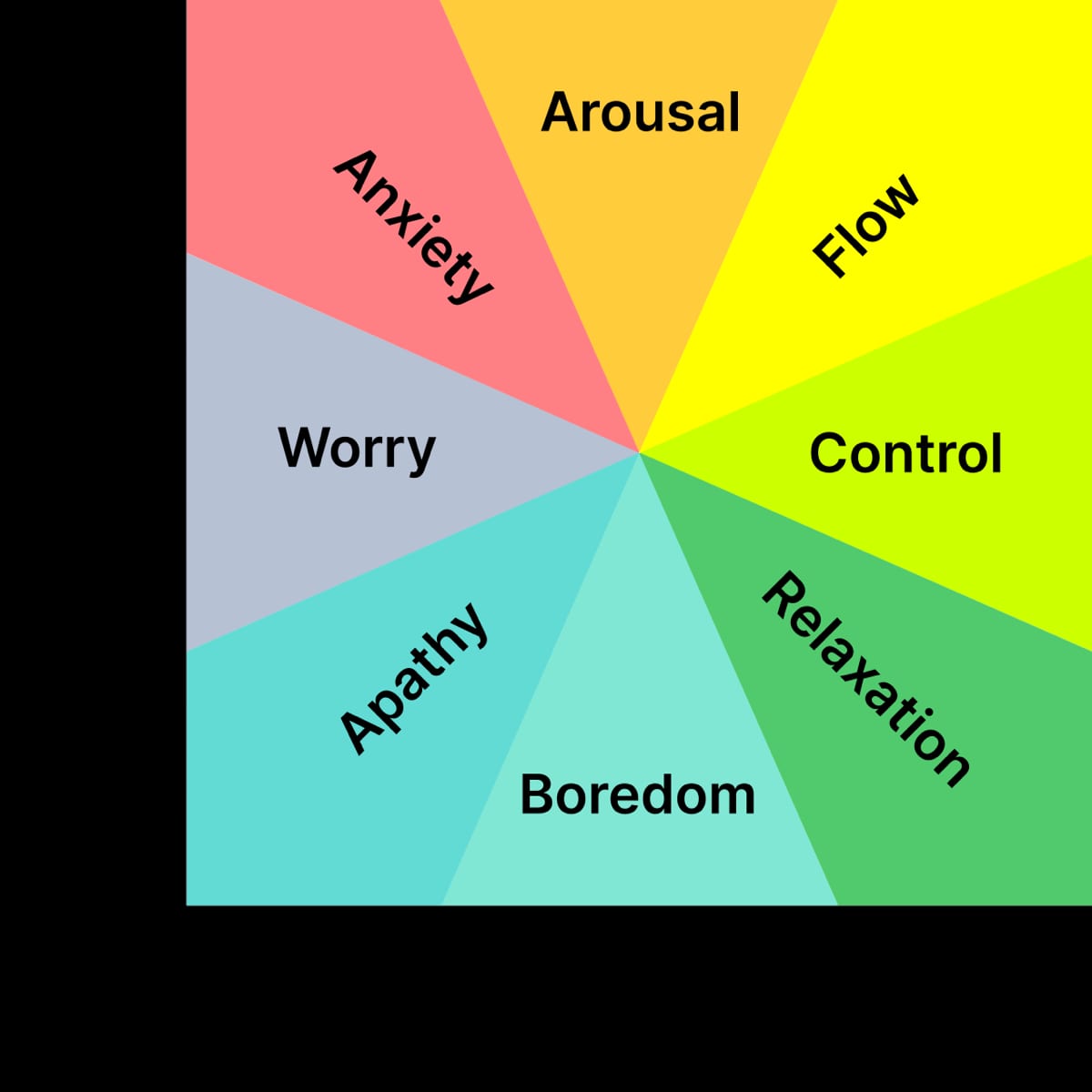
Gamification of life is the deliberate structuring of your day with game mechanics: clear goals, visible progress, calibrated difficulty. Done right, it pushes you into flow state more often, where challenge meets skill and time disappears. Treat every obstacle as a level, every problem as a puzzle, every setback as a design error you can work around.
Life plays differently once you see it as a game.
Not in a trivial sense. In a strategic sense. Levels and challenges instead of problems and catastrophes. Puzzles instead of verdicts. Gamification of life does not remove difficulty. It changes what difficulty means. The full case for the frame, and the play research behind it, lives in the companion article. (Related: Life Is a Game.)
What is flow state and how do I enter it?
Flow state is the psychological condition Mihály Csíkszentmihályi described in his 1990 book Flow: The Psychology of Optimal Experience as "complete absorption in an activity, where action and awareness merge, time distorts, and self-consciousness fades." You enter flow when three conditions align: a clear goal, immediate feedback, and a challenge level that is just beyond your current skill. Remove any one and flow collapses back into boredom or anxiety.
The entry protocol is structural. Pick a task with a specific, measurable outcome. Set a fixed block of time (usually 60-90 minutes) during which you will work on nothing else. Eliminate interruptions: phone in another room, notifications off, browser closed. Start on the task within 30 seconds of the block beginning. Most people enter flow within 15-20 minutes once the structure is right.
The modern research has refined Csíkszentmihályi's original model. A 2024 study in the Journal of Happiness Studies found that flow is most reliably triggered when perceived skills slightly exceed challenge, not when they perfectly match it. The implication: choose work where your capacity is real and the difficulty is present but not overwhelming. Too easy kills flow. Too hard kills it faster. (Related: The Cost of Distraction.)
How does gamification of life turn obstacles into levels?
Gamification of life turns obstacles into levels by applying game mechanics (clear objectives, progress feedback, tiered difficulty, visible wins) to situations where those mechanics would otherwise be missing. The obstacle does not change. Your interpretation of it does. The same blocked email becomes "puzzle to solve before lunch" instead of "problem that is ruining my morning." The underlying work is identical. The internal experience is not.
The mechanism is specific. Games give you scaffolding that real life usually does not: you always know the score, the rules, and what counts as winning. When you impose that scaffolding on a real-life task (defining the goal, setting a timer, tracking completion, awarding yourself a visible win), you recruit the same motivation systems games exploit. Dopamine fires on the progress cues a player adds, not only on final outcomes.
Jane McGonigal's 2011 book Reality Is Broken documented that players in well-designed games show persistence, optimism, and problem-solving behaviors that drop off dramatically in the same people when they face similar difficulty at work or school. The difference is not the people. It is the design. Gamification of life starts with borrowing the design elements that make games engaging and applying them on purpose. (Related: The Enemy of Progress.)
What is the challenge-skill balance in flow theory?
The challenge skill balance is the mechanism Csíkszentmihályi identified for sustained flow state. If the challenge is below your skill, you get bored. If it is far above, you get anxious. Flow lives in the narrow band where the challenge requires close to your full capability, forcing concentration without overwhelming the system.
The balance moves. What was challenge-level work a year ago is comfort-zone work today. Staying in flow requires continuously nudging difficulty upward as skill grows. This is why world-class performers in any domain do not repeat the same training year after year. They progressively add constraint, speed, complexity, or stakes so the challenge keeps stretching the current edge of capacity.
A 2015 meta-analysis in the Journal of Applied Sport Psychology synthesized dozens of flow studies and found that the challenge skill balance correlation with flow, while real, is moderated by intrinsic motivation, autonomy, and clear feedback. Flow is not just a difficulty calibration problem. It is also about whether the work matters to you and whether you can see yourself making progress on it. (Related: Make Discomfort a Practice.)
How do I stay in flow during difficult tasks?
Stay in flow by protecting the conditions that enable it: clear goal, immediate feedback, eliminated interruption, and challenge calibrated to skill. Most flow loss is not mysterious. It happens when one of these conditions breaks: the phone pulls attention, the task goal gets fuzzy, feedback disappears, or the difficulty suddenly spikes into overwhelm. Protect the four conditions and flow returns within minutes.
The biggest operational lever is single-tasking. Flow is impossible when you are switching between contexts. Cal Newport's research in Deep Work documented the 23-minute recovery cost per interruption (from Gloria Mark's UC Irvine studies), which means an interrupted 90-minute session produces maybe 40 minutes of actual flow time. Close the extra tabs. Silence the pings. Tell the people around you that you are unreachable for the block.
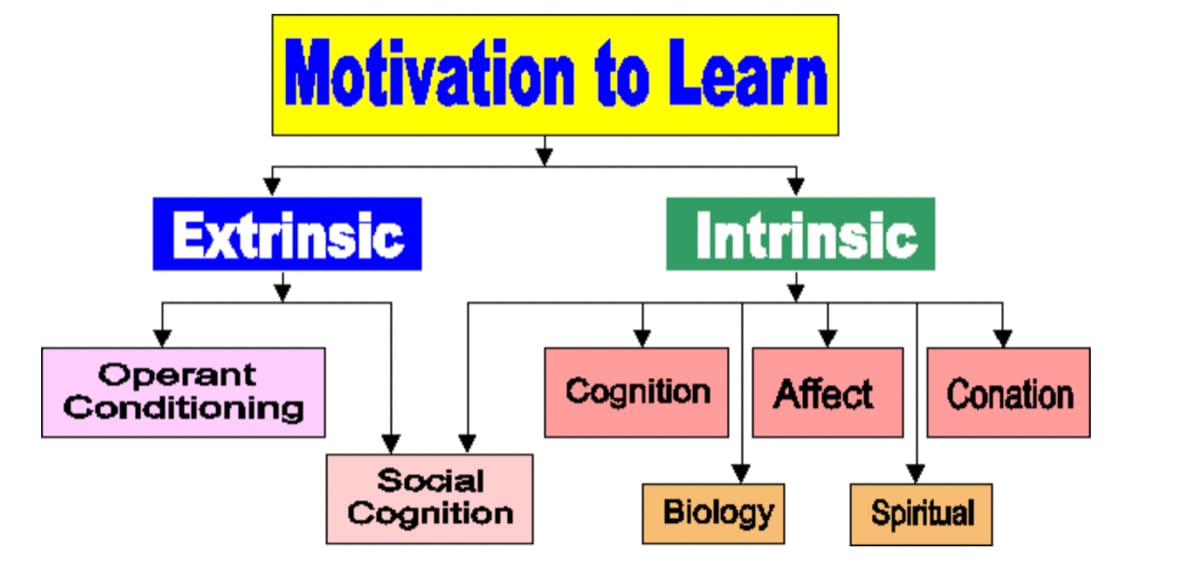
Deci and Ryan's self-determination theory adds a third layer: flow deepens when the work connects to autonomy, competence, and relatedness. Autonomy means you chose this task, not had it assigned. Competence means you are good at the kind of work this is. Relatedness means the work serves a purpose beyond yourself. Stack all three and flow becomes reliable instead of occasional. (Related: The Power of Silence.)
Why does the game mindset beat the victim mindset?
The game mindset beats the victim mindset because games assume agency and victimhood removes it. A player asks "what move have I not tried yet?" A victim asks "why did this happen to me?" The first leads to experiments. The second leads to stories. Over years the gap compounds into radically different lives.
The honest distinction is not about toxic positivity. Real difficulty is real. Injustice exists. Circumstances matter. The player frame does not deny any of this. It simply refuses to hand authorship of your response over to the circumstance. Two people face the same setback. One approaches it as a level to be beaten. One approaches it as a catastrophe to be suffered. The setback is the same. The outcomes diverge almost immediately.
The practical move is small and daily. When something blocks you, ask three questions: what have other people in similar situations done; what is the unconventional path; where is the gap in the system. Players look for ways to win. Victims accept the constraints as given. The game mindset is simply the practiced habit of assuming that a move exists, and searching for it until it shows up. (Related: No One Is Coming.)
Being THE ONE
THE ONE plays the game.
Does not complain about the difficulty of the level. Does not wish for easier challenges. Does not sit out because the game is hard.
THE ONE engineers flow state on purpose. Clear goal. Immediate feedback. Eliminated interruption. Challenge calibrated to skill.
THE ONE finds the workarounds. Maintains the search for the next move. Grows through difficulty instead of around it.
How you deal with the situation is more important than the situation itself.
Every challenge is a level. Every problem is a puzzle. Every obstacle is an opportunity to demonstrate what you are made of.
Be the one who plays to win.
Be the one who stays in flow long after most people have given up.
Be the one who treats life as the game it is.
And play it well.
Sources
- Csíkszentmihályi, M. (1990). Flow: The Psychology of Optimal Experience. Harper & Row. Original book defining flow state and the challenge-skill balance. https://www.harpercollins.com/products/flow-mihaly-csikszentmihalyi
- Engeser, S., & Schiepe-Tiska, A. (2012). "Historical Lines and an Overview of Current Research on Flow." Advances in Flow Research. Synthesis of flow research including challenge-skill meta-analytic findings. https://link.springer.com/chapter/10.1007/978-1-4614-2359-1_1
- McGonigal, J. (2011). Reality Is Broken: Why Games Make Us Better and How They Can Change the World. Penguin Press. On how game mechanics produce persistence and problem-solving. https://www.penguinrandomhouse.com/books/305501/reality-is-broken-by-jane-mcgonigal/
- Deci, E. L., & Ryan, R. M. (2000). "The 'What' and 'Why' of Goal Pursuits: Human Needs and the Self-Determination of Behavior." Psychological Inquiry, 11(4), 227-268. Autonomy, competence, relatedness as flow-deepening conditions. https://doi.org/10.1207/S15327965PLI1104_01
Make room for the practice. Plan your weekly practice time and see how the sessions add up.