Mind & emotions
Gratefulness
A daily gratitude practice is measurable neurological training, not soft thinking. It rewires attention toward what is working, strengthens relationships, and improves well-being in controlled studies. Start anywhere in the cycle. The people, the results, and the contentment follow the practice, not the other way around.

In this article
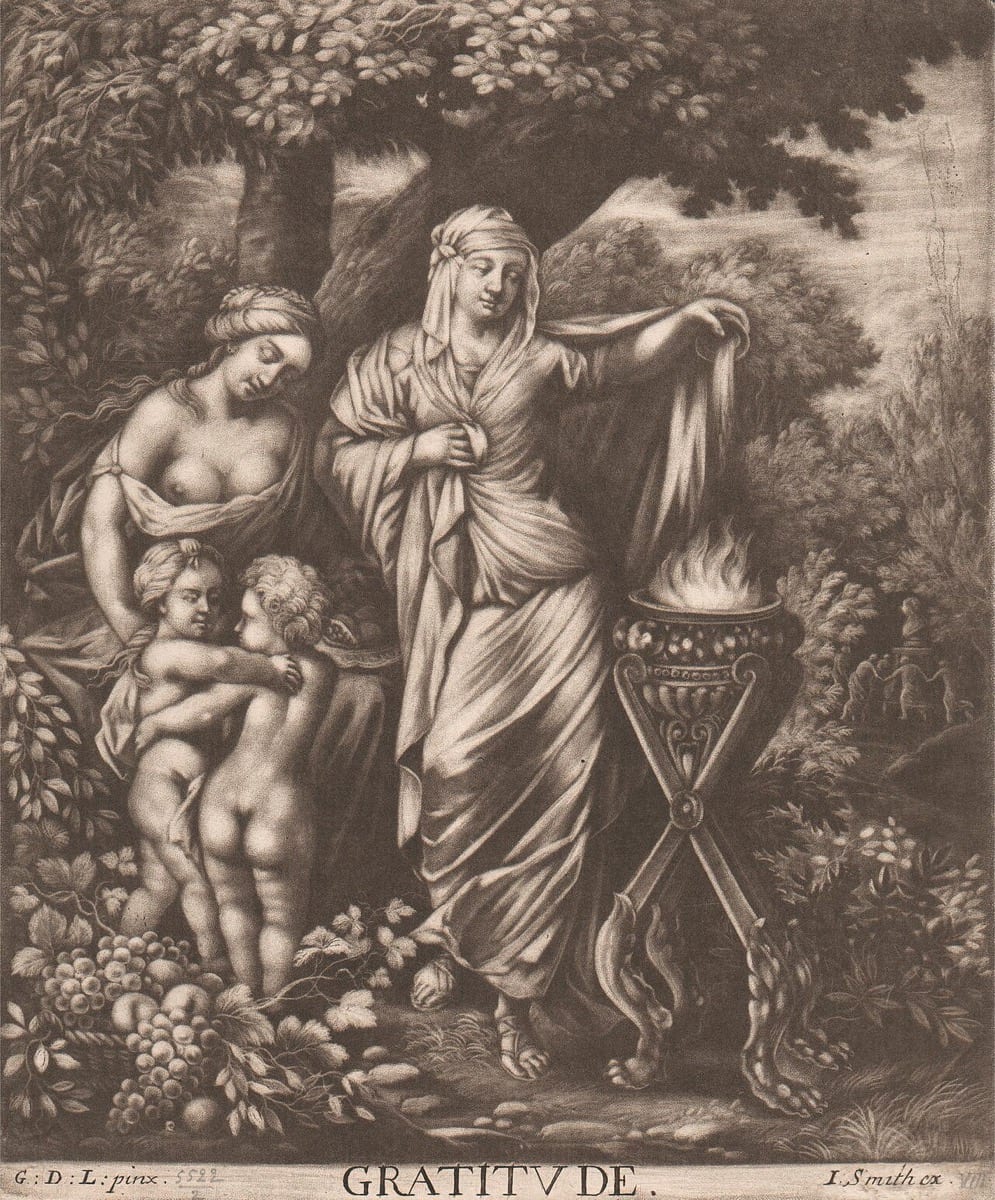
A daily gratitude practice is measurable neurological training, not soft thinking. It rewires attention toward what is working, strengthens relationships, and improves well-being in controlled studies. Start anywhere in the cycle. The people, the results, and the contentment follow the practice, not the other way around.
Grateful people attract great people.
Whether the gratitude comes first or the great people come first is the wrong question. The cycle reinforces itself, which means you can enter it anywhere. The fastest entry point is also the smallest: a few minutes a day, on purpose, written down.
What are the real benefits of a daily gratitude practice?
A daily gratitude practice produces measurable improvements in well-being, sleep, physical symptoms, and goal progress within weeks. Emmons and McCullough's 2003 study in the Journal of Personality and Social Psychology found that participants who kept gratitude journals reported fewer physical symptoms, exercised more, and felt more optimistic than participants journaling about hassles or neutral events.
The effects are not placebo. Later work by Wood, Froh, and Geraghty (2010) in Clinical Psychology Review synthesized dozens of studies and concluded that gratitude interventions reliably increase subjective well-being, with effects robust across age, gender, and cultural context. The consistent finding: attention that is directed toward what is working produces more of what works, because behavior follows attention.
The practical version is boring by design. Two to five minutes a day, writing down specific things (not generic abstractions), three to five items, ideally at a consistent time. That is the minimum effective dose, and it is what the research tested. You do not need an app. You need a notebook and the commitment to show up. (Related: Breathe Before You React.)
How do I start a gratitude journal that actually works?
Start a gratitude journal by writing three specific things each day, naming the actual person or situation rather than a category. "My partner made coffee without being asked this morning" works. "Family" does not. Specificity is the whole difference between a gratitude practice that rewires perception and a habit that produces nothing but ink on paper.
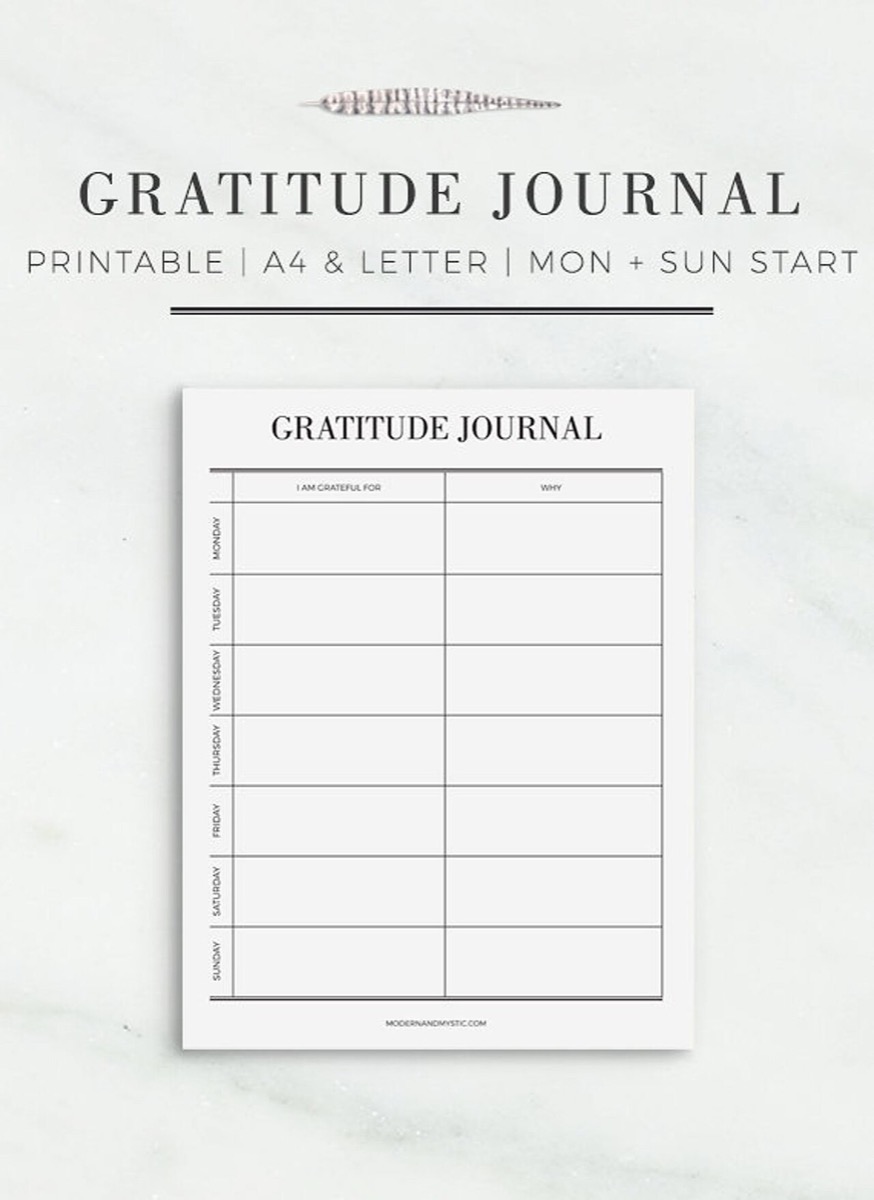
The second rule is cadence. Daily beats weekly for most people because the habit loop is tighter and the cue is stronger. Pick a time that already exists (first thing after waking, last thing before sleeping, right after morning coffee) and attach the practice to it. The research on habit formation says the consistency of the cue matters more than the duration of the session.
The third rule is what to write about. Mix three categories: something a person did, something about yourself, something about the day's circumstances. This mix prevents the gratitude practice from collapsing into a list of external things that happened to you, which is the failure mode that produces the journal-without-effect. Expressing thanks directly to a person once a week amplifies everything. (Related: The Power of Silence.)
Why does gratitude attract better people and opportunities?
Gratitude attracts better people because it is the rarest and most reliable signal of a person worth being around. Appreciative people are easier to collaborate with, more generous with credit, and less expensive in time and emotional bandwidth. The market for attention and goodwill consistently prices grateful people higher, which is why opportunities accumulate around them over time.
The mechanism is also social. When you express appreciation specifically and publicly, you create a small amount of status for the person being appreciated. That person now has an incentive to stay connected to you, because your recognition is reliable and their other sources probably are not. Do this consistently for years and you accumulate a network of people who have been materially helped by knowing you. That network is what most people mean by "luck."
The opposite dynamic is also visible. Unappreciative people repel even when they are successful. They drain the people around them by absorbing credit, missing the contribution of others, and treating support as default rather than a gift. Their networks shrink over time because there is no reason for anyone to invest in them. Gratitude is not decoration. It is infrastructure. (Related: Your Word Is Your Bond.)
How do I stay grateful when life is hard?
Stay grateful when life is hard by narrowing the practice to what is still genuinely working rather than forcing positivity on what is not. Real gratitude in difficulty is not pretending the difficulty is good. It is finding three honest things that are still true while the hard thing is also true. Both can be present without either invalidating the other.
The failure mode is performative gratitude, which is when you list blessings to convince yourself or others that things are fine. That version increases stress because you know you are lying to yourself, and the practice becomes one more thing to distrust. The research on gratitude specifically excludes this kind of forced positivity; what it tests and validates is the honest identification of real things that are working, not the suppression of what is not.
The small version works in hard weeks. One specific person who showed up. One lesson the difficulty made available. One physical thing (your body, food, shelter) that is not at risk this week even though other things are. Daily thankfulness for those three items, written down, is enough to keep the attention system calibrated while you handle the difficulty. (Related: Guard Your Peace.)
Can gratitude actually change my brain?
The gratitude science says yes, though the claims have been overstated in popular writing. Neuroimaging studies by Fox and colleagues found that gratitude correlates with activity in the medial prefrontal cortex, a region involved in social cognition and reward. Repeated practice appears to strengthen these activations over time.
The behavioral effects are better documented than the neural ones. In randomized controlled trials, gratitude interventions reduce symptoms of depression and anxiety, improve sleep quality, and increase prosocial behavior. These outcomes are reliable even in short interventions (two to three weeks), which means the practice pays rent quickly, not only after years of accumulation.
The Harvard Health Publishing summary of this literature is blunt: "giving thanks can make you happier," and the effect size, while not dramatic, is larger than many psychopharmacological interventions and costs nothing. A daily gratitude practice is one of the cheapest, best-studied, most reliable upgrades available to a human nervous system. Most people do not do it because it is boring, not because it does not work. (Related: The Dopamine Trap.)
Being THE ONE
THE ONE practices gratitude.
Not as technique. As the genuine training of attention toward what is working.
THE ONE keeps the gratitude practice alive. Writes specifics. Expresses thanks to the people who showed up. Does not wait for perfect circumstances to be grateful.
THE ONE knows that gratitude is the cheapest, best-studied intervention available to a human nervous system, and does it anyway while everyone else searches for something more dramatic.
Grateful people attract great people.
Whether the gratitude came first or the people came first does not matter. The cycle reinforces itself.
Enter the cycle. Anywhere.
Be the one who practices gratitude on the worst days, not only the best.
Be the one who expresses thanks specifically, not abstractly.
Be the one who treats the notebook as training equipment, not decoration.
Start being thankful now.
Sources
- Emmons, R. A., & McCullough, M. E. (2003). "Counting Blessings Versus Burdens: An Experimental Investigation of Gratitude and Subjective Well-Being in Daily Life." Journal of Personality and Social Psychology, 84(2), 377-389. Landmark study on gratitude journaling and well-being. https://pubmed.ncbi.nlm.nih.gov/12585811/
- Wood, A. M., Froh, J. J., & Geraghty, A. W. A. (2010). "Gratitude and well-being: A review and theoretical integration." Clinical Psychology Review, 30(7), 890-905. Synthesis of gratitude research across dozens of studies. https://pubmed.ncbi.nlm.nih.gov/20451313/
- Fox, G. R., Kaplan, J., Damasio, H., & Damasio, A. (2015). "Neural correlates of gratitude." Frontiers in Psychology, 6, 1491. Neuroimaging study on medial prefrontal cortex activation during gratitude. https://www.frontiersin.org/articles/10.3389/fpsyg.2015.01491
- Harvard Health Publishing. "Giving thanks can make you happier." Harvard Medical School. Summary of gratitude research and practical recommendations. https://www.health.harvard.edu/healthbeat/giving-thanks-can-make-you-happier
Ready to put this into practice? Check your burnout risk score and see where you actually stand.