Daily practice
Why Not Eating a Croissant Every Morning Can Change Your Life
The croissant principle shows one small morning decision triggers a chain reaction that shapes your entire day. Research on decision cascades, blood glucose and cognition, and keystone habits shows tiny choices compound into identity. Everything is connected. Pick wisely.

In this article
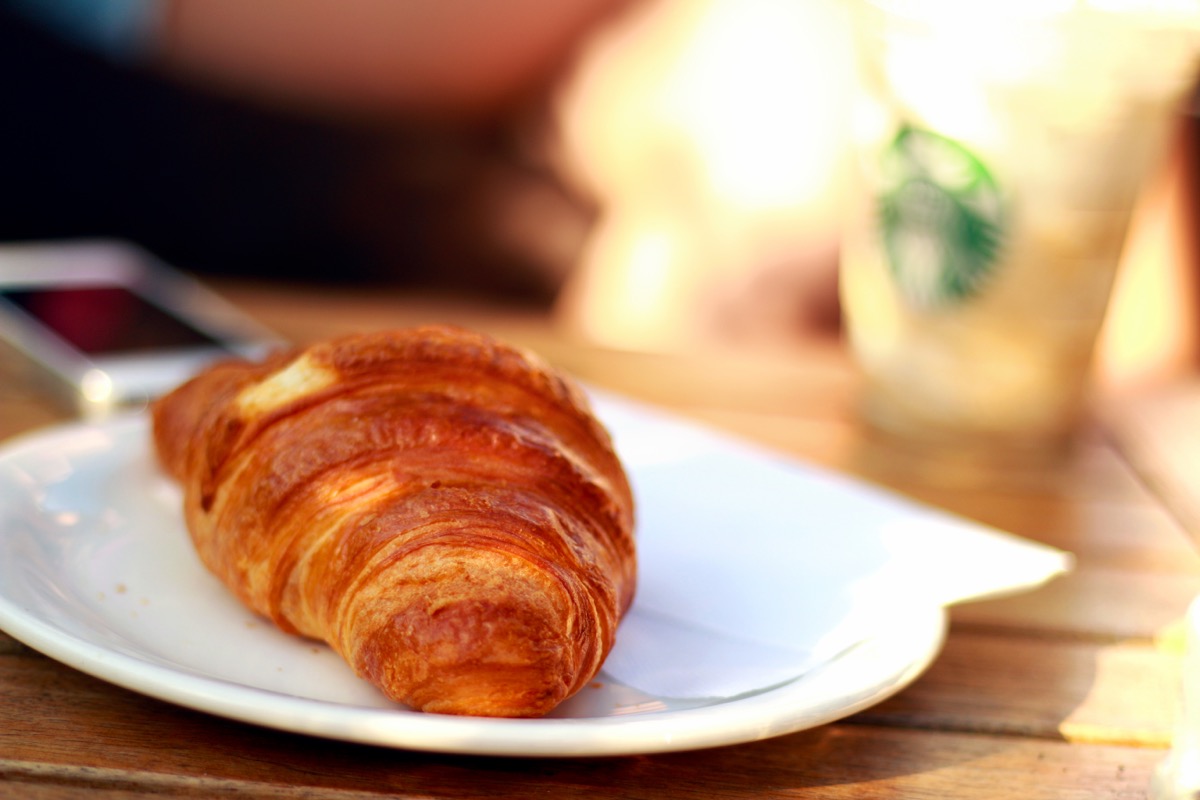
The croissant principle is the idea that one small morning decision, what you eat, whether you snooze, how you spend the first hour, triggers a chain reaction that shapes your entire day. Research on decision cascades, blood glucose effects on cognition, and keystone habits shows tiny choices compound into identity. Everything is connected. The person you become is built one decision at a time.
It starts with a croissant.
That might sound ridiculous. A pastry cannot possibly be the difference between the life you are living and the life you are meant to live. Except it is. Not the croissant itself. What it represents. The decision behind it. The pattern it reveals. The cascade of consequences that flows from one small choice made before you are fully awake.
What does the research say about blood glucose and cognition?
Research on blood sugar cognition documents that rapid-carb breakfasts produce measurable drops in attention, mood, and decision-making within hours. Morning habits built on simple carbs carry a predictable cognitive price. Roy Baumeister's work on self-control, summarized in Willpower (2011), found that decision quality correlated with stable blood glucose levels. Sharp spikes and crashes produced the same decision-degradation pattern as depletion after many decisions.
The mechanism is specific. Simple carbs like a croissant produce a glucose spike within 30 minutes, followed by a crash 90 minutes later. During the crash, executive function in the prefrontal cortex drops measurably. You reach for coffee. Then more coffee. The caffeine creates anxiety while masking the fatigue. By afternoon, you are running on fumes and stimulants, and your work, patience, and decisions all suffer.
A high-protein, moderate-fat breakfast produces a different curve. Slower glucose rise, sustained release, no crash. The difference is not about the calories. It is about the effect on cognition across the next eight hours. Same person. Same capabilities. Different breakfast. Different day. This is the biological side of the croissant principle. (Related: The Morning Routine for Burnout Recovery.)
How does the decision cascade actually work?
The decision cascade works because every choice influences the next. You wake up at 6. You choose to hit snooze. Now it is 6:20. You are rushed. The morning routine gets compressed. Meditation skipped. Workout skipped. Breakfast has to be quick. Something quick. Like a croissant. The second choice was constrained by the first.
The croissant spikes your blood sugar. By 9 AM you are crashing. Focus scatters. You reach for coffee. Then more coffee. By afternoon, you are running on fumes. Your work suffers. Your patience suffers. Your decision-making suffers. You get home tired and irritable. You do not have energy to exercise. You do not have clarity to work on your real goals. You collapse on the couch. Another night of scrolling. Another day wasted. All from one snooze.
Research on decision fatigue by Shai Danziger, Jonathan Levav, and Liora Avnaim-Pesso, published in PNAS in 2011 as "Extraneous Factors in Judicial Decisions," documented that judges granted fewer paroles as the day progressed, regardless of case merits. Decisions deteriorate as the day wears on, especially when early decisions burn cognitive resources through stress or glucose crashes. The croissant principle is this dynamic at individual scale. (Related: Structure Is Freedom.)

Why does the morning matter more than the rest of the day?
The morning matters more than the rest of the day because the first choices create the state from which the later choices get made. The person who starts with movement, protein, and focused work is making afternoon decisions from one baseline. The person who starts with snooze, croissant, and reactive scrolling is making afternoon decisions from a different, measurably worse baseline.
Research on keystone habits, documented in Charles Duhigg's The Power of Habit (2012), showed certain morning behaviors trigger cascades of other positive behaviors. Regular morning exercise improved nutrition, sleep, and work quality without the person deliberately targeting those areas. The cascade runs automatically, because the early-day state primes the rest of the day to match.
The practical implication is that winning the morning is not motivational poster wisdom. It is neurological reality. The first choices establish the pattern the brain follows for the rest of the day. They determine whether you are operating from strength or weakness, clarity or fog. The croissant principle operates here: the small breakfast choice is a proxy for the larger pattern of early-day decisions that compound across 16 waking hours. (Related: Own Your Morning.)
What are you actually choosing when you reach for the easy option?
When you reach for the easy option, you are not just choosing food. You are choosing an identity. Every choice is a vote. A vote for the person you are becoming or a vote against them. The votes accumulate. Daily. Hourly. Until you look around and wonder how you ended up so far from where you wanted to be. You ended up there one choice at a time.
James Clear's Atomic Habits (2018) framed this as identity-based habits: "Every action you take is a vote for the type of person you wish to become." The croissant vote says "I am someone who takes the path of least resistance." The protein vote says "I am someone who invests in today's performance." Neither vote feels dramatic. The accumulation of thousands of them is the whole difference.
Identity is not declared. It is demonstrated. Through action. Through choice. Through the thousand small decisions nobody else will ever know about. The person who eats for performance across a year is structurally different from the person who eats for comfort across the same year. Same starting point. Same capabilities. Different choices. Radically different outcomes.

How do I actually apply the croissant principle daily?
Apply the croissant principle daily by treating the first choice of the morning as the one that sets the tone. Not perfectly. With awareness. The first decision shapes the second, which shapes the third, and the chain runs all day. Intervene at the first link and the downstream chain improves.
The specific interventions matter less than the first one. Drink water before coffee. Eat protein before carbs. Move before scrolling. Complete one deliberate action before any reactive input. The goal is not any particular protocol. The goal is to stop letting the day start from the weakest possible choice and instead to start it from a choice that produces the state that handles the next 15 hours better.
Darren Hardy's The Compound Effect (2010) synthesized this across domains: small daily choices that feel insignificant compound into outcomes that look impossible from the outside. The math favors people who consistently choose the slightly-better option, not because any single choice matters, but because the ratio of better-to-worse choices across years determines the trajectory. The croissant principle is the compound effect operating on breakfast. (Related: The One Percent.)
Being THE ONE
THE ONE understands the croissant principle.
Treats the first morning choice as the one that sets the tone. Intervenes at the first link in the chain because the first link constrains every link after it.
THE ONE knows the small thing is the big thing. Every choice is a vote. The votes accumulate. The identity that emerges is built from thousands of micro-decisions nobody else saw, including the one about breakfast.
THE ONE does not aim for perfection. Aims for awareness. Consciousness of the cascade. Recognition that the croissant is not just a croissant, and the snooze is not just a snooze. Each one is a node in a pattern that compounds.
The croissant is a test. But so is everything else.
Every moment is an opportunity to vote for your future self or against them.
Every choice is a brick in the foundation of your identity.
What are you building?
Who are you becoming?
These are not abstract questions. They are answered every morning. Every meal. Every decision point throughout the day.
Be the one who chose wisely.
Not because it was easy. Because it was connected to everything.
Sources
- Baumeister, R. F., & Tierney, J. (2011). Willpower: Rediscovering the Greatest Human Strength. Penguin Books. On glucose, decision fatigue, and self-control. https://www.penguinrandomhouse.com/books/307740/willpower-by-roy-f-baumeister-and-john-tierney/
- Danziger, S., Levav, J., & Avnaim-Pesso, L. (2011). "Extraneous Factors in Judicial Decisions." PNAS, 108(17), 6889-6892. On decision fatigue in real-world outcomes. https://doi.org/10.1073/pnas.1018033108
- Duhigg, C. (2012). The Power of Habit: Why We Do What We Do in Life and Business. Random House. On keystone habits and cascades. https://charlesduhigg.com/the-power-of-habit/
- Hardy, D. (2010). The Compound Effect: Jumpstart Your Income, Your Life, Your Success. Vanguard Press. On small choices compounding into outcomes. https://tce.darrenhardy.com/resources
Make room for the practice. Plan your weekly practice time and see how the sessions add up.