Identity
The Mirror Never Lies
Your current life is evidence of your past choices. Self reflection done honestly is how you read the evidence and change the next chapter. The mirror does not flatter and does not deceive. It reports.

In this article
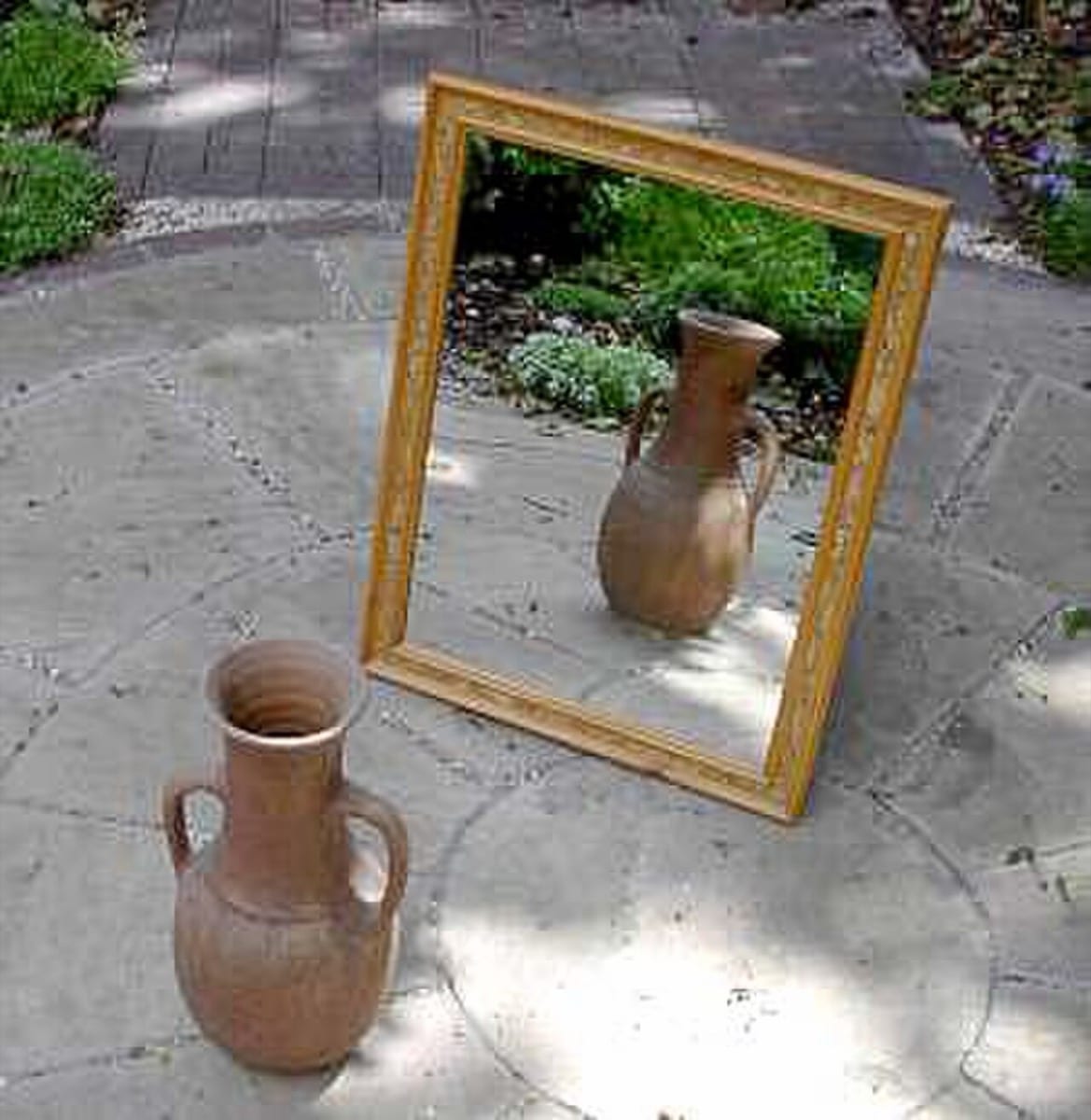
Self reflection is the practice of reading your current life as evidence of your past choices, not as a verdict on your worth. The mirror does not flatter, and it does not deceive. It reports. The question is whether you have the honesty to read the report and the courage to edit the next chapter instead of arguing with the current one.
The life you are living right now did not arrive by accident.
It is the accumulated result of your choices, your habits, your patterns, your refusals. Some of those choices you made consciously. Most you made by default.
Either way, the life is yours. And the mirror is showing you exactly what you have built.
Why does my current life reflect my past choices?
Your current life reflects your past choices because life is a compounding process, not a series of isolated events. Every choice you made about time, energy, attention, relationships, spending, and speaking has added up to the specific arrangement of circumstances, body, bank account, and inner weather that you woke up inside today. The reflection is not unfair. It is mathematical.
The uncomfortable part is that this includes the choices you did not realize you were making. Defaults you accepted. Scripts you inherited. Conversations you avoided. Those accumulate with the same gravity as the deliberate choices, which is why two people with the same stated intentions can produce very different lives over a decade. Self reflection is how you pull those default choices up into awareness, so the next decade runs on inputs you chose instead of inputs that chose you.
Carl Jung wrote in Aion: "The psychological rule says that when an inner situation is not made conscious, it happens outside, as fate." The patterns that run your life while unexamined keep generating the same outcomes, and those outcomes become the reflection you do not want to look at. Looking is the first move. (Related: Your Environment Shapes You.)
How do I do an honest life audit?
Run an honest self assessment by looking at each major domain and asking what the current state is evidence of, without the layer of story you usually put between the evidence and your self-image. Money, body, relationships, and work each reflect a specific set of past choices, and each can be read as neutral data about the inputs you have been running.
The audit is not moral. It is informational. Frame each domain neutrally: "The data from the last year says X. What does that suggest about the inputs I have been running?" Avoid "why am I like this," which Ethan Kross's research on self-distancing shows produces rumination, not insight. Ask "what is this evidence of," which produces actionable observation.
Tasha Eurich's 2018 research on self-awareness, published in Harvard Business Review and in her book Insight, found that while 95 percent of people believe they are self-aware, only 10-15 percent actually are. More striking: the more people introspected, the less self-aware they tended to become, because they confused introspection with insight. The difference is the question type. Personal accountability lives in "what" and "how." (Related: The Measure of a Person.)
Why is the mirror a teacher, not an enemy?
The mirror is a teacher because it gives you accurate data no one else will. Friends flatter. Family has stakes in your staying the same. Your own inner narrator softens the edges. Self reflection on the actual circumstances of your life is the only feedback that cannot lie, which is why most people prefer almost any other source of feedback instead.
Most people treat the mirror as an enemy because they confuse the reflection with a verdict. It is not a verdict. It is a reading. The reading is neutral; the interpretation you add is what makes it painful. "I failed" is interpretation. "The last year produced these numbers" is observation. The first locks you in. The second opens the next move. The best self-development teachers train you to make that second read.
Identity work begins with this distinction. You are not the reflection. You are the one looking at it, and the one capable of changing the inputs that produce the next one. That asymmetry is where every real change starts. (Related: Your Habits Are Your Future.)
How do I separate shame from honest observation?
Separate shame from observation by noticing that shame is a story about being defective, while observation is data about what is. The same facts can be read as "I am broken" or "the inputs produced this output." The first is toxic and immobilizing. The second is useful and actionable. Only one of them leads anywhere.
A practical move: write the observations in the third person for ten minutes. "He has not exercised in two months. He has been drinking more than he said he would. He has not finished the project he started in January." The grammatical shift creates distance. Ethan Kross at Michigan has shown that self-distancing via language reduces emotional reactivity and improves the quality of reflection.
Shadow work is this, done consistently. You are not trying to destroy the parts of you that produced unwanted outcomes. You are trying to see them clearly enough that you can choose differently going forward. Jung's whole point is that what you refuse to see keeps running the show. Seeing it is the beginning of no longer being run by it. (Related: What Your Triggers Tell You.)
How do I change the reflection?
Change the reflection by changing the inputs. The mirror is lagging indicator. Whatever it shows today was decided in the choices of the last one to five years. The choices you make in the next six months will show up in the mirror one to five years from now. There is no shortcut. There is also no curse. It is input-output, applied patiently.
Pick three specific inputs you are going to change this quarter. Not ten. Three. One physical (sleep, movement, or food). One financial (spending, saving, or earning). One relational (a conversation to have, a boundary to hold, a person to spend more time with). Run those three for ninety days. Re-check the mirror in a year. It will have changed, because the inputs did.
The final practice is the simplest and hardest. Stop arguing with the reflection. Stop negotiating with the evidence. Start doing the boring thing of changing the inputs. The mirror will catch up. It always does. That is the rule you can actually count on. (Related: The 90-Day Identity Shift.)
Being THE ONE
THE ONE looks in the mirror without flinching.
Not because the reflection is flattering. Because the reflection is information.
THE ONE treats self reflection as a tool, not a punishment. Runs the audit. Names the patterns. Changes the inputs.
THE ONE knows the mirror is never the enemy. The enemy is the unwillingness to look.
The mirror never lies.
Go look.
And then get to work on the next reflection.
Be the one whose honest self assessment produces a life worth reflecting on.
Sources
- Jung, C. G. (1951). Aion: Researches into the Phenomenology of the Self. Collected Works, Volume 9, Part II. Verified quote: "The psychological rule says that when an inner situation is not made conscious, it happens outside, as fate." https://press.princeton.edu/books/paperback/9780691018263/collected-works-of-c-g-jung-volume-9-part-2
- Eurich, T. (2017). Insight: Why We're Not as Self-Aware as We Think, and How Seeing Ourselves Clearly Helps Us Succeed at Work and in Life. Crown Business. Research finding: 95% believe they are self-aware, only 10-15% are. https://www.tashaeurich.com/insight/
- Kross, E., & Ayduk, O. (2017). "Self-Distancing: Theory, Research, and Current Directions." Advances in Experimental Social Psychology, 55, 81-136. Research on "what" vs "why" questions in reflection. https://selfcontrol.psych.lsa.umich.edu/wp-content/uploads/2020/02/Self-Distancing-Theory-Research-and-Current-Directions.pdf
- Pennebaker, J. W., & Beall, S. K. (1986). "Confronting a Traumatic Event: Toward an Understanding of Inhibition and Disease." Journal of Abnormal Psychology, 95(3), 274-281. Foundational expressive-writing research. https://psycnet.apa.org/doi/10.1037/0021-843X.95.3.274
Ready to put this into practice? Check your identity alignment and see where you actually stand.