Daily practice
The Truth About Sungazing
Sungazing, the practice of staring at the sun, can permanently damage your eyes. The safe, science-backed alternative is morning sunlight viewed early in the day, never stared at directly. It sets your body clock, lifts mood at the margins, and costs nothing. Here is the myth, the evidence, and the protocol.

In this article
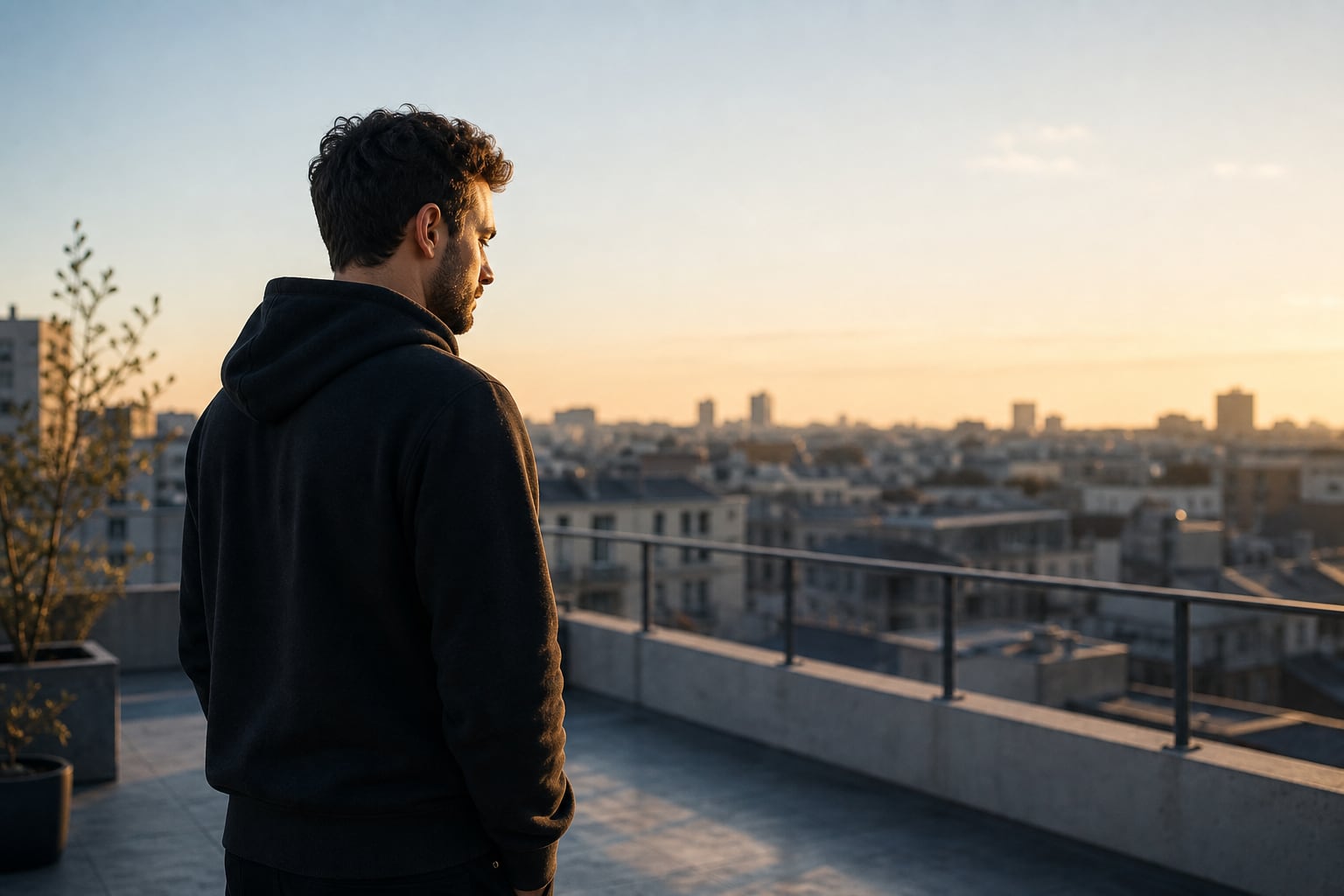
Sungazing promises enlightenment and delivers blind spots. Staring at the sun burns the retina, and no ritual makes that safe. The practice worth keeping is quieter: step outside and let morning sunlight reach your eyes early, no staring required. It is free, it repeats, and it compounds.
There is a real thing here, buried under a dangerous one.
The dangerous one has millions of views. The real one is almost boring. That gap is the whole story.
Is sungazing safe, or does staring at the sun damage your eyes?
No. Sungazing is not safe, and staring at the sun damages the retina. The light burns the fovea through photochemical and thermal injury, a condition called solar retinopathy. Doctors reviewing the viral TikTok trend documented lasting harm. There is no dose of direct sun that trains your eyes to tolerate it.
A 2024 case report in Clinical Insights in Eyecare tracked a person who followed the #SunGazing trend and lost visual acuity that never fully returned. The authors warn that sungazing "can result in permanent visual acuity deficit, central or paracentral scotoma, and metamorphopsia." Metamorphopsia means straight lines start to look bent, and they stay bent.
The damage hides at first because the retina has no pain receptors. You feel nothing while the injury forms, which is exactly why the trend spread. Skip the myth and read what the silent hours teach about starting the day well.
| Practice | What you do | Risk | What it is good for |
|---|---|---|---|
| Sungazing | Stare at the sun itself | Retinal injury, blind spots, distorted vision | Nothing worth the risk |
| Morning sunlight | Stand outside and let daylight reach your eyes while looking away from the sun | Low when you do not stare at the sun | Circadian rhythm, alertness, mood support |
| Bright indoor light | Sit near strong artificial light in the morning | Usually low, but intense lamps need instructions | Helpful backup when outdoor light is impossible |
If you already stared at the sun and notice a central blur, dark spot, bent lines, color changes, or trouble reading, treat that as an eye problem, not a detox symptom. Stop the practice and contact an eye doctor. Waiting to see if it becomes "part of the process" is exactly how bad advice gets expensive.
What morning sunlight actually does to your brain and mood
Morning sunlight hits specialized cells in your eyes that report the time of day to your brain. That signal anchors your circadian rhythm, sets a timer for melatonin about sixteen hours later, and nudges mood upward. Bright light early tells the body the day has started, and everything downstream lines up behind it.
The clock-setting effect is well documented. Zeitzer and colleagues showed in their 2000 study that ocular light suppresses melatonin and shifts the human clock, with a response near half-maximal at only about 100 lux. Outdoor morning light runs into the thousands of lux even on a gray day, so a few minutes outside swamps anything your ceiling bulbs produce.
Mood moves too. An APA-commissioned meta-analysis by Golden and colleagues put the effect of bright light on seasonal depression at Cohen's d = 0.84, on par with antidepressants. If mornings feel heavy, pairing light with a steadier burnout recovery routine is a cheap first move. It will not replace treatment, and it should not pretend to.
How to use morning sunlight the safe way (the protocol)
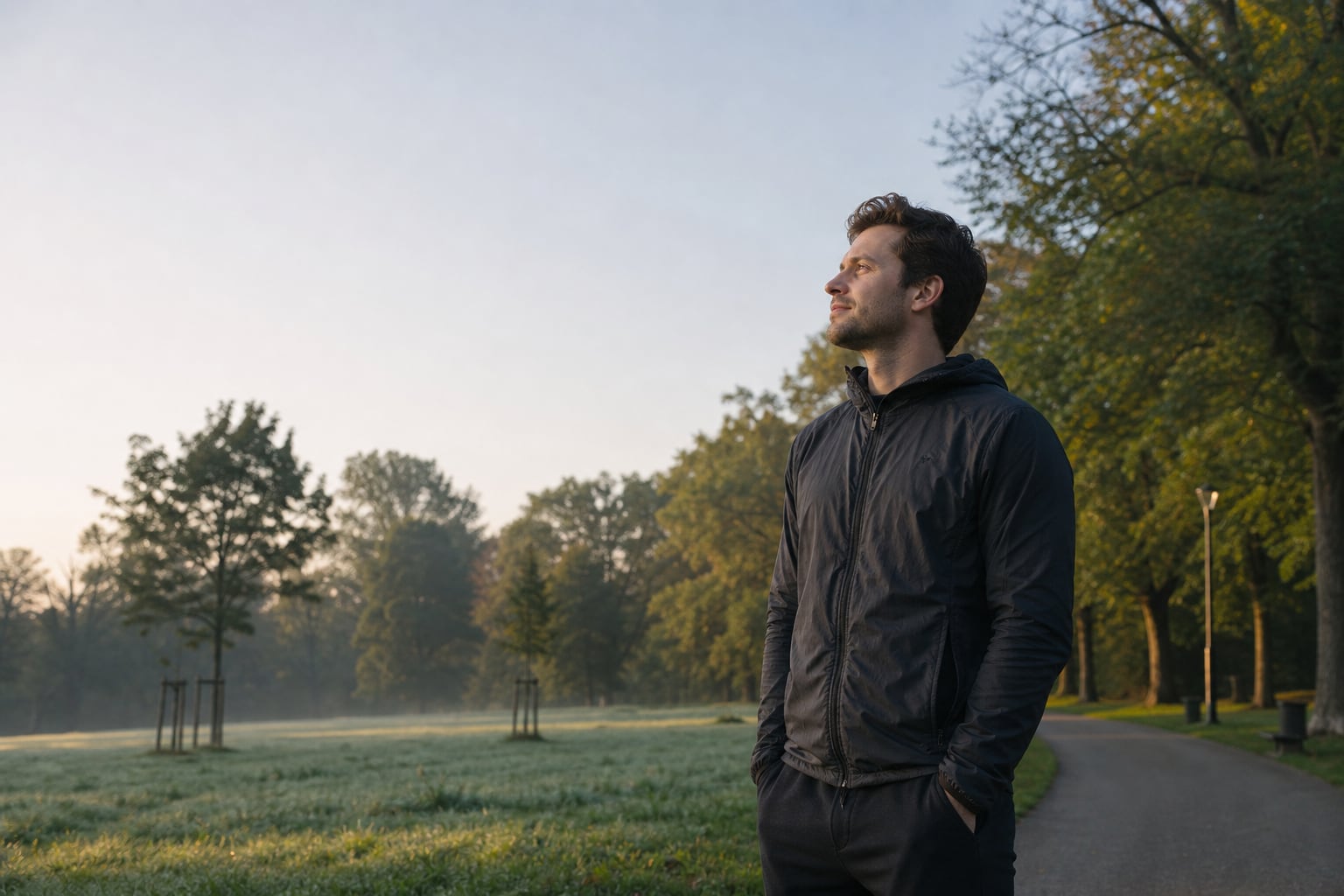
Get outside within thirty to sixty minutes of waking and let daylight reach your open eyes. Five to ten minutes is enough on a clear day, ten to twenty when it is overcast. Skip sunglasses so the signal lands, keep a regular window, and never look straight at the sun.
Neuroscientist Andrew Huberman popularized this protocol, and he is blunt about the ceiling: you view the sky, not the sun. On bright days do not force your eyes toward the disc, because the surrounding light carries the signal fine. Cloud cover is not an excuse either, since the relevant brightness still gets through the clouds.
Consistency beats intensity. A short bout of morning sun exposure every day outperforms one long session on Sunday, the same way small daily habits shape your future. Stack it onto something you already do, like the walk out to your coffee, and it stops being a task you can forget.
The video below fits this section because Huberman keeps the distinction clear: get outdoor light early, but do not stare at the sun. Watch it as a practical protocol, not a permission slip for sungazing.
Why morning light beats coffee for waking up
Coffee blocks the chemical that makes you feel sleepy; it hides tiredness without fixing the clock behind it. Morning light does the opposite. It resets the timing system directly, so alertness rises on schedule and the afternoon crash softens. Light works upstream of caffeine, which is why the two are not the same tool.
None of this means quit coffee. It means order the two correctly: light first, caffeine a bit later, so you are not masking a clock you never set. People who own their mornings tend to get the sequence right without thinking about it.
There is a bracing version of the same idea. A cold rinse jolts you awake, and cold water teaches a similar lesson about starting the day on purpose rather than drifting into it. Light is the gentler, more repeatable lever, and it asks almost nothing of you.

What morning sunlight will not do (the honest limits)
Morning sunlight will not make vitamin D. Early sun is mostly UVA, and vitamin D needs UVB, which shows up later when the UV index climbs past three. It also will not cure clinical depression on its own. The mood evidence is strongest for seasonal patterns, and weaker outside them. Be honest about that.
So keep the claim narrow. Morning sunlight sets timing and lifts mood at the margins. It does not detoxify you, feed you energy through your eyes, or replace food, sleep, or medicine. The sungazing crowd oversold a real thing until it turned dangerous, and the correction is not to swing to another myth.
Protect the practice by protecting your attention around it. Guard the first hour, guard your peace, and let the light do its small, reliable work. The honesty is the point: a modest daily edge, claimed accurately, beats a miracle that blinds you.
FAQ
Can sungazing cause permanent eye damage?
Yes. Sungazing can cause solar retinopathy, which can leave central blind spots, distorted vision, or reduced visual acuity. The danger is that it may not hurt while the damage is happening.
Is sunrise sungazing safer?
It is still not worth doing. The safer alternative is not "look at the sun when it is low." The safer alternative is outdoor morning sunlight while looking away from the sun.
What is the safest morning sunlight protocol?
Go outside within thirty to sixty minutes of waking. Let daylight reach your eyes for five to ten minutes on clear mornings and ten to twenty minutes when it is overcast. Look at the sky or the environment, not the sun.
Being THE ONE
THE ONE does not chase magic. Tests the claim, keeps what holds.
THE ONE steps into the light early and looks away from the sun. Sets the clock, then gets on with the day.
The cheapest investment in yourself is ten minutes of morning sunlight. Free. Repeatable. Compounding.
Not the ritual that promises everything. The habit that quietly delivers. Build it into your daily systems and let it run.
Sources
- Solar retinopathy from the #SunGazing social media trend: a case report. (2024). Clinical Insights in Eyecare. https://clinicalinsightsineyecare.scholasticahq.com/article/123720
- American Academy of Ophthalmology. "Solar Retinopathy." EyeWiki. https://eyewiki.org/Solar_Retinopathy
- Zeitzer, J. M., Dijk, D. J., Kronauer, R. E., Brown, E. N., & Czeisler, C. A. (2000). "Sensitivity of the human circadian pacemaker to nocturnal light." Journal of Physiology, 526(3), 695–702. https://pmc.ncbi.nlm.nih.gov/articles/PMC2717723/
- Golden, R. N., et al. (2005). "The efficacy of light therapy in the treatment of mood disorders." American Journal of Psychiatry, 162(4), 656–662. https://ajp.psychiatryonline.org/doi/10.1176/appi.ajp.162.4.656
- Huberman, A. "Using Light for Health." Huberman Lab Newsletter. https://www.hubermanlab.com/newsletter/using-light-for-health
Ready to put this into practice? Check your habit consistency and turn ten minutes of morning light into a streak that holds.