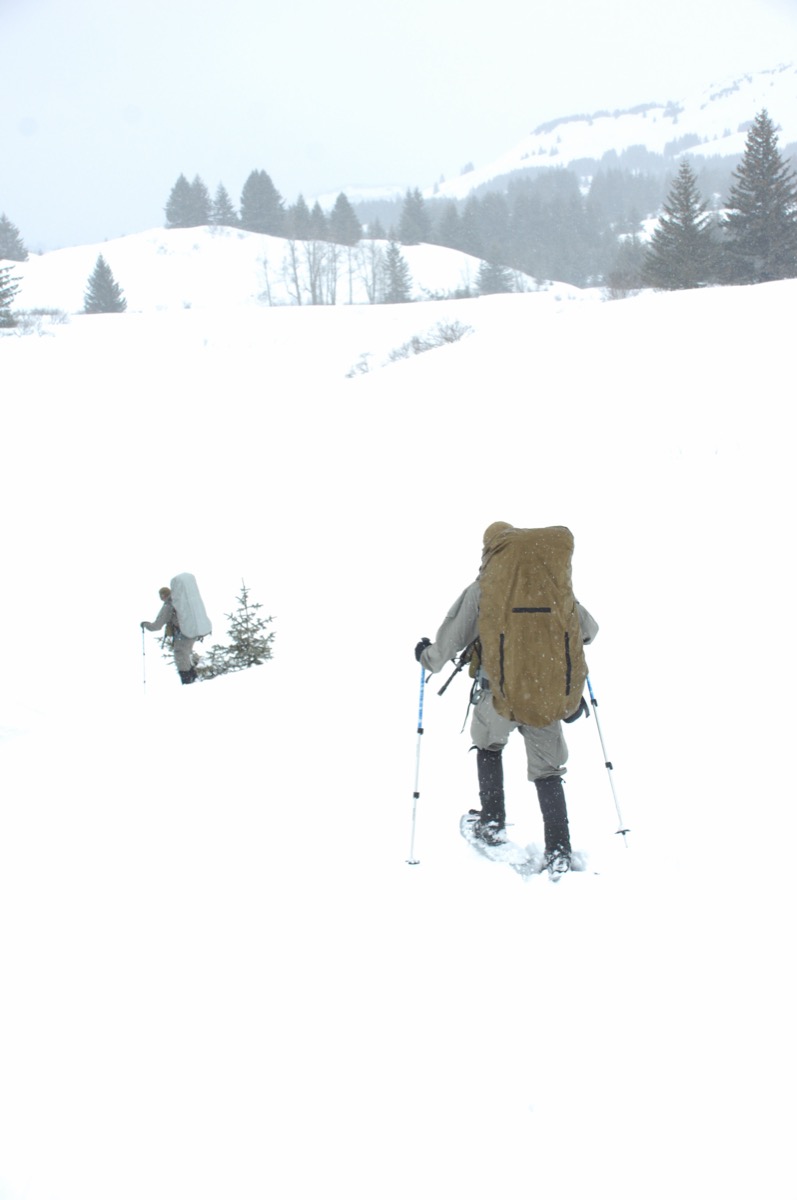
Deliberate discomfort is chosen difficulty, practiced daily, so your tolerance grows and life stops shrinking to what feels safe. Cold water, hard conversations, unfamiliar thinking: small doses of voluntary stress compound into a capacity to handle the involuntary stress that arrives uninvited. Make discomfort a practice and comfort stops running your life.
You will never grow in comfort.
Not physically. Not mentally. Not professionally. Not personally. Growth only happens when capacity is asked to stretch past what was easy yesterday. The stretch is uncomfortable by design, and the discomfort is not a side effect of growth. It is the cause.
Chapter IWhat is deliberate discomfort and why does it work?
Deliberate discomfort is chosen difficulty: small, voluntary challenges that push your current capacity slightly past comfort. A cold shower, a hard set, a conversation you would rather avoid, a task you would rather delay. Chosen means you opt in. It also means you can opt out, which is what makes the practice training rather than trauma. The distinction matters physiologically and psychologically.
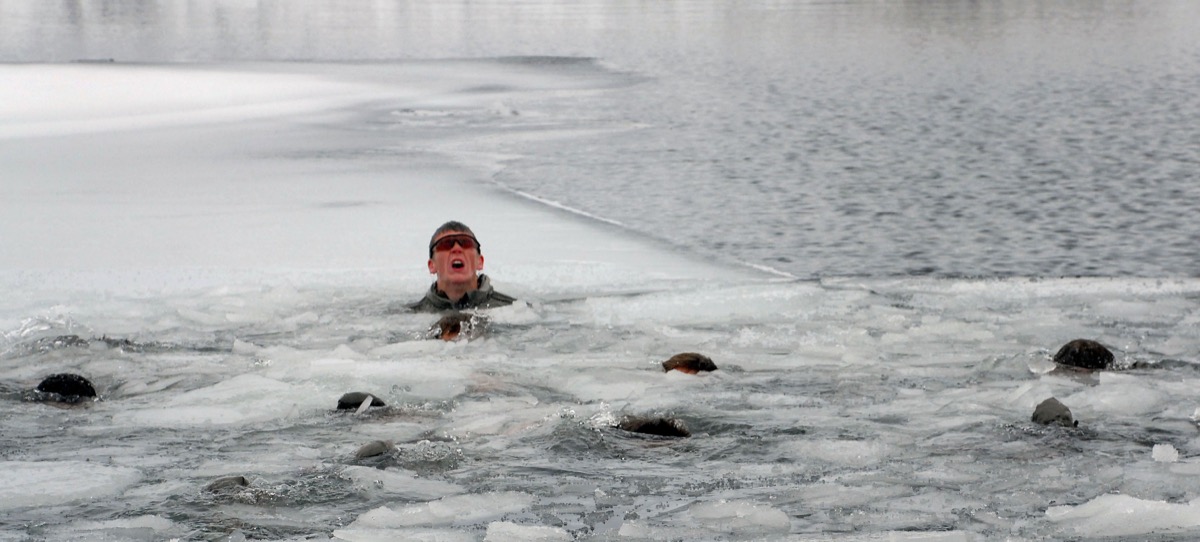
The mechanism is adaptive stress. Controlled doses of stress trigger cellular and neurological repair processes (hormesis, in the biological literature) that produce a stronger baseline after the session than existed before. The muscle gets stronger after the hard set. The nervous system gets more regulated after the cold exposure. The mind gets more confident after the honest conversation. The gain happens in the recovery, not in the session itself.
The dose matters. Too small and there is no adaptation. Too large and the system breaks. The sweet spot is the growth zone: uncomfortable enough that your current capacity is clearly insufficient, but not so overwhelming that recovery becomes impossible. Daily practice at the edge of that zone is what makes discomfort a reliable engine for compound improvement. (Related: Cold Water Teaches.)
Chapter IIHow do I make discomfort a practice?
Make discomfort a practice by picking one small, daily, non-negotiable action that puts you slightly past your comfort zone. A 30-second cold shower. A set of ten hard pushups. A 15-minute session with material you do not yet understand. A five-minute honest conversation about something you have been avoiding. The specifics are flexible. The daily cadence is not.
The protocol is deliberately unromantic. Same time each day. Same minimum dose. No elaborate setup. The practice has to survive a bad Tuesday with six hours of sleep, so anything requiring fresh motivation will collapse inside a month. Cold exposure training is the easiest entry point: after brushing teeth, cold shower. After coffee, hard reading. After dinner, the conversation.
The practice compounds on a time scale most people are not patient for. Week one feels hard and looks like nothing. Week four looks like slight progress. Month three starts producing visible change. Month six is where other people begin to notice that you have a different baseline than you used to. The alternative, avoiding discomfort, compounds in the opposite direction at the same rate. (Related: Make Discomfort a Practice.)
Chapter IIIWhat is the growth zone and how do I stay in it?
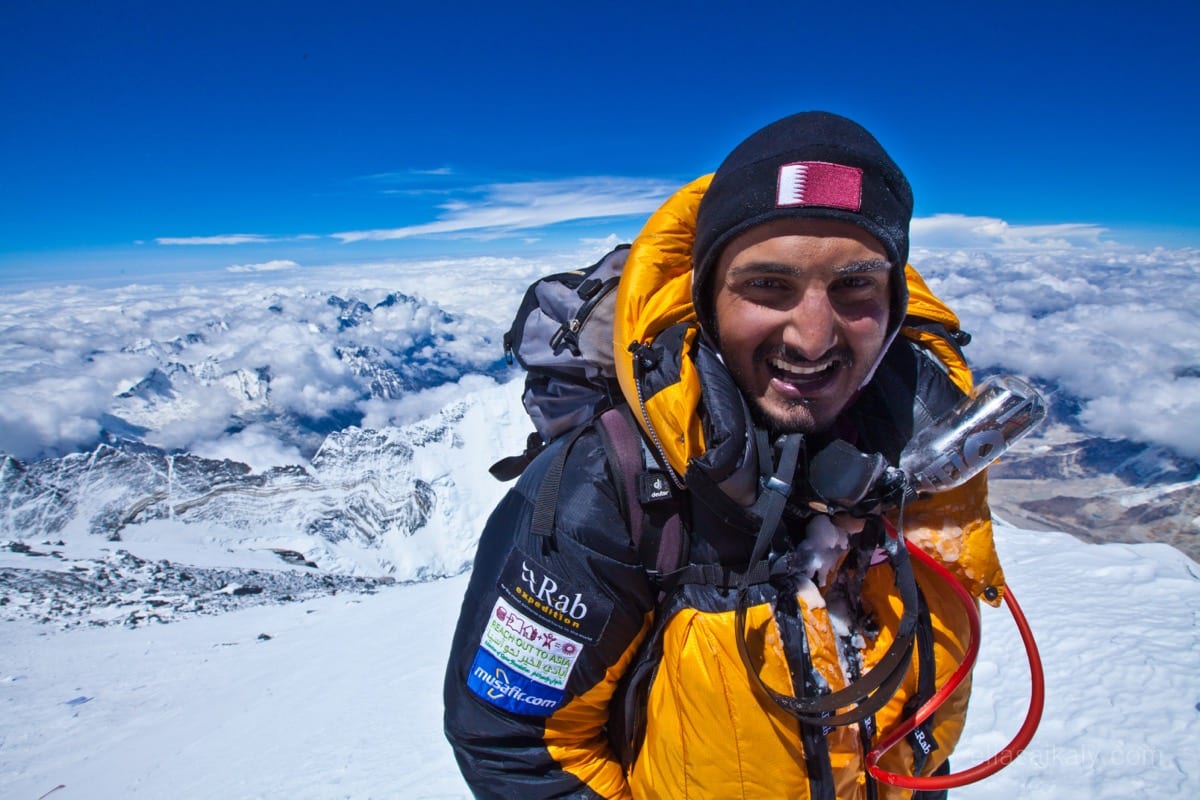
The growth zone is the band of effort just past comfort but short of panic, where adaptation happens without the system breaking. The model originates from the Yerkes-Dodson law (Journal of Comparative Neurology and Psychology, 1908), which documented that performance rises with arousal up to an optimal point and then declines. Modern translations call the three bands comfort, growth, and panic. The target is the middle one, consistently.
Staying in the growth zone requires calibration. Too easy and the work produces no adaptation. Too hard and the work produces injury, burnout, or avoidance. The zone itself moves: what was growth-zone work a year ago is comfort-zone work today, and the same stimulus stops producing gains once the system has adapted to it. This is why practitioners need to keep nudging the difficulty upward to stay productively uncomfortable.
The honest diagnostic is the after-feeling. A growth-zone session leaves you tired and improved. A panic-zone session leaves you depleted and worse. A comfort-zone session leaves you the same as before. If your workouts, your reading, your conversations, or your work consistently leave you the same as before, you are not in the zone where discomfort tolerance is being built. You are running in place with the appearance of motion. (Related: The Discipline of Rest.)
Chapter IVHow do I build discomfort tolerance?
Build discomfort tolerance by practicing it in small, varied contexts so the skill generalizes. Physical discomfort (cold, hard training, fasting). Mental discomfort (unfamiliar material, complex problems, ideas that contradict your current beliefs). Social discomfort (honest feedback, boundary-setting, conversations you have been avoiding). Each domain trains a slightly different aspect of the underlying capacity, and the training transfers.
Robertson and Marino's 2016 paper in the Journal of Applied Physiology argued that exercise tolerance is regulated not only by peripheral signals but by the prefrontal cortex's interpretation of those signals. The implication matters: discomfort tolerance is a trainable cognitive skill, not only a physiological trait. The person who has practiced staying with discomfort in one domain transfers that capacity to other domains where the same override is required.
Seneca wrote in Letters to Lucilius (Letter 18): "Set aside a number of days, during which you shall be content with the scantiest and cheapest fare, with coarse and rough dress, saying to yourself the while: 'Is this the condition that I feared?'" The Stoic practice he called praemeditatio malorum is the same protocol as modern discomfort training. Rehearse hardship on purpose so the arrival of real hardship finds you prepared. (Related: Fear Is a Compass.)
Chapter VWhy is comfort the enemy of growth?
Comfort is the enemy of growth because sustained comfort removes the stimulus adaptation requires. Muscles do not get stronger on a couch. Minds do not sharpen binge-watching television. Relationships do not deepen in conversations that avoid every hard topic. The comfortable path consistently under-produces because the system has nothing to adapt to.
The trap is that comfort is also addictive. The more comfortable you are, the less you can tolerate discomfort, which means the threshold for avoiding the next uncomfortable situation drops. The avoidance tightens the spiral. Over time, a life organized around comfort becomes smaller, not larger, because every new challenge looks threatening instead of interesting. The comfort tolerance that seemed like a feature becomes a prison.
The reframe that works: comfort is not the goal of a good life. Meaning is. Meaning lives in the gap between current capacity and some outcome worth reaching, and closing that gap requires the deliberate discomfort of effort applied in the direction of the thing you care about. Make discomfort a practice and the reach of what feels possible expands. Make comfort the default and the reach contracts until nothing is possible at all. (Related: The Cost of Comfort.)
Chapter VIBeing THE ONE
THE ONE makes discomfort a practice.
Not as punishment. As the daily engine that keeps capacity growing.
THE ONE seeks deliberate discomfort in small doses, daily, across domains. Cold water. Hard training. Unfamiliar reading. Honest conversations.
THE ONE knows comfort is cheap and discomfort is valuable. That the easy path leads to a smaller life, quietly, over decades. That the hard path leads to a life worth inhabiting.
Comfort will always be available.
It will always be there, offering you the easy choice. The warm bed. The safe path. The familiar routine.
Every time you choose comfort over discomfort as a default, the comfort zone tightens around you.
Make discomfort your practice. Not your punishment.
Seek it every day. In small ways. In deliberate ways. In ways that stretch you past where you were yesterday.
Be the one who practices discomfort until it becomes a source of strength.
Chapter VIISources
- Yerkes, R. M., & Dodson, J. D. (1908). "The relation of strength of stimulus to rapidity of habit-formation." Journal of Comparative Neurology and Psychology, 18(5), 459-482. Original basis for the comfort-growth-panic zone model. https://psycnet.apa.org/record/1925-13214-001
- Robertson, C. V., & Marino, F. E. (2016). "A role for the prefrontal cortex in exercise tolerance and termination." Journal of Applied Physiology, 120(4), 464-466. On the prefrontal cortex's role in tolerating discomfort. https://journals.physiology.org/doi/full/10.1152/japplphysiol.00363.2015
- Tipton, M. J., Collier, N., Massey, H., Corbett, J., & Harper, M. (2017). "Cold water immersion: kill or cure?" Experimental Physiology, 102(11), 1335-1355. Peer-reviewed review of cold-shock response, habituation, and adaptation. https://onlinelibrary.wiley.com/doi/10.1113/EP086283
- Seneca. Letters to Lucilius, Letter 18. On praemeditatio malorum, rehearsing discomfort on purpose. https://en.wikisource.org/wiki/Moral_letters_to_Lucilius/Letter_18
---
Ready to put this into practice? Score your daily discipline system and see where you actually stand.