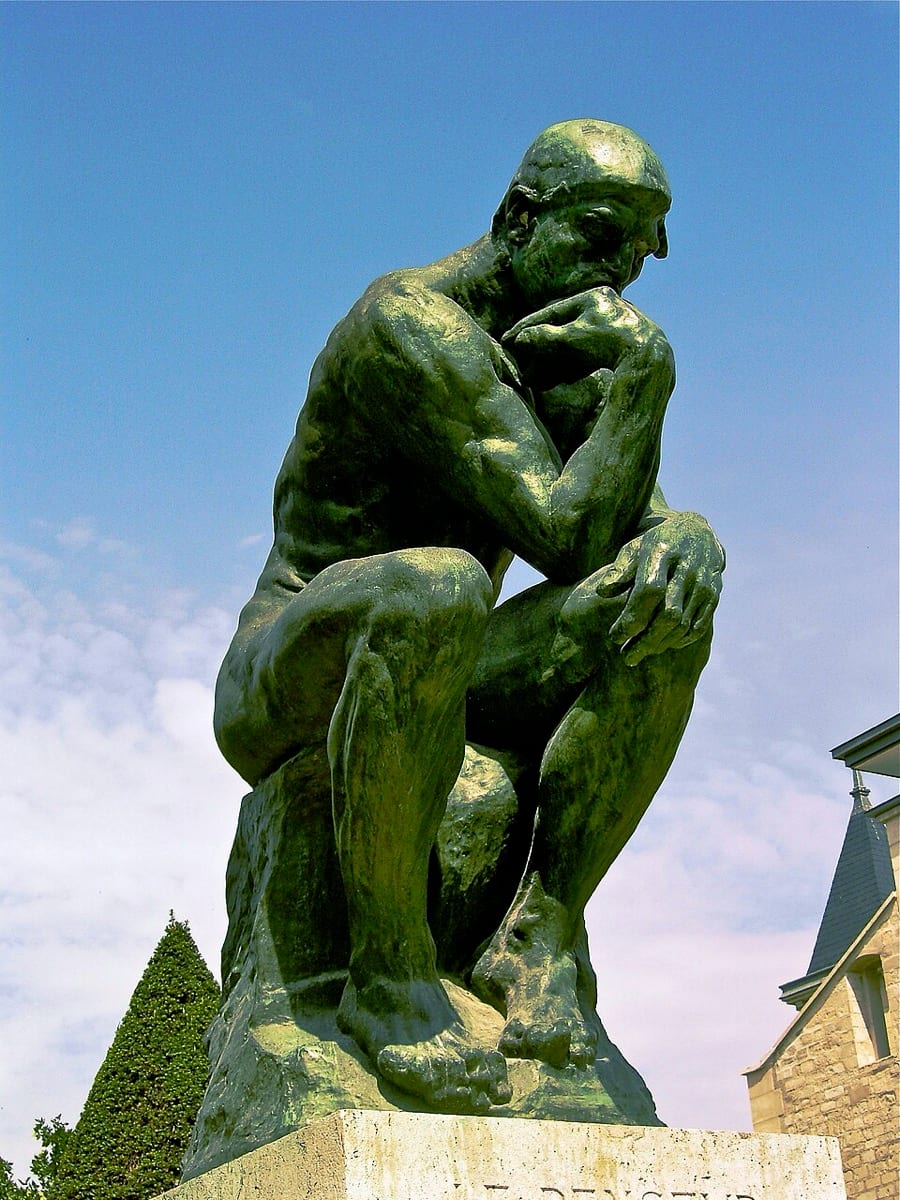
Critical thinking is the trained ability to reach your own conclusions through evidence and reasoning rather than absorbing opinions from the crowd. Most people confuse repetition with thinking and feeling with reasoning. Real thinking is slow, uncertain, and uncomfortable. It is also the foundation of a life that is actually yours, not one handed to you by consensus.
Most people do not think for themselves.
They think they do. What they call thinking is usually repeating: absorbing what others say and presenting it as their own conclusion. Real independent thought is one of the rarest skills in the world, and most people never practice it enough to notice they lack it.
Chapter IWhat is critical thinking and why is it rare?
Critical thinking is the disciplined process of analyzing evidence, evaluating arguments, and reaching conclusions through reasoning rather than reflex. It is rare because most human cognition runs on System 1 (fast, automatic, emotional), which Daniel Kahneman documented in Thinking, Fast and Slow as the default mode that feels like thinking but is mostly pattern-matching.
The practical version has four moves. First, distinguish what you actually know from what you heard. Second, evaluate the evidence for each belief, not just the conclusion. Third, consider the strongest version of opposing views before dismissing them. Fourth, notice when an argument is persuading you through emotion rather than evidence. These four moves are simple to describe and genuinely hard to run at scale.
The reason critical thinking is rare is not that people lack the capacity. It is that the capacity is expensive to use. System 2 thinking burns cognitive energy that System 1 does not. In any given day, most people choose the cheaper mode and repeat what they heard. The people who consistently use the expensive mode end up with better conclusions, and the gap compounds across years into dramatically different lives. (Related: The Power of Silence.)
Chapter IIHow do I think for myself instead of repeating?
Stop repeating by noticing when a belief is yours versus borrowed. Most opinions you hold were installed, not derived. From parents. From media. From social groups. From whoever spoke loudest or last. The test is simple: can you explain the reasoning behind the belief, or can you only cite who said it? If the answer is the second, you are repeating.
Once you have noticed a borrowed belief, you have three options. Keep it (after actually testing it against evidence), update it (if the evidence pushes a different direction), or discard it (if there is no real evidence supporting it). Most borrowed beliefs do not survive this audit. The ones that do become actually yours, which is a different relationship than just holding an opinion.
The discipline is to run this audit on one belief per week. Not a hundred. One. Pick something you believe, examine the evidence, and either re-justify it or revise it. This slow pace is not a limitation. It is the only pace at which real independent thinking happens, because rushing the audit just produces a new set of borrowed beliefs in place of the old ones. (Related: Stop Explaining Yourself.)
Chapter IIIWhat are first principles and how do I use them?
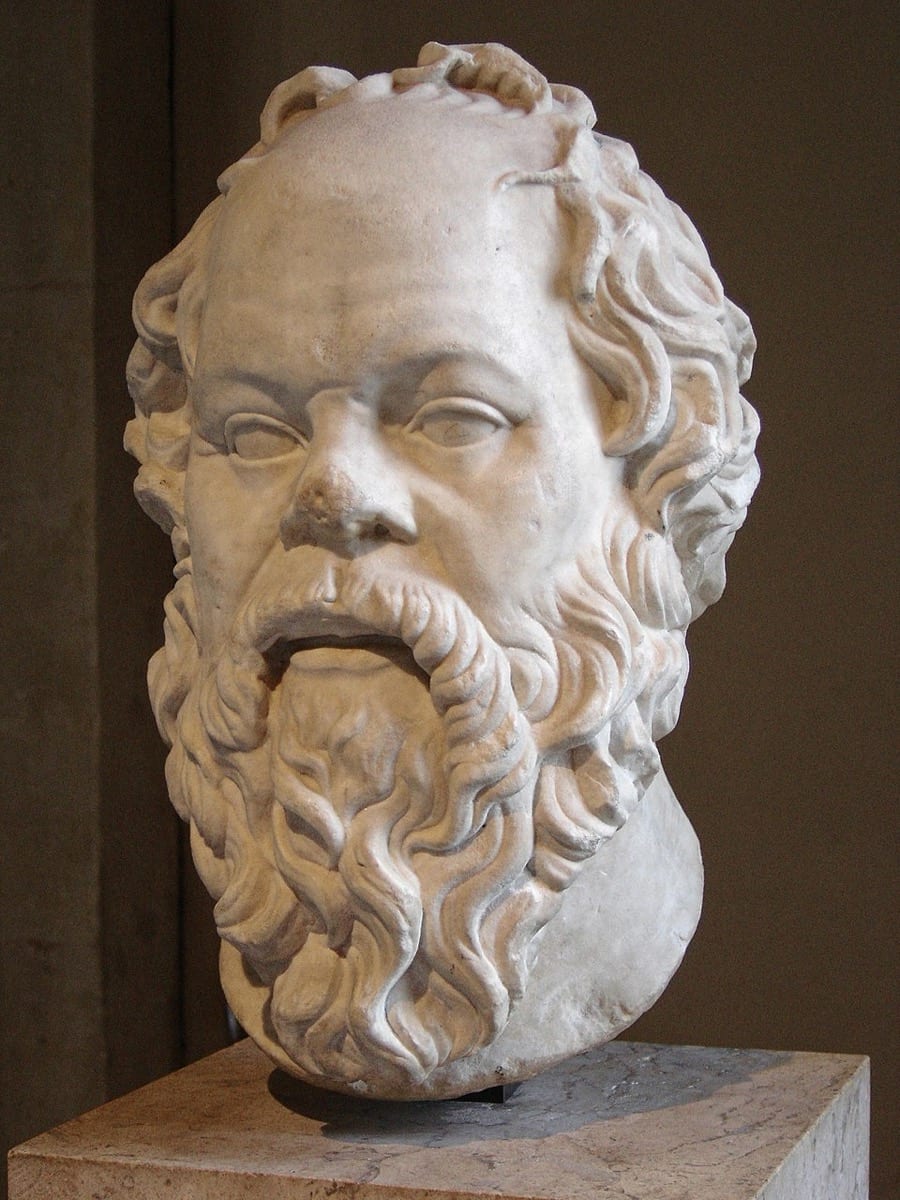
First principles reasoning is starting from the fundamental truths of a situation and building up, instead of starting from someone else's conclusion. Aristotle defined a first principle in Metaphysics as "the first basis from which a thing is known." The practice breaks a problem down to its component truths and rebuilds the answer from there.
The practical protocol has three steps. Step one: identify a conclusion you are holding (or about to adopt). Step two: ask what the actual underlying facts are, independent of the conclusion. Step three: rebuild the reasoning from those facts and see if it arrives at the same place. When it does, your belief is load-bearing. When it does not, you have been holding a conclusion that does not survive scrutiny.
First principles thinking often produces answers that differ from the consensus. That is the whole point. Consensus is a social signal, not a truth signal. Sometimes they align. Often they do not. Different answers produce a different life. (Related: The Measure of a Person.)
Chapter IVHow do I escape herd mentality?
Escape herd mentality by recognizing you are subject to it. Humans are herd animals. Being expelled from the group meant death for most of our evolutionary history, so the pull toward consensus is genetically installed. Solomon Asch's 1956 conformity experiments documented that about 75 percent of people conformed to an obviously wrong answer at least once. It is the default setting of the species.
Once you accept the pull is real, you can design around it. Spend time with people who disagree well (disagree with evidence, not with volume). Read authors who hold positions you instinctively reject, and test their best arguments honestly. Reduce consumption of sources that amplify consensus (social feeds, mainstream opinion media). These are environmental changes, not character upgrades, and they work because they change the ambient pressure on your thinking.
The internal move is to separate "I believe X" from "people I respect believe X." The second is social information. The first is epistemic information. Most herd-driven beliefs are the second masquerading as the first. Question assumptions specifically by asking: would you hold this belief if nobody around you did? If no, you are not thinking independently. You are voting. (Related: Walk Alone If You Must.)
Chapter VHow do I question assumptions without becoming cynical?
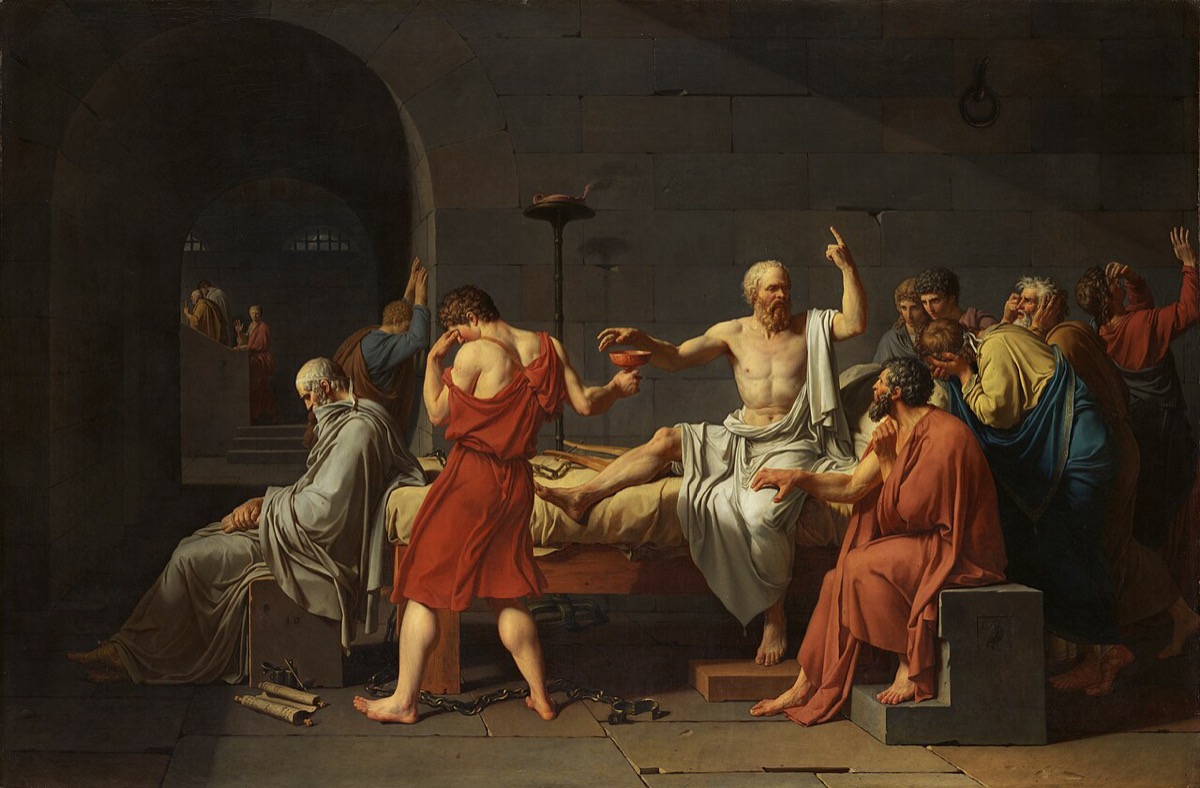
Question assumptions without cynicism by aiming the questions at truth instead of at tearing down. Cynicism assumes all claims are suspect and all authorities are wrong. Critical thinking assumes claims are testable and some authorities are right, but the claims and authorities need to be evaluated case by case. The first stance is cheap and produces nothing. The second is expensive and produces better beliefs.
The practical tell is what happens after the question. The cynic questions and stops. The critical thinker questions and does the work of finding a better answer. When you ask "is this true?" and the answer is "yes, because," you have upgraded your belief with new evidence. When you ask "is this true?" and just drop the belief without replacement, you have exchanged one uncertainty for another. Useful questioning is generative, not demolitional.
The courage to be wrong is part of the equipment. If you only think thoughts that are safe and popular, you are not thinking independently. You are picking from pre-approved options. Real thinking sometimes arrives at conclusions that are wrong, and the willingness to change them when better evidence shows up is what makes the thinking trustworthy. The thinker who is never wrong is not thinking. They are just performing. (Related: Fear Is a Compass.)
Chapter VIBeing THE ONE
THE ONE thinks independently.
Does not absorb opinions. Does not follow the crowd. Does not mistake agreement for truth.
THE ONE runs the critical thinking audit. Asks which beliefs are borrowed. Rebuilds the reasoning from first principles. Updates conclusions when better evidence arrives.
THE ONE has the courage to be wrong, which is why their thinking is trustworthy in the first place.
The world is full of repeaters.
People who say what they have heard. Who believe what they have been told. Who follow what the majority follows.
And then there are the thinkers. The ones who pause before agreeing. Who ask "is this true?" instead of "does everyone believe this?" Who are willing to stand alone with an unpopular conclusion.
Stop repeating. Start thinking.
Be the one who thinks for themselves.
Chapter VIISources
- Kahneman, D. (2011). Thinking, Fast and Slow. Farrar, Straus and Giroux. System 1 / System 2 distinction and the cognitive cost of careful thinking. https://us.macmillan.com/books/9780374533557/thinkingfastandslow
- Asch, S. E. (1956). "Studies of independence and conformity: A minority of one against a unanimous majority." Psychological Monographs, 70(9). Foundational conformity experiments. https://doi.org/10.1037/h0093718
- Stanford Encyclopedia of Philosophy. "Critical Thinking." Academic overview of critical thinking as disciplined reasoning. https://plato.stanford.edu/entries/critical-thinking/
- Aristotle. Metaphysics, Book V. Original definition of a first principle as "the first basis from which a thing is known." https://classics.mit.edu/Aristotle/metaphysics.html
---
Ready to put this into practice? Check your identity alignment and see where you actually stand.