Daily practice
Stop Consuming Start Creating
You have read enough books. Watched enough videos. The gap between you and the life you want is not information. It is content creation, done daily, output before input, until the identity shifts from consumer to creator. Start today with one small thing that did not exist before.

In this article
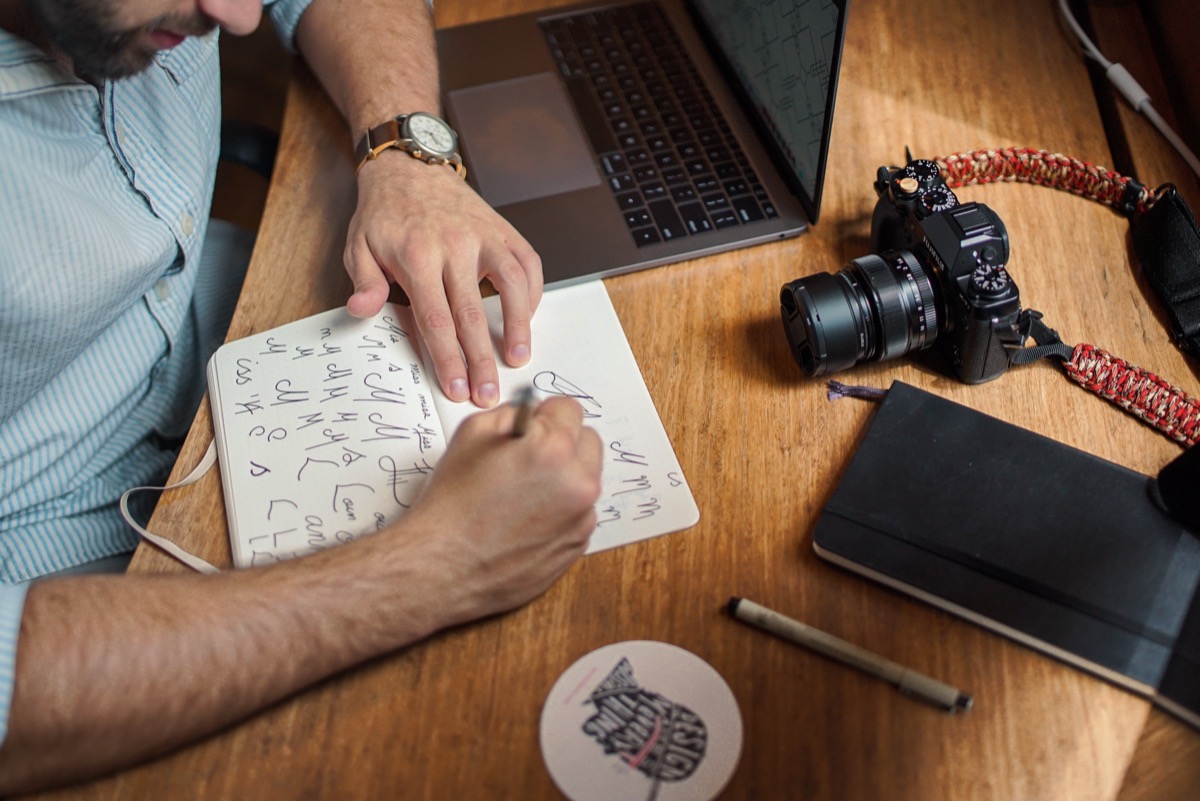
You have read enough. Watched enough. The gap between you and the life you want is not information. It is content creation, done daily, output before input, until the identity shifts from consumer to creator. Start today with one small thing that did not exist before.
You know what to do.
You are just not doing it. That gap is the whole problem. And the cure is not more information. It is the switch from consumer to creator, made today, in one small act of output before any input.
How do I stop consuming content and start creating?
Start content creation today by making one small thing before you read, watch, or scroll. The switch is mechanical, not philosophical. Write a paragraph. Record a voice note. Sketch a diagram. Publish a comment with a genuine opinion. The size of the output does not matter. The sequence does, because content creation before any input rewires the relationship between what you know and what you do.
The reason this works is not motivational. It is neurological. Consumption gives your brain a dopamine hit that feels like progress because it mimics the reward signal of learning. Creation forces the same brain to assemble, choose, and commit, which is an entirely different cognitive operation that consumption cannot simulate.
The practice is non-negotiable for anyone trying to change identity. One created thing, every day, before anything is consumed. Miss the sequence and you stay a consumer who occasionally makes things. Hit the sequence and within weeks you become a creator who occasionally consumes. Same person. Different life. (Related: Make Discomfort a Practice.)
Why does consumption feel like productive action?
Consumption feels productive because your brain cannot cleanly distinguish between learning about something and doing something. Watching someone build a business releases the same dopamine signal as building one. Reading a book about discipline activates reward circuits similar to practicing discipline. The felt experience of progress arrives without the actual progress, which is the exact definition of a trap.
This is why the self-improvement industry functions. People pay for the feeling of progress, delivered efficiently through content. The feeling is real. The underlying progress often is not. A person can accumulate hundreds of hours of self-improvement content while their actual life does not move. That is not a character flaw. It is the default output of a reward system designed for a pre-media environment.
The corrective is to make the reward contingent on output. Until you have written, built, recorded, or shipped, you have not earned the dopamine that consumption would otherwise give you for free. This single reversal is the foundation of the consumer vs creator distinction. (Related: The Dopamine Trap.)

What is the "create before consume" rule?
The rule is simple: every day, you make something before you take anything in. No feed, no email, no podcast, no newsletter touches your attention until a created artifact exists that did not exist yesterday. The rule does not care about quality. It cares about sequence. Output before input. Always. Every single day.
This is not a productivity hack. It is a training protocol for the brain that currently expects reward without output. The sequence teaches the reward system that the good feeling is available only on the far side of making something. After a few weeks, the resistance to content creation drops, because the reward circuit has been rewired to expect effort before payoff.
The failure mode is obvious. Most people check their phone first thing in the morning and then wonder why their creative capacity is flat for the rest of the day. You have already given the reward system its hit. The incentive to produce is already spent. Reverse the order and the same creative capacity is available to you at 7 AM that you never had before. (Related: The Morning Routine for Burnout Recovery.)
Why is output more valuable than input?
Output is more valuable because the act of creating information encodes it far more deeply than the act of receiving it. Slamecka and Graf's 1978 generation-effect research found that participants who generated their own target words remembered them significantly better than participants who simply read the same words. Across five experiments and multiple measures (cued recall, free recall, recognition), the generate condition beat the read condition every time.
Karpicke and Roediger's 2008 study extended this into testing-as-encoding: the act of retrieving information strengthens memory more than re-reading. The common thread is that effortful production beats passive reception on almost every measure that matters for durable learning. You remember what you generate. You forget what you only consume.
The practical implication is large. If you want to actually learn something, make something with it within 24 hours. Explain it to someone. Write about it. Apply it. Build a small version. Consumption without content creation is a thin layer that washes off within a week. Production with consumption as an input is how knowledge becomes capability. (Related: Mastery Takes Time.)
What should I create if I have no idea where to start?
Start with whatever requires the least setup and takes less than twenty minutes. Write 200 words about something that bothered you today. Record a three-minute voice memo explaining a concept to a friend. Sketch a diagram of a system you use. Publish a comment that says something you actually think instead of a platitude. The first created thing will probably be bad, and that is fine.
The barrier is never resources. It is the identity of "person who consumes" versus "person who makes." You shift the identity by accumulating evidence, not by deciding. Ten small created things over ten days is more persuasive to your own brain than a year of "planning to start." The brain believes what the hands have actually done.
After a few weeks of practicing create instead of consume, the question shifts. You stop asking what to create and start asking what to consume, because your consumption has become targeted at the problems your content creation exposed. That is the whole arc. Stop consuming content as entertainment. Start consuming it as fuel for the work you are already making. (Related: The Final Push.)
Being THE ONE
THE ONE does not read another book before starting.
THE ONE starts. Then reads. Then starts again with what the reading revealed.
THE ONE treats consumption as a tool for content creation, not a substitute for it. Does not confuse the dopamine of learning with the capacity of doing.
THE ONE knows the rule: create instead of consume, every single day.
You have read enough.
You have watched enough.
The world has enough consumers. It needs people who make things.
Close the tab.
Open the blank page.
Make one small thing today that did not exist before.
Be the one who creates before the day consumes you.
Sources
- Slamecka, N. J., & Graf, P. (1978). "The generation effect: Delineation of a phenomenon." Journal of Experimental Psychology: Human Learning and Memory, 4(6), 592-604. Foundational study showing generated material is remembered better than read material. https://doi.org/10.1037/0278-7393.4.6.592
- Karpicke, J. D., & Roediger, H. L. (2008). "The critical importance of retrieval for learning." Science, 319(5865), 966-968. Evidence that active retrieval strengthens memory more than re-reading. https://doi.org/10.1126/science.1152408
- Kornell, N., & Bjork, R. A. (2007). "The promise and perils of self-regulated study." Psychonomic Bulletin & Review, 14(2), 219-224. How learners misjudge the effectiveness of passive versus active study. https://doi.org/10.3758/BF03194055
- Newport, C. (2016). Deep Work: Rules for Focused Success in a Distracted World. Grand Central Publishing. Framework for output-focused work in an attention economy. https://www.hachettebookgroup.com/titles/cal-newport/deep-work/9781455586691/
Ready to make something? Begin a short creation practice and give one idea a first line.