Daily practice
The Cold Plunge
Cold exposure has a genuine acute physiology: a big noradrenaline surge, brown-fat activation, a sharp jolt of alertness. But the popular enthusiasm runs well ahead of the hard trial evidence. This is the honest split between what cold showers and plunges actually prove, what stays hype, and who should never try it at all.

In this article
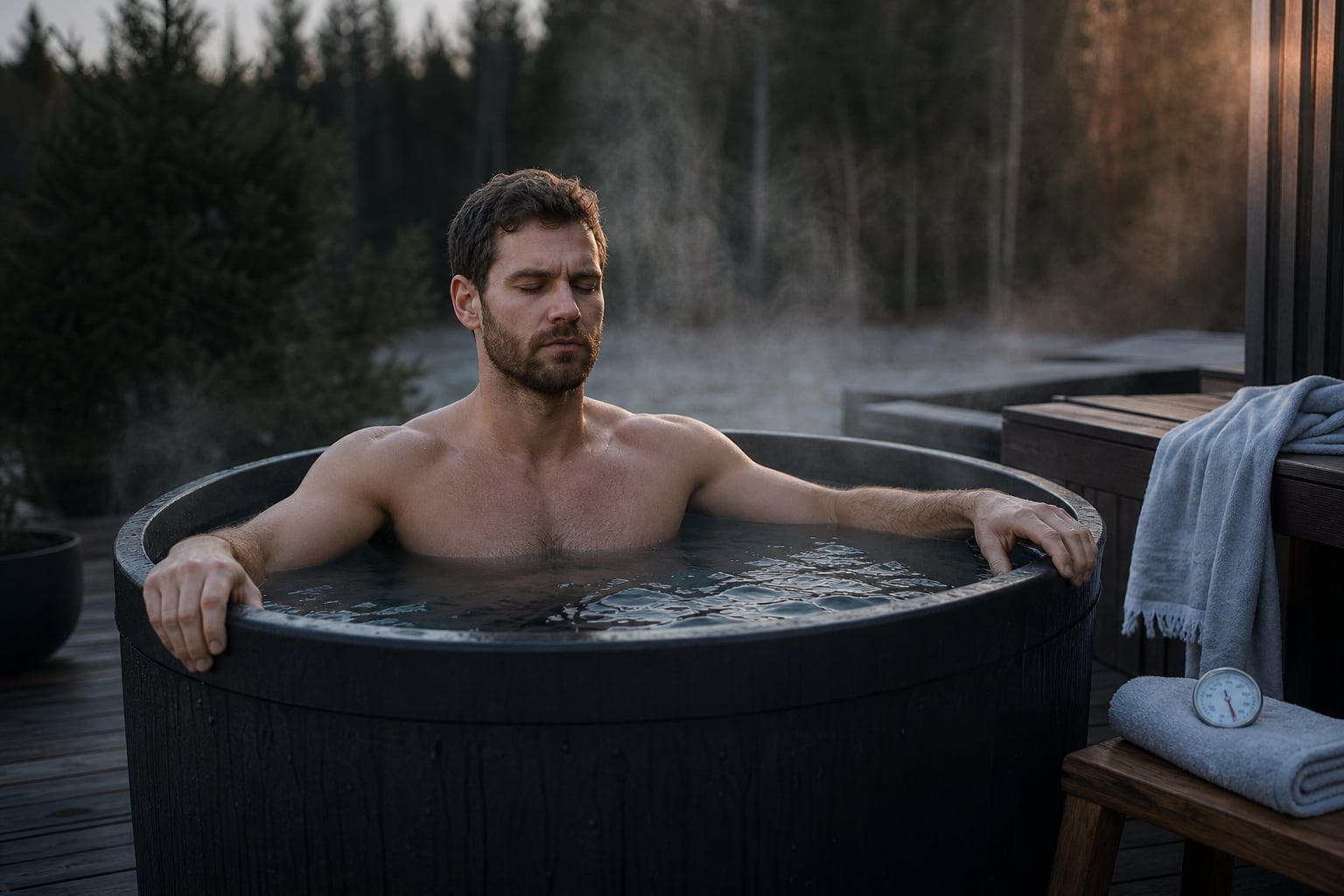
Cold exposure has a real, measurable effect on your body: a large adrenaline surge, brown-fat activation, a jolt that wakes you up. But the popular enthusiasm runs ahead of the hard evidence. Here is the honest picture of what cold showers and plunges prove, what they do not, and who should skip them.
Cold has become a personality. Ice baths on the timeline, breathing gurus, promises of fat loss and superhuman immunity.
Some of it holds up. A lot of it does not.
Here is the honest split: the proven, the hyped, and the people who should stay out of the water.
What does cold exposure actually do to your body?
The instant your skin hits cold water, blood vessels clamp shut, your breathing spikes, and your nervous system floods with noradrenaline. That surge sharpens focus and lifts alertness for a while. Brown fat switches on to generate heat. The acute response is real and fast, even if the long-term payoff is murkier.
The numbers behind that surge are dramatic, but read them carefully. Šrámek and colleagues, in a 2000 study in the European Journal of Applied Physiology, used cold water immersion up to the neck in 14°C water for a full hour and measured plasma noradrenaline climb 530% and dopamine 250%. That is an hour of immersion, not a 60-second shower. Nobody has shown a short blast delivers the same hormonal jump. Treat the big number as the ceiling of an extreme dose, not what you get before work. Still, even a brief cold plunge produces a genuine jolt you can feel. Your body is doing something. The open question is how much of it lasts.
The video below belongs here because it separates the acute physiology from the claims people pile onto it. Use it for dosing and safety context, not as a reason to ignore medical risk.
Can a cold shower really improve mood or immunity?
Honestly, the evidence is thinner than the internet suggests. One large trial found fewer sick days among cold-shower users, but it did not measure mood directly, and the immunity finding was self-reported. Cold shower benefits look plausible for energy and resilience, weaker for hard health claims. Promising, not proven.
The best data comes from Buijze and colleagues, whose 2016 randomized trial in PLOS ONE assigned 3,018 Dutch adults to end their warm shower with 30 to 90 seconds of cold for a month. That group logged 29% fewer days of sickness absence. But the authors stayed careful. As they wrote, "A routine (hot-to-)cold shower resulted in a statistical reduction of self-reported sickness absence but not illness days." People took fewer sick days; they did not get sick less often. There was no dose-response either. If you want the honest reason to keep going, the lesson cold water teaches is steadier than any immune claim. Cold is worth doing. Just do not oversell why.
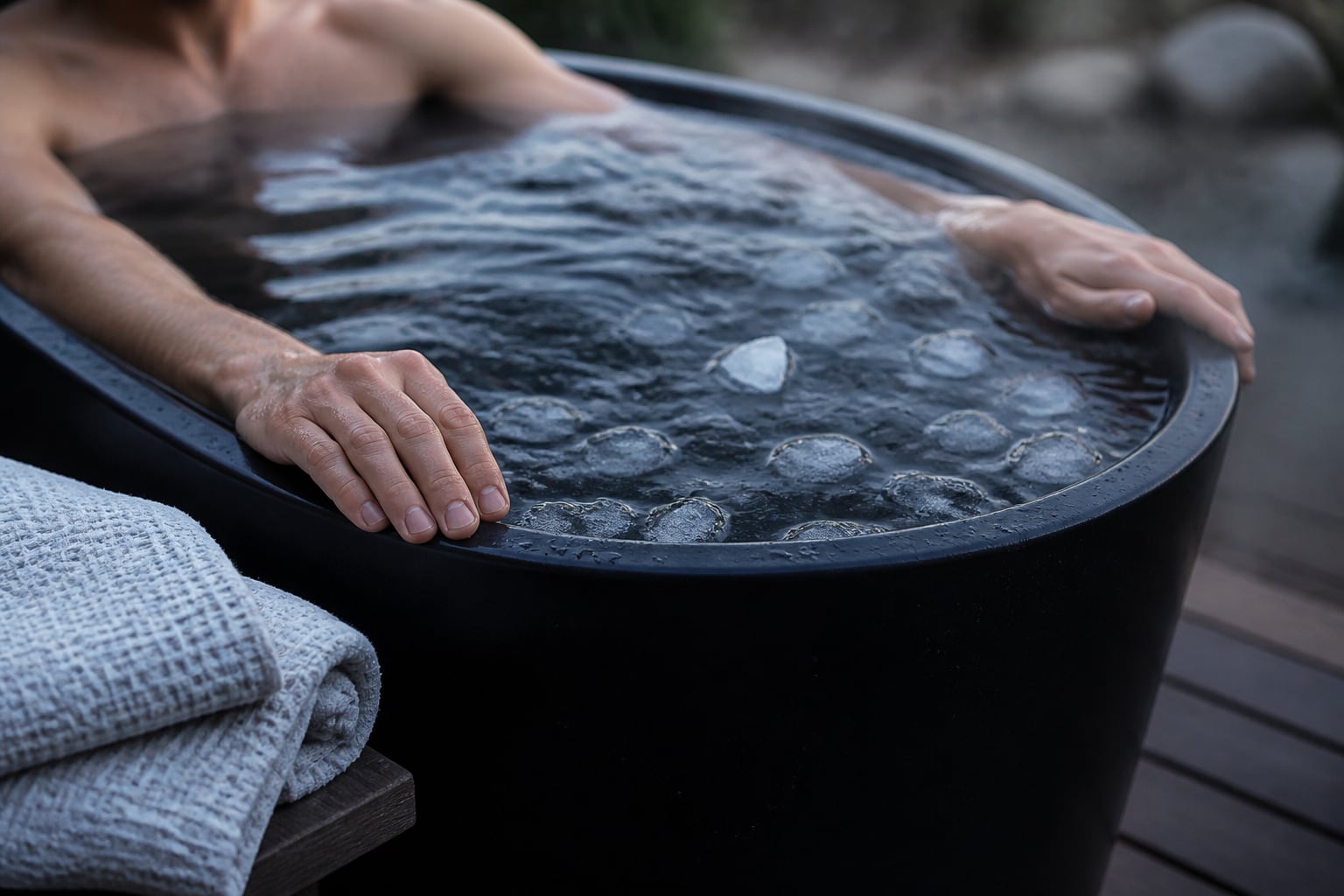
Does cold exposure burn fat?
This is where the hype gets ahead of the biology. Cold does activate brown fat, the tissue that burns energy to make heat, and that sounds like a shortcut to weight loss. It is not. Recent pooled data shows no meaningful effect on blood sugar or fat loss. Nice idea, weak reality.
The brown-fat excitement traces back to a 2009 New England Journal of Medicine study by van Marken Lichtenbelt and colleagues, which found active brown fat in 23 of 24 lean men on cold exposure, and less of it in overweight subjects. The problem is the leap to fat loss. A 2024 meta-analysis by Yoon and colleagues pooled seven studies covering 85 people and found no significant effect of cold on glucose or insulin. Brown fat on a scan is not a shrinking waistline. Keep cold closer to the cost of comfort than to any fat-burning promise. If you want a reason that survives scrutiny, use cold to make discomfort a practice.
Who should not try cold exposure?
Cold water triggers a cold-shock response: a gasp reflex and a sudden spike in heart rate and blood pressure. For a healthy person that is uncomfortable. For someone with a heart condition it can be dangerous. If you have heart disease, an arrhythmia, uncontrolled high blood pressure, or you are pregnant, talk to a doctor first.
The American Heart Association put out a warning in 2022 quoting Dr. Jorge Plutzky of Brigham and Women's Hospital on this exact risk. His caution was blunt: "I would caution against it for anyone with a cardiac history." Take that seriously. The other danger is water itself. The Wim Hof method pairs cold with heavy breathing, and doing that breathing before or during immersion has made people black out and drown. Never do breath-holds in water. If you like the breathing side, keep it on dry land and learn to breathe before you react instead. When in doubt, take the warm shower and ask a professional first.
Skip cold exposure, or get medical clearance first, if any of these apply:
- Heart disease, arrhythmia, previous cardiac event, or unexplained chest pain
- Uncontrolled high blood pressure
- Pregnancy
- History of fainting in water
- Panic attacks triggered by breathlessness
- Any plan that combines breath-holding with water
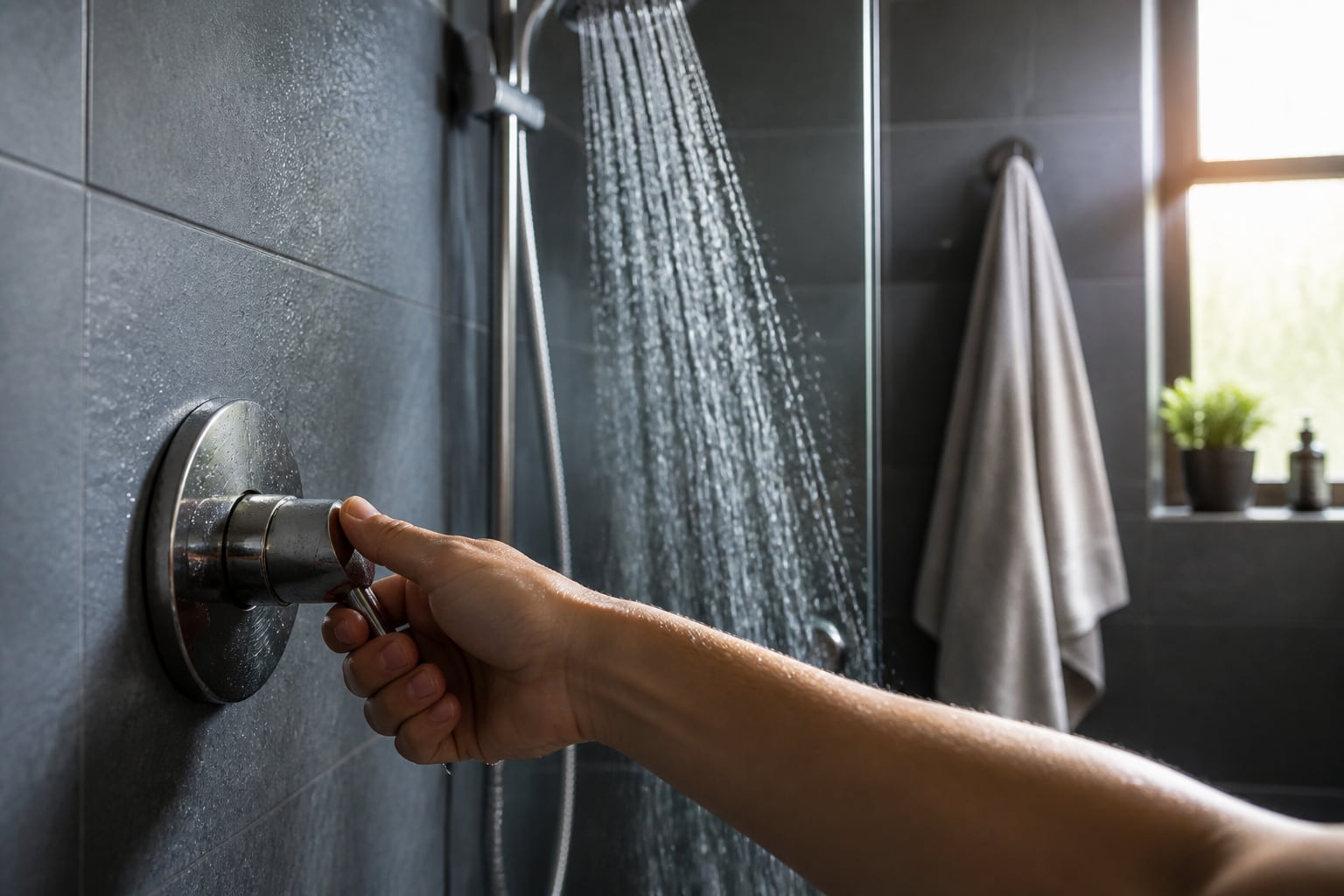
How to start cold exposure safely
Start smaller than the videos suggest. Finish your normal shower with 15 to 30 seconds of cold, breathe slowly through it, and stop. Add a few seconds each week if you want. You are not chasing a record. You are training the ability to do a hard thing on a day you do not feel like it.
| Method | Beginner dose | Best use | Main caution |
|---|---|---|---|
| Cold finish | 15 to 30 seconds at the end of a warm shower | Lowest-friction daily practice | Stop before panic breathing takes over |
| Cold shower | 30 to 90 seconds | Alertness and discomfort training | Do not force max cold on day one |
| Cold plunge | 1 to 3 minutes, supervised if new | Occasional stronger exposure | Bigger cold shock; higher heart-rate and blood-pressure spike |
| Open water | Not a beginner protocol | Nature exposure for experienced swimmers | Current, depth, temperature, and rescue access matter |
The point of cold exposure is not the cold. It is the rehearsal of choosing discomfort on purpose, every day, when quitting is one warm tap away. That is the same muscle you use to burn the comfort zone everywhere else in your life. Keep the practice honest. Cold every morning, brief and consistent, beats a heroic ice bath you do twice and abandon. Consistency is where the discipline lives, and treating it as discipline as devotion keeps you showing up. Get out before you shiver hard. Then go live your day carrying proof that you can do the thing you did not want to do.
If your main goal is muscle growth, do not make cold immersion the first thing you do after lifting. Roberts and colleagues found that regular cold water immersion after strength training reduced long-term gains in muscle mass and strength. Put the cold on a separate morning or several hours away from hypertrophy work.
FAQ
Is a cold shower as good as a cold plunge?
For daily discipline, often yes. A cold shower is easier to repeat, easier to stop, and less risky. A plunge is stronger, but stronger is not automatically better.
How long should a beginner stay in cold water?
Start with 15 to 30 seconds in the shower. If you later use a plunge, begin around one minute and stop while you still feel in control of your breathing.
Should you do breathwork before a cold plunge?
No breath-holds in or near water. Slow breathing during cold exposure is fine. Heavy breathing protocols belong on dry land.
Being THE ONE
THE ONE does the cold thing on the ordinary morning, not the dramatic one.
THE ONE reads the research honestly. Takes the real benefit. Drops the hype. Does not need a miracle to justify a hard habit.
THE ONE knows the value is not in the water. The value is in the choice to stay when leaving is easy.
Not the biggest ice bath. The most consistent one. Not the story you tell. The reps you keep. Cold is just one place you practice the daily systems that make you who you are.
Be the one who does it anyway.
Sources
- Buijze, G. A., et al. (2016). "The Effect of Cold Showering on Health and Work: A Randomized Controlled Trial." PLOS ONE, 11(9), e0161749. https://journals.plos.org/plosone/article?id=10.1371/journal.pone.0161749
- Šrámek, P., et al. (2000). "Human physiological responses to immersion into water of different temperatures." European Journal of Applied Physiology, 81(5), 436–442. https://pubmed.ncbi.nlm.nih.gov/10751106/
- van Marken Lichtenbelt, W. D., et al. (2009). "Cold-Activated Brown Adipose Tissue in Healthy Men." New England Journal of Medicine, 360(15), 1500–1508. https://www.nejm.org/doi/full/10.1056/NEJMoa0808718
- Yoon, S., et al. (2024). "Effects of cold exposure on glucose and insulin: a meta-analysis." PMC. https://pmc.ncbi.nlm.nih.gov/articles/PMC10968636/
- Kox, M., et al. (2014). "Voluntary activation of the sympathetic nervous system and attenuation of the innate immune response in humans." PNAS, 111(20), 7379–7384. https://www.pnas.org/doi/abs/10.1073/pnas.1322174111
- American Heart Association (2022). "You're not a polar bear: The plunge into cold water comes with risks." https://www.heart.org/en/news/2022/12/09/youre-not-a-polar-bear-the-plunge-into-cold-water-comes-with-risks
- Roberts, L. A., et al. (2015). "Post-exercise cold water immersion attenuates acute anabolic signalling and long-term adaptations in muscle to strength training." Journal of Physiology, 593(18), 4285-4301. https://pmc.ncbi.nlm.nih.gov/articles/PMC4594298/
Ready to put this into practice? Track your cold-habit streak and prove you can do the hard thing on repeat.