Daily practice
Your Body Keeps The Score
Anxiety in the body does not respond to more thinking. It responds to movement, breath, and cold. The body stores every stress response you never fully discharged, and the release happens through physical intervention, not through analysis. Stop trying to think your way out. Start moving through what your body has been keeping score of for years.

In this article
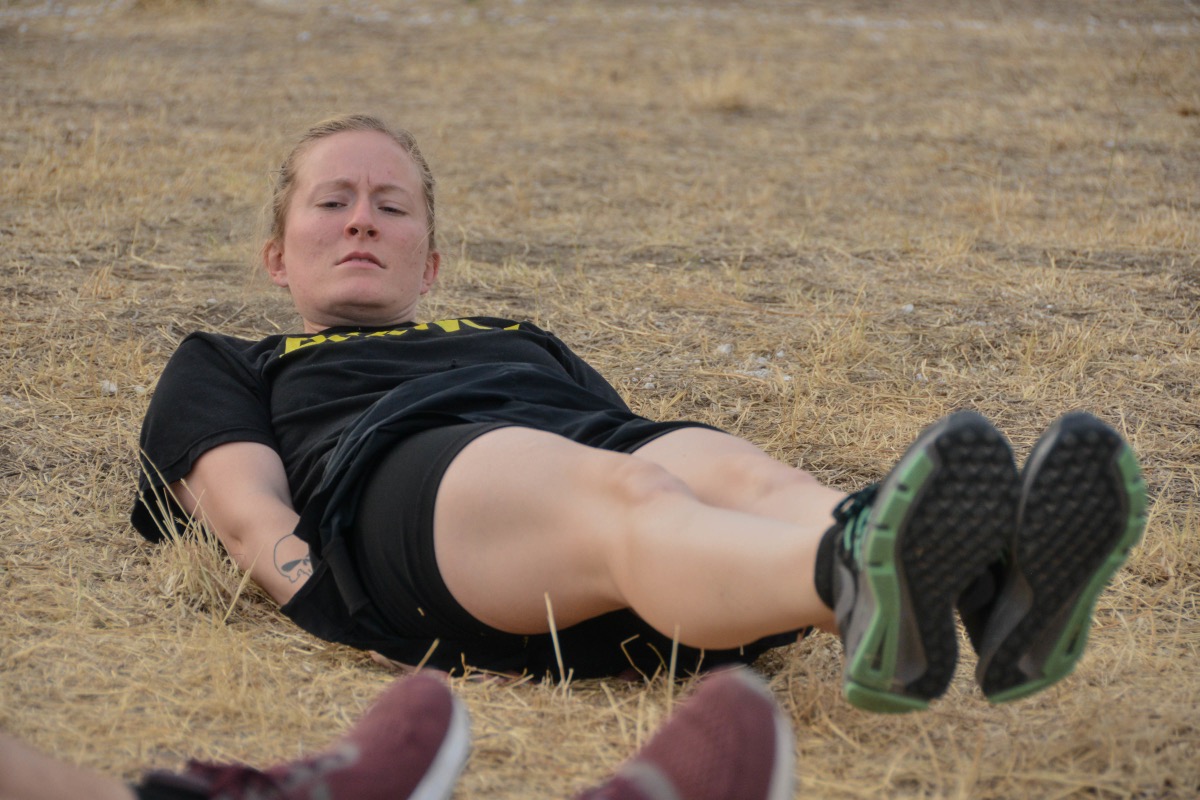
Anxiety in the body does not respond to more thinking. It responds to movement, breath, and cold. The body stores every stress response you never fully discharged, and the release happens through physical intervention, not through analysis. Stop trying to think your way out. Start moving through what your body has been keeping score of for years.
You cannot think your way out of anxiety.
You have to move. Pushups, cold water, breath. The body processes what the mind cannot. If you keep trying to solve a body problem with your mind, you will stay stuck in a loop that feels intelligent but goes nowhere.
Why does anxiety in the body not respond to thinking?
Anxiety in the body does not respond to thinking because anxiety lives below the cognitive layer. It is a nervous system state, not a thought pattern. Bessel van der Kolk's synthesis in The Body Keeps the Score (2014) documented that chronic stress lodges in body tissues and alters baseline physiology. You can understand anxiety perfectly and still experience it at full volume.
The mind is a brilliant tool for analysis and a terrible tool for processing nervous system dysregulation. When you try to think your way through anxiety, you give the anxious mind more material to work with. The analysis becomes the anxiety. You are not solving the problem. You are decorating it, in clearer and clearer language, while the physiology that is actually running the show stays untouched.
The intervention has to match the layer the problem lives in. Body anxiety requires body intervention. Deliberate movement, breath regulation, cold exposure, and other direct physiological levers bypass the cortex and work on the system that is actually dysregulated. This is not anti-intellectual. It is just anatomically correct. (Related: Breathe Before You React.)
How does movement for anxiety actually work physiologically?
Movement for anxiety works by converting sympathetic nervous system activation into something the body can complete rather than suppress. When anxiety fires, your system prepares for fight or flight: elevated heart rate, tense muscles, shallow breathing, stress hormone release. In ancestral contexts, this preparation was followed by actual action that discharged the energy. In modern contexts, the action usually does not happen, and the energy stays stuck.
Pushups, sprints, heavy lifting, or any intense physical effort provides the completion the nervous system was looking for. The muscles burn, the heart rate peaks, the stress hormones get used for their biological purpose, and the system resets to a lower baseline. This is not a mystical effect. It is the completion of a loop that anxiety had left open. Studies on exercise and anxiety, including Harvard Health Publishing's synthesis of the research, consistently find moderate-intensity exercise reduces anxiety symptoms at magnitudes comparable to some pharmacological interventions.
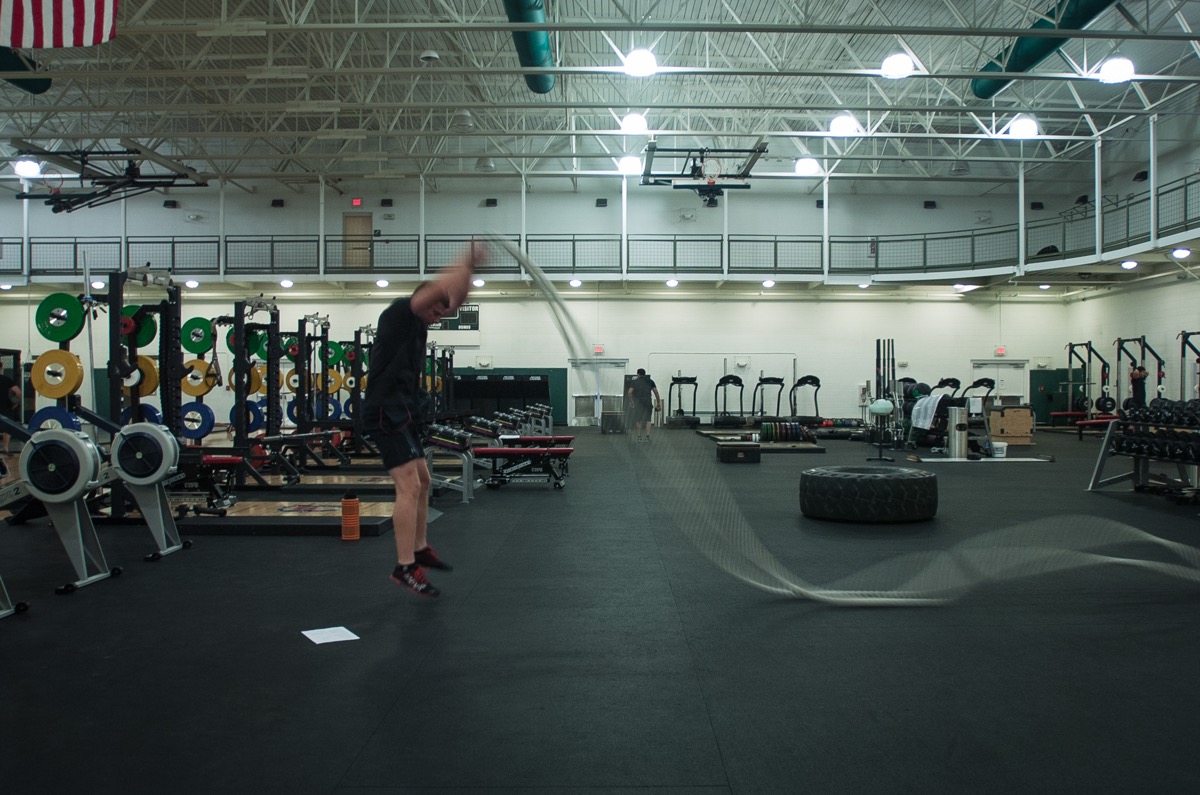
The practical protocol is simple. When anxiety hits, move first. Not a walk. Enough intensity that your working muscles burn within two to three minutes. Pushups to failure. Twenty burpees. A fast mile. The specific modality matters less than the intensity. You are not exercising for fitness in this moment. You are completing a physiological loop that anxiety had opened. (Related: Pain Is Information.)
Why does cold exposure reset the nervous system?
Cold exposure resets the nervous system because it activates the vagus nerve and produces a sharp, measurable shift in autonomic balance. Stephen Porges' polyvagal theory, detailed in his 2011 book The Polyvagal Theory, describes the vagus nerve as the primary regulator of the parasympathetic branch, which is what brings you down from sympathetic (fight-or-flight) activation. Cold water on the face alone triggers the dive response, which directly stimulates vagal tone.
The effect is fast. Three minutes of cold water immersion produces measurable changes in heart rate variability, cortisol, and subjective state, often within 30 to 60 seconds of contact. Šrámek and colleagues' 2000 European Journal of Applied Physiology study documented a 530 percent increase in plasma noradrenaline and 250 percent increase in dopamine following 14°C immersion. The hormonal signature is consistent with the subjective report: you feel alert, calm, and reset.
The practical version does not require ice baths. A cold shower for 30 to 90 seconds works. Cold water on the face for a full minute works. The Wim Hof Method combines cold exposure with breathwork, and the 2014 PNAS study by Kox and colleagues documented that the combined protocol allowed voluntary modulation of the sympathetic nervous system and immune response. The research is not fringe. It is clinical, replicated, and free to apply. (Related: Cold Water Teaches.)
What's the breath work protocol for anxiety in the body?
The breath work protocol for anxiety is slow diaphragmatic breathing with extended exhale. The physiology is specific: slow, deep exhales activate the vagus nerve and shift the autonomic system toward parasympathetic dominance. Shallow chest breathing, which anxiety produces by default, does the opposite. Taking conscious control of breathing is taking conscious control of the nervous system state.
The simplest effective protocol is box breathing: inhale for four counts, hold for four, exhale for four, hold for four. Repeat for five minutes. U.S. Navy SEALs use this protocol in combat contexts because it reliably downshifts autonomic activation within 60 to 90 seconds. Anyone with a working respiratory system can run it. No equipment required. The only cost is the five minutes.
An even simpler version is the 4-7-8 breath: inhale for four, hold for seven, exhale for eight. The extended exhale is the working part. Do this for four cycles. It is one of the few interventions that reliably breaks an acute anxiety spiral in real time, faster than any thought-based technique. The breath is the one autonomic function you can consciously control, which makes it the fastest direct lever into the nervous system. (Related: Breathe Before You React.)
How do I build a daily body-based anxiety protocol?
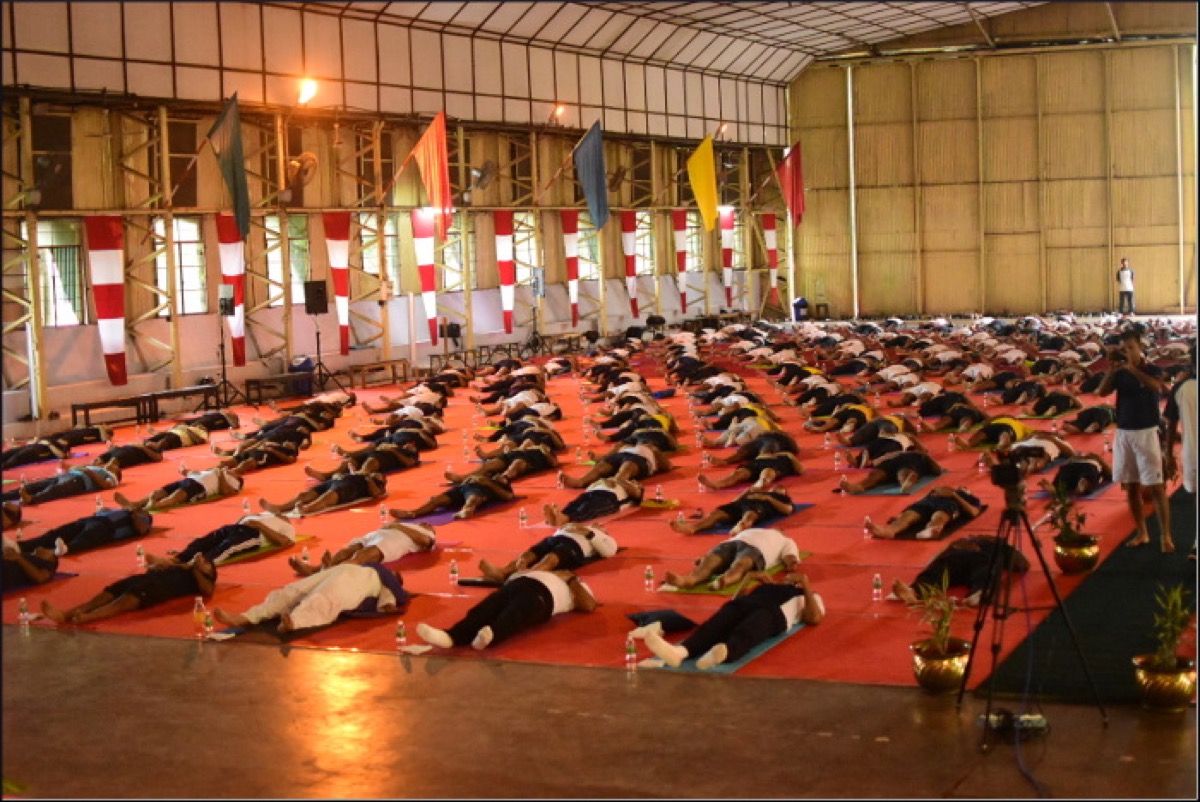
Build a daily body-based protocol so anxiety has less material to work with in the first place. Morning: 5 minutes of box breathing. A set of pushups to meaningful fatigue. A 30-second cold rinse at the end of your shower. Evening: 5 minutes of slow diaphragmatic breathing before sleep. This takes about 15 minutes total. The cumulative effect across weeks is substantial.
The point is not to become a wellness practitioner. The point is to respect that you live in a body, and that body requires discharge. If you only give it a desk chair and a phone screen, it will find other ways to get your attention. Those other ways are usually labeled anxiety, insomnia, or chronic pain, and they are expensive to resolve once they become chronic.
The somatic stress response is cumulative. Every argument you swallowed, every fear you pushed down, every moment you froze when you should have acted, is stored somewhere. The daily protocol is how you stay ahead of the accumulation. Not by eliminating stress (impossible) but by discharging it on a schedule so it does not build up into pathology. (Related: The Morning Routine for Burnout Recovery.)
Being THE ONE
THE ONE does not try to think their way out of anxiety.
Moves first. Breathes second. Analyzes, if at all, third. Knows that body problems need body interventions, not more elegant essays about what is wrong.
THE ONE respects that they live in a body, not just a mind. Discharges daily. Refuses to let the somatic stress accumulate into pathology.
THE ONE reads what the body is saying. Tight shoulders mean carried responsibility. Clenched jaw means unspoken words. Chronic fatigue means something the mind has been refusing to acknowledge.
Your body keeps the score long before you start paying attention.
Start reading what it has been trying to say.
Move. Breathe. Get cold. Let the body discharge what it has stored.
You have spent long enough trying to think your way to peace.
It does not work. You know it does not work.
Try the other way.
Be the one who finally stopped sending emails while the body was screaming.
Sources
- van der Kolk, B. (2014). The Body Keeps the Score: Brain, Mind, and Body in the Healing of Trauma. Viking. Foundational synthesis on somatic storage of stress. https://www.penguinrandomhouse.com/books/313183/the-body-keeps-the-score-by-bessel-van-der-kolk-md/
- Porges, S. W. (2011). The Polyvagal Theory. W. W. Norton. On vagal regulation and autonomic nervous system balance. https://wwnorton.com/books/The-Polyvagal-Theory/
- Kox, M., van Eijk, L. T., Zwaag, J., van den Wildenberg, J., Sweep, F. C. G. J., van der Hoeven, J. G., & Pickkers, P. (2014). "Voluntary activation of the sympathetic nervous system and attenuation of the innate immune response in humans." PNAS, 111(20), 7379-7384. Wim Hof Method research. https://www.pnas.org/doi/10.1073/pnas.1322174111
- Šrámek, P., Šimečková, M., Janský, L., Šavlíková, J., & Vybíral, S. (2000). "Human physiological responses to immersion into water of different temperatures." European Journal of Applied Physiology, 81(5), 436-442. Foundational cold-immersion study. https://pubmed.ncbi.nlm.nih.gov/10751106/
Make room for the practice. Plan your weekly practice time and see how the sessions add up.